Rambha Lake Chilika Ganjam: Boating, Islands & Travel Guide
Plan your trip to Rambha Lake on Chilika in Ganjam, Odisha. Explore island boat tours, Breakfast Island, OTDC Panthanivas, birdwatching, and driving routes.
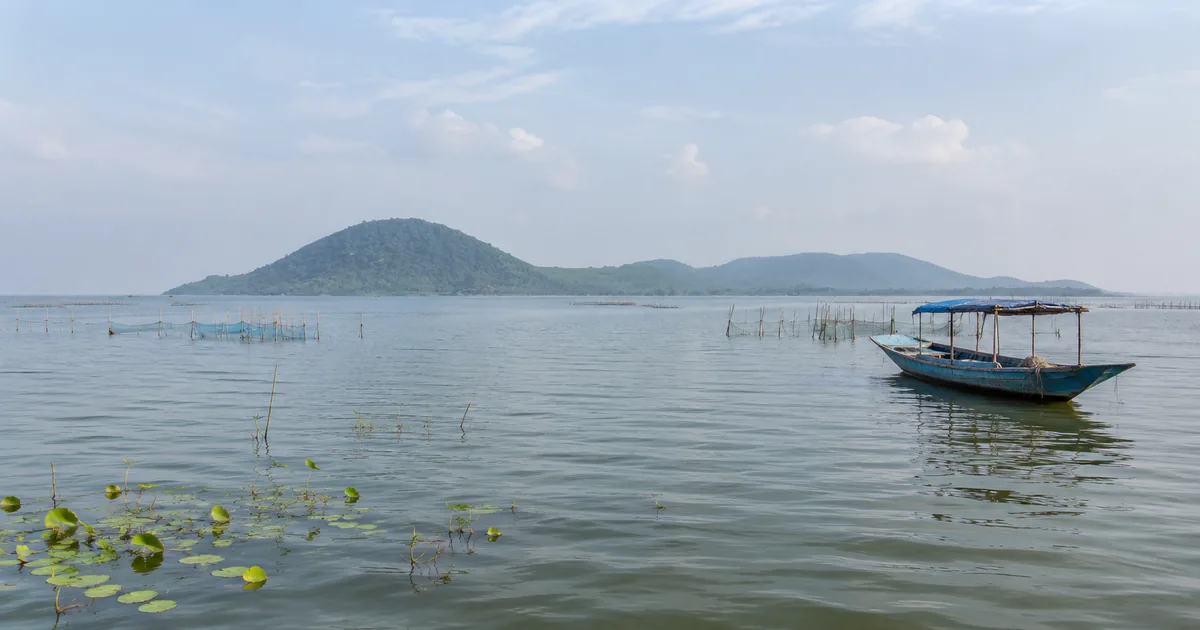
Rambha Lake Chilika Ganjam forms the deepest and most scenic southern expanse of the famed Chilika lagoon in coastal Odisha. Positioned along National Highway 16 in northern Ganjam district, this tranquil bay is renowned among scenic picnic spots in Odisha for its peaceful waters and mountain backdrops.
Dozens of rocky islands rise above the turquoise surface, creating an archipelago setting where travelers enjoy leisurely boating cruises, heritage exploration, and winter birdwatching.
The shoreline is anchored by the historic town of Rambha, where the state-run OTDC Panthanivas provides panoramic vistas across the lagoon. Managed under the conservation framework of the Chilika Development Authority and promoted by Odisha Tourism alongside the Ganjam District Administration, Rambha offers an unhurried, nature-focused alternative to the busier tourism corridors of the coast.
Key Takeaways
- Lagoon Setting: Situated on the southern bay of Chilika Lake in Ganjam district, approximately 45 kilometers north of Berhampur and 130 kilometers south of Bhubaneswar.
- Island Archipelago: Features famous rocky islands including Breakfast Island, Honeymoon Island, Somolo Island, and the colonial-era Dipadanda Island.
- Boating Infrastructure: Official OTDC motorized boats and certified community vessels provide circuit cruises ranging from ₹1,200 to ₹3,500 per boat.
- Avian Sanctuary: Exceptional winter birdwatching refuge hosting vast flocks of migratory greater flamingos, pelicans, and brahminy shelducks from November to February.
- Transit Convenience: Superbly connected along the six-lane National Highway 16, with rail access available at Rambha station and Khallikote junction.
Rambha Lake at a Glance: Location, Geography & Lagoon Splendor
Rambha functions as both a peaceful weekend retreat and an important ecological hub on the Chilika lagoon. Because the southern sector is shielded by high granitic ridges, wave action remains gentle.
Glassy water conditions mirror passing clouds and distant mountain silhouettes. The absence of commercial shipping lanes preserves a quiet environment where travelers can observe wading herons feeding along the shallows.
The master reference table below presents core geographic coordinates, water depth, and visiting hours for planning your excursion to Rambha:
| Metric / Parameter | Visitor Information |
|---|---|
| Site Name | Rambha Sector, Chilika Lagoon (Southern Bay) |
| Administrative Territory | Rambha NAC, Ganjam District, Odisha |
| Geographic Coordinates | 19.5200° N, 85.1000° E |
| Average Water Depth | 2.5 to 3.5 meters (Deepest zone of Chilika) |
| Boating Operating Hours | 6:30 AM to 5:00 PM (Daily all year) |
| Boat Ride Costs | ₹1,200 to ₹3,500 per boat (Depending on island circuit) |
| Nearest Railway Stations | Rambha Railway Station (RBA, 2 km) and Khallikote (KIT, 12 km) |
| Primary Highway Corridor | National Highway 16 (Chennai–Kolkata Golden Quadrilateral) |
| Recommended Stay Duration | Full day excursion or overnight stay at OTDC Panthanivas |
Core Administrative and Geographic Metrics
Rambha occupies a strategic position along the coastal belt documented in our Ganjam district travel guide. The bay marks the point where the Eastern Ghats hills make their closest approach to the Bay of Bengal, pinching the coastal corridor into a narrow strip of fertile land.
The town itself is well supplied with visitor infrastructure. Concrete boat jetties, shaded viewing walkways, manicured gardens, and clean sanitation facilities are centered around the OTDC Panthanivas complex, providing safe boarding points for travelers of all ages.
Landscape Character of the Southern Chilika Bay
Unlike the northern and central sectors of Chilika where expansive open silt waters dominate the horizon, the southern bay at Rambha is broken up by dramatic rocky outcrops. Weathered khondalite and granite hillocks emerge directly from the water, clad in thorny scrub, euphorbia, and wild flowering bushes.
The sheltered bay maintains higher salinity levels than the northern river mouths, fostering a distinctive marine ecology. Schools of brackish water fish, mud crabs, and prawns thrive in the quiet coves, supporting generations of traditional fisher families in surrounding coastal hamlets.
The Iconic Islands of Rambha Bay: Breakfast to Honeymoon
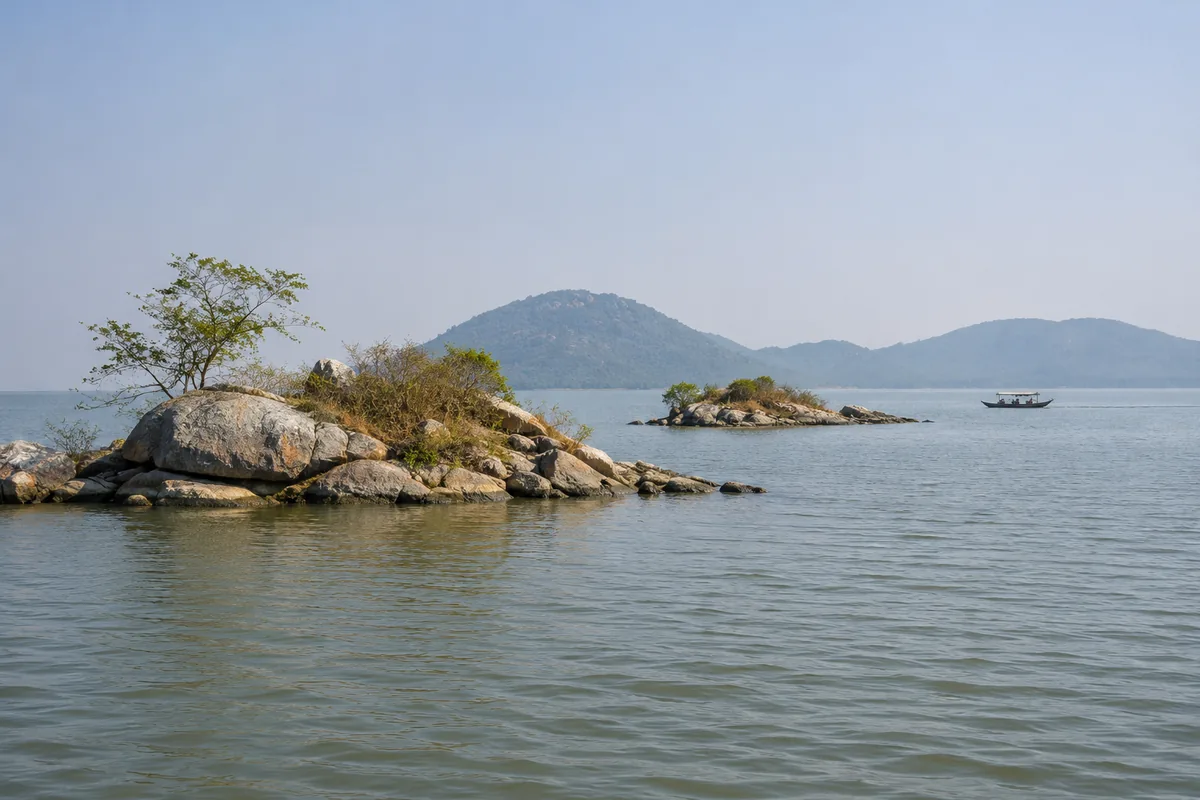
The defining attraction of a boat cruise from Rambha is exploring its famous cluster of named islands. Each islet features unique rock formations, historical legends, and scenic vantage points that reveal the maritime heritage of the region.
Breakfast Island and Dipadanda Island Heritage
Among the most photographed landmarks is Breakfast Island, also known locally as Sankuda Island. During the British colonial era, Mr. Snodgrass, the Collector of Ganjam under the East India Company, erected a miniature single-room masonry bungalow on this tiny rock outcrop where he enjoyed solitary morning breakfasts surrounded by cooling lake breezes.
Nearby sits Dipadanda Island, characterized by a conical stone pillar constructed atop a rugged rock spire. The pillar was erected by colonial maritime officers to guide traditional wooden cargo boats navigating the shallow channels of the lagoon between Rambha and the open sea mouth.
Honeymoon Island and Somolo Island Sanctuaries
Honeymoon Island, known traditionally as Barkuda Island, features smooth stone ledges and lush wild vegetation. The waters surrounding the island are celebrated for sightings of the limbless lizard (Barkudia insularis), an extremely rare endemic reptile first recorded by British naturalists on this tiny landmass.
Somolo Island is the largest rock island in the Rambha bay, rising prominently to a height of over one hundred meters. Draped in dense deciduous woods, the island provides a protected sanctuary for spotted deer, monitor lizards, and soaring white-bellied sea eagles that nest among the high branches of coastal trees.
The table below outlines the prominent islands accessible by motorboat from Rambha jetty:
| Island Name | Local Odia Name | Distinctive Feature | Cruise Duration from Jetty |
|---|---|---|---|
| Breakfast Island | Sankuda Island | Historic British masonry pavilion | 20 minutes (One way) |
| Dipadanda Island | Lighthouse Pillar Island | Conical navigation stone pillar | 25 minutes (One way) |
| Honeymoon Island | Barkuda Island | Endemic fauna habitat and stone benches | 35 minutes (One way) |
| Somolo Island | Somolo Pahada | Tallest forested island with spotted deer | 50 minutes (One way) |
| Birds Island | Pakhi Dhana | Guano-bleached rocks crowded with winter storks | 40 minutes (One way) |
Boating Tariffs, Cruise Routes & Water Safety Protocols
Exploring the islands requires chartering a motorized tourist boat from the official OTDC jetty or the certified local boatmen association counter located on the Rambha waterfront. Official rambha boating charges are regulated by the boatmen cooperative to maintain transparent rates for tourists.
Official Motorboat Circuit Tariffs and Packages
The boat operators offer standardized circuit packages that allow visitors to tailor their cruise duration to their personal schedule and budget. Fares are charged on a per-boat basis rather than per passenger, making group travel economical.
The table below presents standardized boat tour packages and official tariffs:
| Boating Circuit / Package | Islands Covered on Route | Maximum Capacity | Tariff (Per Boat) | Approximate Duration |
|---|---|---|---|---|
| Short Island Circuit | Breakfast Island and Dipadanda Island | Up to 8 passengers | ₹1,200 – ₹1,500 | 1 hour 15 minutes |
| Medium Bay Circuit | Breakfast, Honeymoon & Birds Island | Up to 8 passengers | ₹2,000 – ₹2,400 | 2 hours 15 minutes |
| Grand Island Tour | Breakfast, Honeymoon, Somolo & Ghantasila | Up to 8 passengers | ₹3,200 – ₹3,500 | 3 hours 30 minutes |
| Speedboat Cruise | Rapid panoramic bay cruise | Up to 4 passengers | ₹2,500 – ₹3,000 | 45 minutes |
Chilika Development Authority Safety and Life Jacket Mandate
Safety standards on Rambha lake are stringently enforced by the Chilika Development Authority (CDA) and local maritime police. All commercial tourist vessels must be registered, fitted with functioning marine engines, and equipped with approved buoyant life vests.
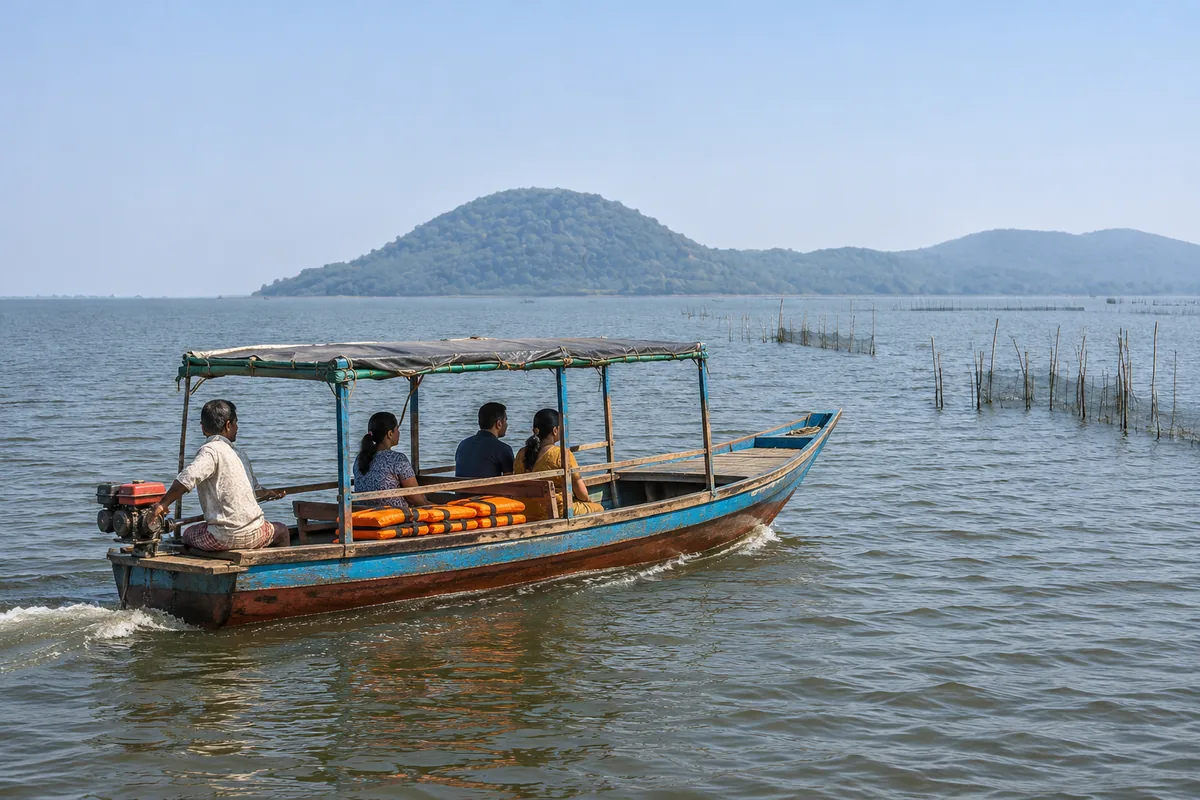
Every passenger must wear an approved life jacket before the boat departs the jetty. Visitors should decline boarding any uncertified private fishing skiff that lacks proper life-saving equipment. Boat operations conclude promptly at 5:00 PM to ensure that all vessels return safely before twilight.
Winter Migratory Birdwatching & Biodiversity in Rambha
From November through late February, Rambha transforms into one of Asia’s most spectacular avian wintering grounds. Over one million migratory birds travel thousands of miles along the Central Asian Flyway from Siberia, Mongolia, Kazakhstan, and the Caspian Sea to settle on the nutrient-rich waters of Chilika.
Key Migratory Species: Flamingos, Pelicans and Osprey
The shallow, saline mudflats around Rambha are especially famous as the primary feeding territory of greater flamingos and lesser flamingos. Flocks numbering in the thousands wade gracefully through the shallows, their pale pink plumage creating a striking natural ribbon against the blue water.
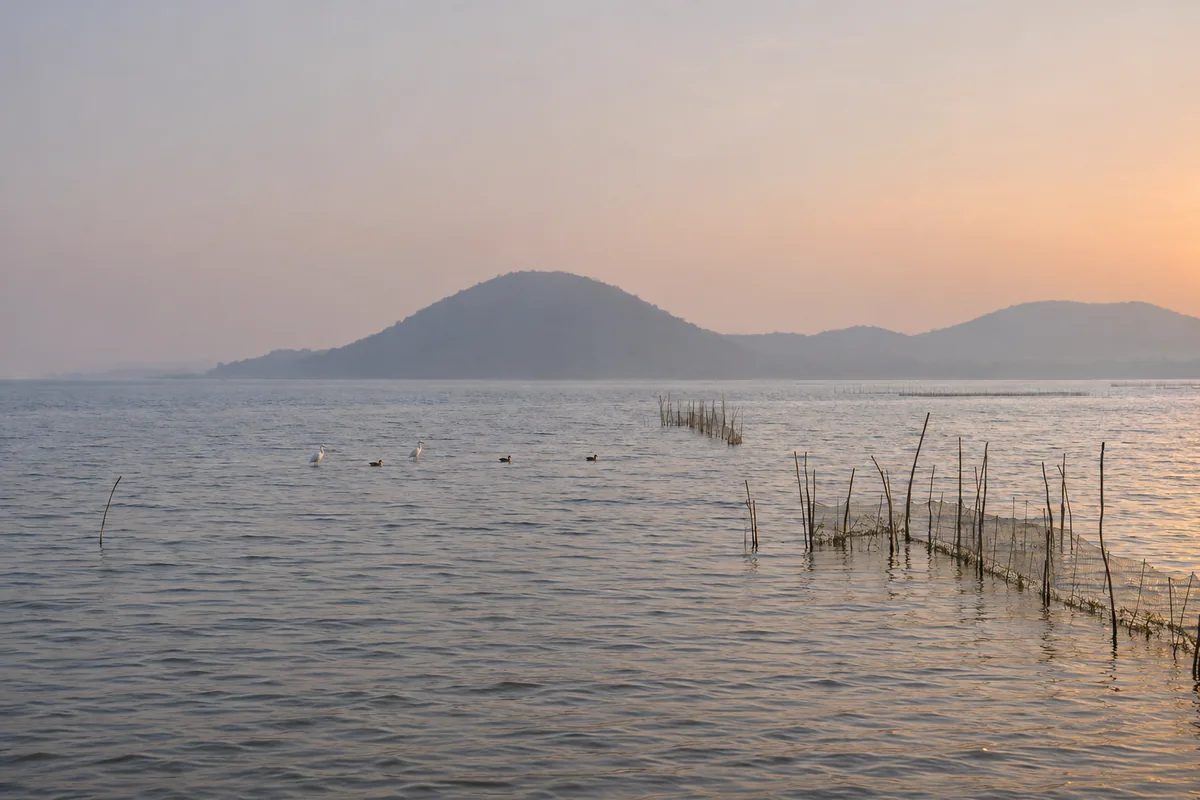
Other notable migratory waterfowl include spot-billed pelicans, northern pintails, gadwalls, garganeys, bar-headed geese, and Eurasian wigeons. Formidable raptors like the osprey, peregrine falcon, and brahminy kite circle high overhead, hunting for fish near the rocky islands.
The table below highlights prominent avian species and their seasonal observation windows:
| Avian Species | Migratory Origin | Preferred Habitat in Rambha | Peak Sighting Period |
|---|---|---|---|
| Greater Flamingo | Rann of Kutch and Central Asia | Shallow saline mudflats and sandbars | December to February |
| Spot-Billed Pelican | Central Asian wetlands | Open water around Somolo Island | November to January |
| Bar-Headed Goose | Tibetan Plateau | Grassy shoreline margins | December to February |
| Northern Pintail | Siberian tundra | Shallow reed beds near Ghantasila | November to February |
| White-Bellied Sea Eagle | Resident coastal breeder | High tree perches on Somolo Island | Year-round resident |
Best Morning Observation Points and Birding Etiquette
The most rewarding birdwatching takes place during early morning between 6:30 AM and 9:00 AM, when feeding activity is at its height and morning sunlight provides optimal conditions for telephoto photography.
Travelers should observe conscientious birding conduct by keeping a respectful distance of at least fifty meters from feeding flocks. Never instruct boat drivers to rev engines or steer directly into bird gatherings to cause birds to take flight for photographs, as sudden disturbance causes severe energy stress for migratory travelers.
How to Reach Rambha from Bhubaneswar and Berhampur
Rambha benefits from exceptional transport infrastructure, situated directly along the primary highway and rail arteries linking Odisha with southern India.
Road Navigation via National Highway 16
Traveling by private vehicle is the most convenient way to reach Rambha. The entire route from Bhubaneswar follows the six-lane National Highway 16, passing through Khordha and Balugaon. The highway is impeccably paved with smooth flyovers and clear directional signage throughout.
The driving distance from Bhubaneswar is approximately 130 kilometers, taking around two and a half hours. From Berhampur, the drive north along NH 16 covers forty-five kilometers, requiring just forty-five minutes of comfortable driving.
Rail Access via Rambha and Khallikote Railway Stations
For rail passengers, Rambha Railway Station (Station Code: RBA) sits just two kilometers from the lakefront, receiving regular passenger and local MEMU trains linking Bhubaneswar, Khurda Road, and Berhampur.
For travelers boarding major long-distance express trains, Khallikote Railway Station (Station Code: KIT) is situated twelve kilometers north. Taxis, shared three-wheelers, and local buses operate continuously between Khallikote station and Rambha town along the highway.
The transit distance table below provides key metrics for planning your journey:
| Starting Location | Transit Corridor | Distance | Estimated Travel Duration |
|---|---|---|---|
| Berhampur (Brahmapur) | NH 16 North directly to Rambha | 45 km | 45 minutes |
| Chatrapur (Ganjam HQ) | NH 16 North through Humma | 25 km | 25 minutes |
| Balugaon (Barkul Sector) | NH 16 South along lake edge | 30 km | 35 minutes |
| Bhubaneswar Airport (BPIA) | NH 16 South past Khordha | 130 km | 2 hours 30 minutes |
| Puri Town | NH 316 to Palur, or via Khordha | 110 km | 2 hours 45 minutes |
| Visakhapatnam City | NH 16 North via Srikakulam | 290 km | 5 hours 30 minutes |
Airport Connections via Bhubaneswar and Visakhapatnam
The closest commercial domestic and international airport is Biju Patnaik International Airport in Bhubaneswar (BPIA), located 130 kilometers north. Taxis and airport cabs can be reserved directly from the arrivals terminal for comfortable point-to-point transfers to Rambha.
Alternatively, travelers from southern India can fly into Visakhapatnam International Airport (VTZ), situated 290 kilometers south, connecting to Rambha via express trains along the Howrah–Chennai mainline.
Rambha vs Satapada vs Mangalajodi: Which Chilika Gateway Is Best?
Chilika Lake encompasses over one thousand square kilometers, offering three distinct gateways with markedly different landscape environments: Rambha in the south, Satapada dolphin sanctuary in Puri in the east, and Mangalajodi in the north.
Key Differences in Vibe, Wildlife and Landscape
Satapada, located along the ocean spit in Puri district, is celebrated primarily for boat rides to spot the rare Irrawaddy dolphins and visit the natural sea mouth. It attracts heavy pilgrim and weekend tourist crowds arriving from Puri and Bhubaneswar.
Mangalajodi represents an expansive freshwater wetland marsh in Khordha district, world-renowned for silent wooden punt-boat birding where photographers can get within touching distance of thousands of waterbirds among marsh weeds.
Rambha provides a blend of open lagoon sailing, rocky mountain island scenery, and quiet lakeside relaxation. It offers the most dramatic panoramic vistas where high hills plunge directly into blue brackish waters.
The comparison table below highlights key parameters across the three Chilika gateways:
| Feature / Metric | Rambha (Southern Sector) | Satapada (Eastern Sector) | Mangalajodi (Northern Sector) |
|---|---|---|---|
| Primary Attraction | Scenic rocky islands and bay cruising | Irrawaddy dolphins and sea mouth | World-class wetland bird photography |
| Landscape Type | Deep bay with forested rocky hills | Shallow coastal lagoon near sea spit | Freshwater marsh with tall reed beds |
| Boat Propulsion | Motorized boats and speedboats | Large motorized wooden passenger boats | Silent pole-punted wooden skiffs |
| Crowd Atmosphere | Peaceful, unhurried, scenic | Lively, busy pilgrim crowds | Quiet, focused birders and naturalists |
| Water Clarity | Clean, turquoise brackish water | Turbid brackish water near ocean mouth | Shallow, marshy freshwater channels |
| Best Base Town | Berhampur or Rambha Panthanivas | Puri holy town (50 km) | Bhubaneswar capital (70 km) |
Choosing the Right Chilika Sector for Your Trip
If your priority is seeing Irrawaddy dolphins breach near the ocean mouth during a temple holiday in Puri, Satapada is the logical destination. If you are an avid bird photographer wanting intimate eye-level images of feeding waders in marshes, Mangalajodi is unmatched.
However, if you want a relaxing lakefront holiday featuring boat cruises around historic islands, hillside walks, and comfortable resort stays with uninterrupted lake views, Rambha is the finest destination on Chilika.
Where to Stay, Best Time to Visit & Nearby Ganjam Attractions
Planning your stay in Rambha allows you to experience sunrise over the lagoon when early morning mist hovers above the rocky islands.
OTDC Panthanivas Rambha and Scenic Lakefront Stays
The leading lodging option is OTDC Panthanivas Rambha, situated right on the water edge within expansive landscaped gardens. The property offers air-conditioned lake-view rooms, standalone cottages, an open-air restaurant serving freshly caught Chilika prawns and crab curries, and an on-site boat booking counter.
Private guest houses and eco-resorts are also available along the NH 16 service road, offering basic amenities for budget travelers and backpackers.
Seasonal Climate and Best Months for Lagoon Exploration
The ideal season to explore Rambha is between October and March. Temperatures during winter range from a comfortable 16°C in the morning to 28°C in the afternoon, making boat cruises and outdoor island hikes exceptionally pleasant.
Monsoon months from July to September bring dramatic cloudscapes and rainstorms that transform the surrounding hills into lush green emerald ridges, though rough waters can occasionally cause temporary boat suspensions. Summer months from April to June are warm, but refreshing evening breezes from the Bay of Bengal keep coastal temperatures manageable.
The table below presents a seasonal travel rating matrix:
| Season | Calendar Months | Ambient Temperature | Travel Rating & Advisory |
|---|---|---|---|
| Winter (Peak) | October to March | 16°C to 28°C | Outstanding; massive migratory bird flocks and cool sailing weather |
| Monsoon | July to September | 24°C to 32°C | Good; dramatic hill greenery, though boat services may pause during storms |
| Summer | April to June | 26°C to 36°C | Moderate; pleasant dawn and dusk breezes, but midday sun is intense |
Pairing with Tampara Lake, Tara Tarini and Gopalpur
Rambha serves as a wonderful springboard for discovering notable places to visit in Ganjam. Just thirty kilometers south lies Tampara Lake water sports in Chatrapur, an expansive freshwater lake offering jet skiing, kayaking, and water zorbing.
Heritage enthusiasts can make a pilgrimage to the revered hilltop temple of Maa Tara Tarini hill shrine near Purushottampur, or unwind along the historic colonial promenade of Gopalpur sea beach. Further inland, the therapeutic hot sulfur pools of Taptapani and the freshwater wetlands of Ansupa Lake create diverse multi-day southern Odisha touring circuits.
Frequently Asked Questions (FAQs)
Where is Rambha Lake located in Odisha?
Rambha Lake is the southern sector of Chilika Lake, located in Ganjam district along National Highway 16. It is situated approximately forty-five kilometers north of Berhampur and one hundred thirty kilometers south of Bhubaneswar.
How much does boating cost in the southern bay?
Motorized boat tours from the official OTDC jetty cost between ₹1,200 and ₹3,500 per boat based on the island circuit chosen. Each standard tourist boat accommodates up to eight passengers safely.
What are the prominent islands to explore?
The most famous islands in Rambha include Breakfast Island with its colonial pavilion, Honeymoon Island, Somolo Island with its spotted deer population, and Dipadanda Island.
How does Rambha differ from Satapada?
Rambha is characterized by calm deep blue waters framed by rocky mountain islands and is famous for flamingos, whereas Satapada is located on a coastal spit famous for Irrawaddy dolphin sightings.
How to travel from Bhubaneswar to the lagoon?
Travelers can drive 130 kilometers south along the six-lane National Highway 16 in roughly two and a half hours. Alternatively, daily express and passenger trains stop at nearby Rambha and Khallikote railway stations.
Is overnight stay available along the lakefront?
Yes, comfortable accommodation is available at OTDC Panthanivas Rambha, featuring waterfront cottages, lush gardens, and on-site dining serving fresh Chilika seafood.