Jayadev Pitha Kenduvilwa Kenduli Bhubaneswar: Guide
Explore Jayadev Pitha Kenduvilwa Kenduli Bhubaneswar, birthplace of poet Jayadeva. Check museum timings, Gita Govinda history, route from city, and tips.
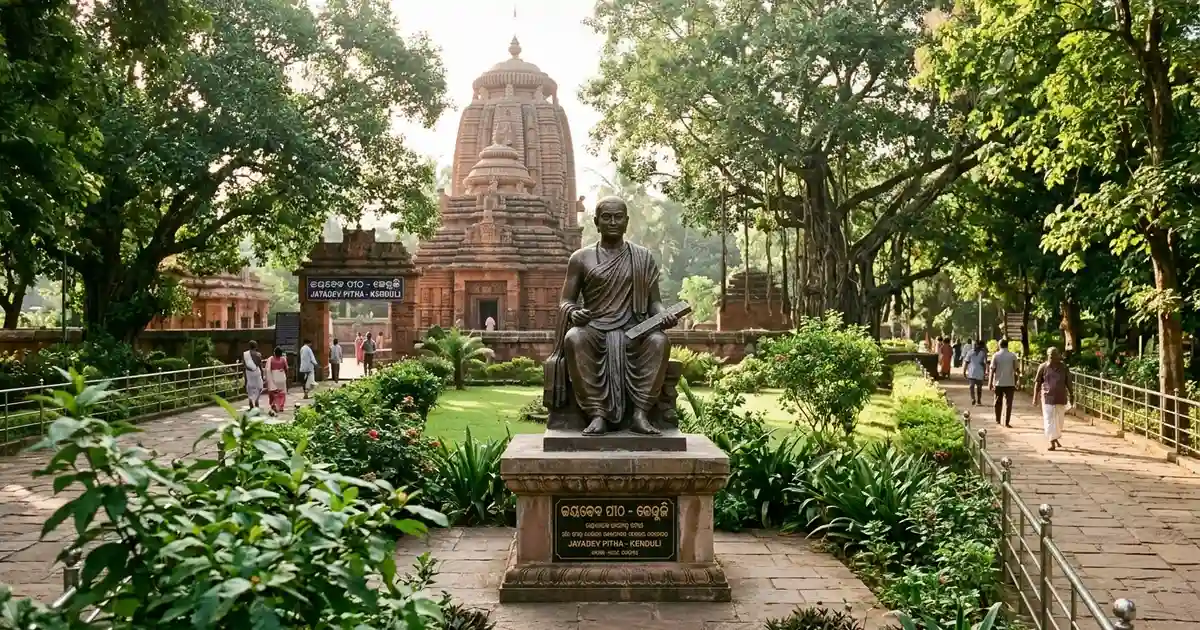
Jayadev Pitha Kenduvilwa Kenduli Bhubaneswar stands as one of the most significant literary and spiritual monuments in eastern India. Situated in the rural landscape of Kenduli Sasan along the ancient Prachi River valley, this memorial complex honors Mahakavi Jayadeva, the twelfth-century Sanskrit poet who composed the immortal lyrical classic Gita Govinda.
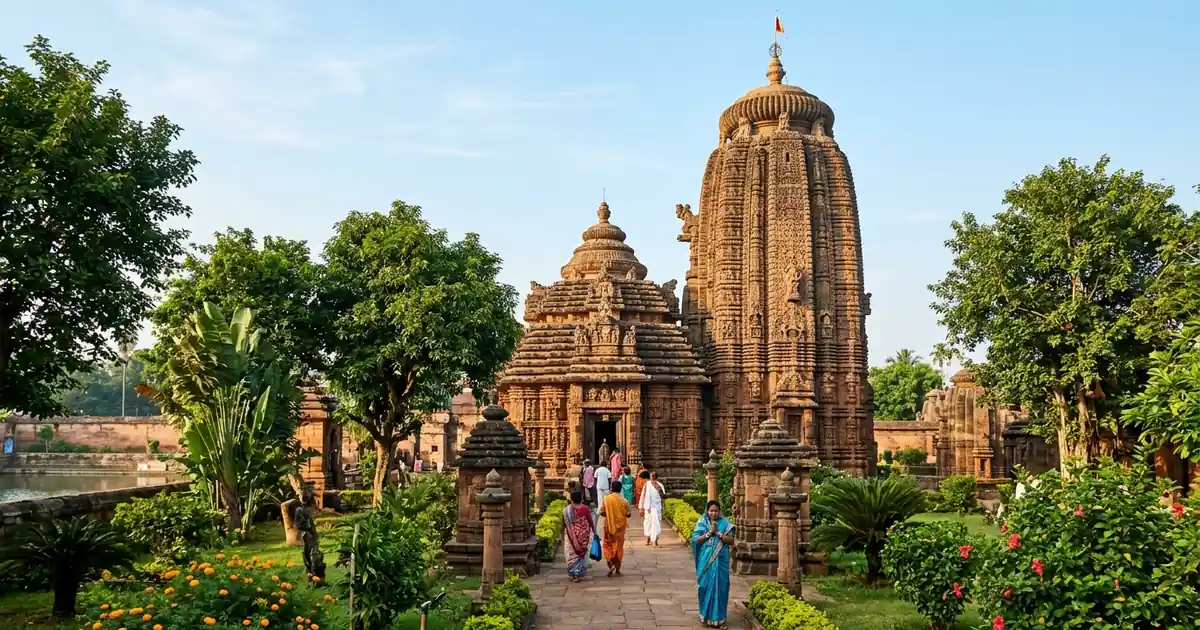
The peaceful retreat sits approximately thirty kilometers southeast of the state capital, making it a compelling cultural excursion among the best tourist places to visit in Bhubaneswar. Visitors encounter an archaeological museum, medieval stone shrines, and landscaped gardens reflecting the botanical world described in Jayadeva’s poetry.
Key Takeaways
- Literary Birthplace: Identifies the historic village of Kenduvilwa as the birthplace of poet Jayadeva and his dancer-wife Padmavati.
- Prachi Valley Cradle: Situated within an ancient river valley known for medieval brick monuments and Vishnu worship.
- Archaeological Museum: Houses excavated tenth to twelfth-century stone sculptures, inscriptions, and palm leaf manuscripts.
- Sacred Kadamba Vana: Features a memorial garden landscaped with kadamba, tamala, and bakula trees praised in the Gita Govinda.
- Akshaya Tritiya Festival: Hosts the annual Jayadev Jayanti cultural festival featuring national Odissi musicians and dancers.
Historical Legacy of Mahakavi Jayadeva in the Prachi Valley
Kenduli Sasan, historically documented as Kenduvilwa, holds deep reverence as the ancestral home of Jayadeva. Born into an orthodox Brahmin family in the twelfth century, Jayadeva spent his formative years meditating along the banks of the sacred Prachi and Kushabhadra river systems.
His immortal work, the Gita Govinda, portrays the intimate divine love between Lord Krishna and Radha through twenty-four lyrical cantos. The poet explicitly identifies his birthplace in the seventh verse of the first canto as Kenduvilwa. Later scholars and epigraphists verified these geographical references through medieval palm-leaf manuscripts and copper plate charters curated by the Odisha State Government.
Jayadeva composed his songs under royal patronage during the rule of the Eastern Ganga Dynasty. His wife, Padmavati, was an accomplished temple dancer dedicated to Lord Jagannath at Puri. Together, they established a devotional bhakti tradition that permanently shaped the rituals of Jagannath worship and supplied the core lyrical repertoire for Odissi classical dance.
The Prachi Valley surrounding Kenduli formed a flourishing center of early medieval civilization within Khordha district heritage. Dozens of historic Vaishnavite, Shaivite, and Shakta sanctuaries arose along its waterways, establishing Kenduli as a focal point of regional artistic achievement.
Jayadev Archaeological Museum: Relics and Sculptures
The Jayadev Archaeological Museum sits at the center of the memorial grounds, managed by the state archaeological authority. Established to preserve archaeological remnants recovered during regional excavations, the gallery displays classical stone sculptures dating from the ninth to thirteenth centuries.
Among the most remarkable exhibits is an exquisite stone image of Lakshmi-Nrusimha from the Eastern Ganga period. In this carving, Lord Nrusimha is depicted in a peaceful form, gently seating Goddess Lakshmi upon His left thigh, contrasting with typical fierce depictions.
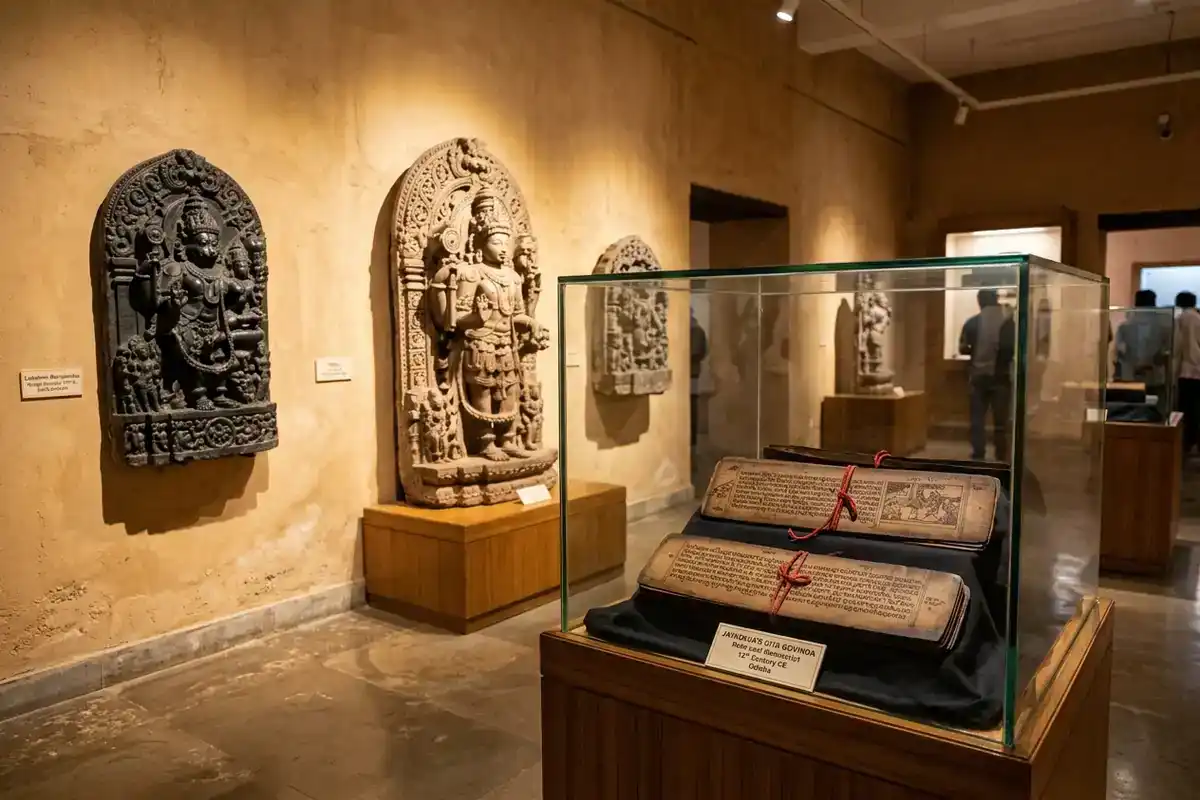
The museum also displays carved chlorite panels of Madhava, Surya, and decorative Nayikas gathered from dilapidated shrines nearby. Glass display cases hold ancient palm-leaf folios, miniature stone votive stupas, and commemorative inscriptions outlining the life history of Jayadeva.
Visitors can explore descriptive interpretive plaques detailing how Jayadeva’s verses spread across medieval India, from Nepal to southern temple towns. Museum attendants are available during working hours to provide educational context for touring school groups and cultural researchers.
Ancient Shrines and the Sacred Kadamba Vana
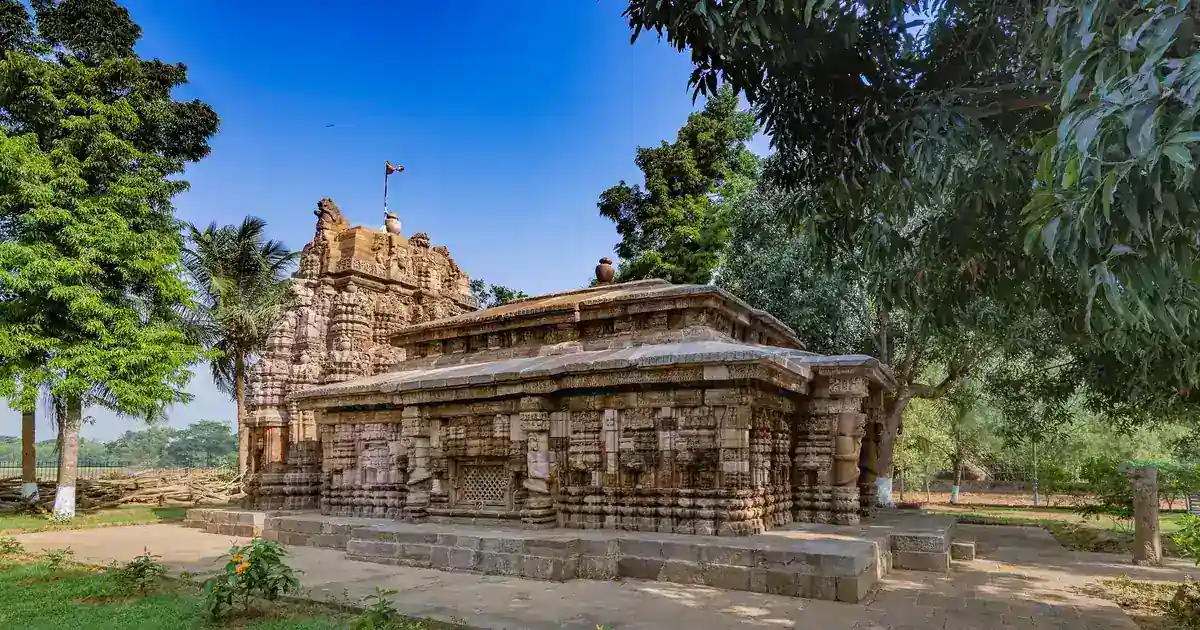
Adjoining the museum grounds stands the historic Ambika Temple and the Lakshmi-Nrusimha shrine. These compact stone structures retain early Kalingan architectural features, including carved doorframes, modest pyramidal roofs, and miniature chaitya arches.
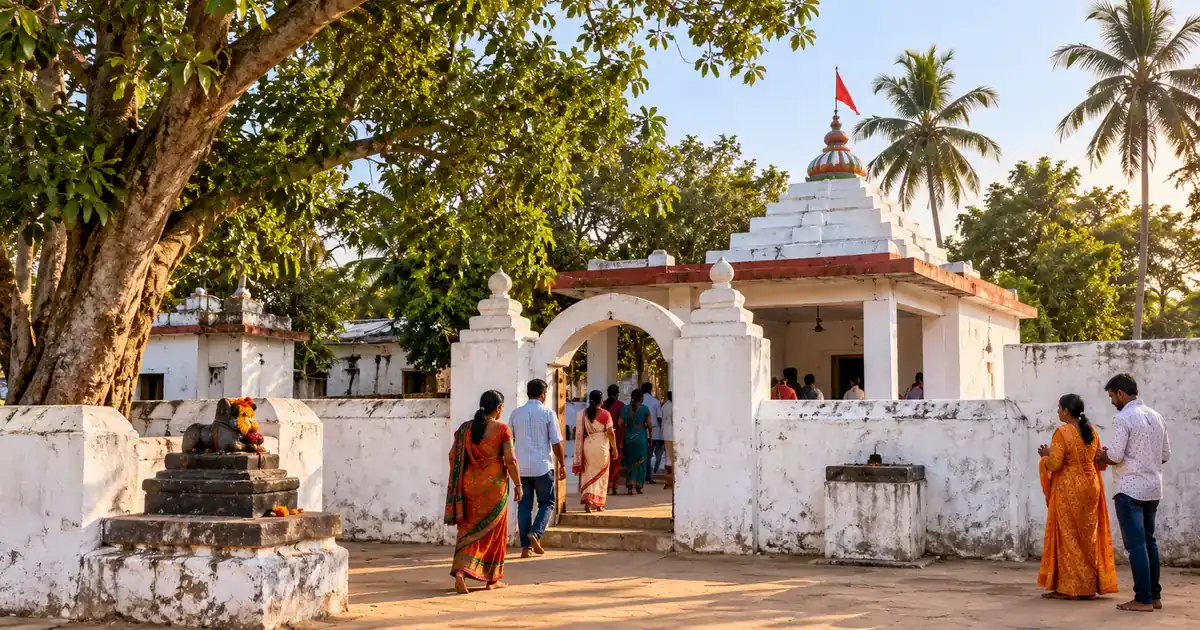
Local residents continue to conduct daily worship within these village temples, offering tulsi leaves and milk sweets. Devotees often pause before the stone images to offer quiet prayers, reflecting the long continuity of local spiritual devotion among famous temples in Odisha.
Surrounding the shrines is the lovingly maintained Kadamba Vana memorial garden. This botanical enclave is specifically planted with trees and flora mentioned throughout the verses of the Gita Govinda.
Stately kadamba trees, dark-barked tamala trees, fragrant bakula groves, and yellow champaka blossoms shade the paved brick footpaths. A central reflecting pool adorned with flowering pink lotuses provides a restful setting where travelers can read translations of Jayadeva’s verses in peaceful solitude.
Akshaya Tritiya: The Annual Jayadev Jayanti Festival
Kenduli comes to life every year during Akshaya Tritiya, falling on the third lunar day of the bright fortnight in the Odia month of Baisakh (April or May). This auspicious date commemorates the traditional birth anniversary of Mahakavi Jayadeva.
The state culture department and local youth committees organize a multi-day cultural festival attracting thousands of pilgrims, scholars, and art enthusiasts. Master artists of Odissi music and dance gather on an open-air amphitheater stage to perform expressional abhinaya based on Jayadeva’s Ashtapadis.
Poetry recitation contests, scholarly seminars on bhakti literature, and folk musical performances continue late into the night. Temporary handicraft stalls set up along village lanes present local applique work, palm-leaf etchings, and handloom cotton textiles.
Participating in the evening celebrations under the open sky provides a memorable connection to Odisha’s classical arts. Attending this festival gives travelers a profound appreciation for how twelfth-century verses remain enduring in everyday community life.
Timings, Entry Fees, and Visiting Logistics
Jayadev Pitha maintains open visitor hours throughout the year, welcoming daytime travelers, families, and educational groups.
| Facility | Days of Operation | Timings | Entry Fee |
|---|---|---|---|
| Memorial Grounds & Kadamba Vana | Open Daily | 6:00 AM to 7:30 PM | Free Entry |
| Jayadev Archaeological Museum | Tuesday to Sunday (Closed Mondays) | 10:00 AM to 5:00 PM | Free Entry |
| Ancient Village Shrines | Open Daily | 6:30 AM to 12:00 PM & 4:00 PM to 7:00 PM | Free Entry |
General access to the memorial complex, gardens, and shrines requires no admission ticket. Photography of outdoor gardens and temple exteriors is permitted for personal use, though flash photography inside the museum artifact gallery is restricted to preserve delicate surfaces.
Visitors typically spend between ninety minutes and two hours exploring the museum exhibits, walking through the gardens, and paying respects at the shrines. Wheelchair-accessible ramps connect the parking zone to the primary courtyard paths.
How to Reach Kenduli from Bhubaneswar
Kenduli is located approximately thirty kilometers southeast of central Bhubaneswar. The site enjoys smooth road connectivity via district routes and state highways passing through rural Khordha.
| Route Option | Distance | Approximate Driving Time | Recommended Transit Mode |
|---|---|---|---|
| Via Utkal University of Culture & Balipatna | 28 km | 45 to 55 minutes | Private Taxi or Two-Wheeler |
| Via Puri Bypass & Dhauli Road | 34 km | 55 to 65 minutes | Rental Car or Tour Bus |
| Via Cuttack & Phulnakhara | 42 km | 1 hour 15 minutes | Private Vehicle via NH-16 |
By Private Car or Taxi
Hiring a cab from Bhubaneswar remains the most convenient option for travelers. The scenic drive navigates past rural agricultural fields, crossing the Kuakhai and Kushabhadra rivers. You can easily combine the excursion with a visit to the historic Dhauli Shanti Stupa situated along the southern outskirts.
By Public Bus
Frequent state transport buses operate from Bhubaneswar’s Master Canteen bus stand to Balipatna and Nimapada. From Balipatna town square, auto-rickshaws cover the remaining five kilometers to Kenduli village within ten minutes.
By Rail and Air
Bhubaneswar Railway Station (30 km) and Biju Patnaik International Airport (32 km) serve as the closest entry points for interstate visitors. Pre-paid airport cabs offer direct round-trip day rentals to Kenduli. Check verified travel guidelines on the Odisha Tourism Portal before finalizing travel itineraries.
Nearby Heritage Destinations in the Prachi Valley
A visit to Jayadev Pitha provides an ideal launchpad for exploring the ancient Prachi River Valley heritage trail. The valley contains some of the oldest surviving medieval monuments in Odisha.
Madhava Temple at Niali
Located approximately fifteen kilometers east of Kenduli, the monumental Madhava Temple in Niali honors Lord Vishnu as Sobhaneswar and Madhava. The temple exhibits intricate thirteenth-century Ganga-era stone carvings and active Vaishnavite rituals.
Varahi Devi Temple at Chaurasi
Traveling southeast along the river route brings visitors to the ninth-century Varahi Devi Temple in the Prachi Valley. The shrine features a rare khakhara wagon-vaulted roof and an imposing chlorite deity of Matsya Varahi.
Old Town Heritage Circuit
Returning northwest toward the state capital allows travelers to tour the historic Lingaraj Temple and surrounding seventh to twelfth-century stone monuments. The route can also connect with the historic Cuttack district heritage circuit along the northern river banks.
Visitor Tips for a Meaningful Cultural Day Trip
- Morning Excursions: Plan your arrival at Kenduli around 9:30 AM to explore the Kadamba Vana in pleasant morning light before the museum opens at 10:00 AM.
- Seasonal Packing: Winter months between October and March offer mild, sunny weather. If traveling in summer, carry an umbrella, sun protection, and plenty of drinking water.
- Dining Options: Kenduli is a quiet rural hamlet with limited dining infrastructure. Small roadside tea stalls sell traditional Odia snacks like chenna poda and bara; major meals are best enjoyed at restaurants along the Puri highway or Bhubaneswar.
- Literary Reading: Reading an English or Odia translation of the Gita Govinda before your journey enriches your appreciation of the poet’s imagery and references.
- Respecting Local Custom: Dress modestly when visiting the active sanctums of Ambika Temple and Lakshmi-Nrusimha Temple, removing shoes at designated entrance thresholds.
Frequently Asked Questions
What is the historical importance of Jayadev Pitha?
Jayadev Pitha at Kenduli marks the confirmed birthplace of twelfth-century Sanskrit poet Jayadeva, who authored the foundational lyrical classic Gita Govinda, which revolutionized Vaishnava literature and Odissi classical dance.
Where is Jayadev Pitha located?
The memorial complex is located at Kenduli Sasan in the Balipatna block of Khordha district, approximately thirty kilometers southeast of Bhubaneswar along the Prachi River valley.
What are the museum timings at Jayadev Pitha?
The Jayadev Archaeological Museum operates from 10:00 AM to 5:00 PM, Tuesday through Sunday. It remains closed on Mondays and designated government holidays.
Is there an entry fee to visit Jayadev Pitha?
No, general entry to the memorial complex, the Kadamba Vana garden, and the archaeological museum is completely free for all visitors.
When is the Jayadev Jayanti festival celebrated?
Jayadev Jayanti is celebrated annually on Akshaya Tritiya, falling in April or May. The festival features live Odissi dance recitals, classical vocal music, and seminars by renowned scholars.
How do I travel from Bhubaneswar to Kenduli?
Travelers can hire a private taxi or drive via the Balipatna Road, covering thirty kilometers in approximately fifty minutes. Regular buses to Balipatna connect with local auto-rickshaws for the final leg.