BSKY Odisha 2026: Eligibility, Hospital List and Benefits
Discover BSKY Odisha eligibility criteria, Smart Health Card benefits, empanelled hospital lists, and cashless healthcare coverage limits for 2026.
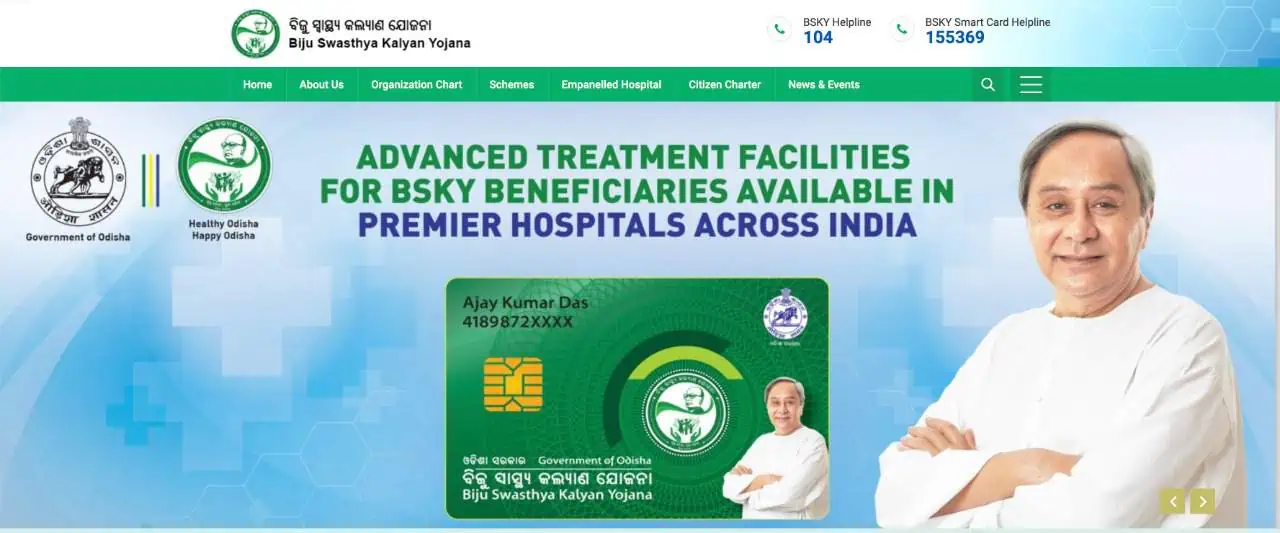
The Biju Swasthya Kalyan Yojana (BSKY) is a flagship universal health coverage scheme launched by the Government of Odisha. It ensures that no citizen is deprived of quality medical care due to financial constraints.
In 2026, BSKY stands as one of the most comprehensive health security frameworks in India, providing cashless treatment to over 96 lakh families. Parallel initiatives like the PM Surya Ghar scheme demonstrate the state’s broader push toward household social protection.
Key Takeaways
- Universal Public Care: All Odisha citizens receive 100% free treatment, diagnostics, and essential medications across public healthcare institutions.
- Cashless Private Limits: Eligible ration cardholders receive annual cashless coverage of ₹5 lakh per family, extended to ₹10 lakh for female members.
- Empanelled Network: Covers over 800 accredited private hospitals within Odisha and specialized partner hospitals across neighboring states.
- Smart Health Card Access: Cardholders authenticate via biometric or OTP systems with zero out-of-pocket paperwork at point of treatment.
- Emergency Support: Dedicated 24/7 helpline at 104 and 155369 assists with hospital admissions, grievances, and patient navigation.
The primary objective of BSKY is universal health coverage with dedicated protection for vulnerable groups. Unlike private insurance, the state government directly reimburses public and empanelled private hospitals for every approved clinical service.
The Evolution of BSKY: From Coverage to Assurance
Initially launched as a health insurance supplement, BSKY evolved into a dedicated Smart Health Card assurance scheme. In 2026, the framework has been integrated with digital health databases to streamline admissions statewide.
Key pillars of the BSKY framework include:
- Free Services in Public Facilities: All citizens of Odisha receive free healthcare services across all government facilities, from Sub-Centres to Medical Colleges.
- Cashless Private Care: Eligible families use a Smart Health Card for cashless treatment at empanelled private hospitals.
- Gender-Specific Coverage: The scheme provides an enhanced coverage limit specifically for female family members.
- Zero Paperwork: Biometric authentication and digital claims eliminate manual reimbursement delays.
For citizens tracking other state administrative and transport services, our guides cover Bhulekh Odisha Land Records for land governance, as well as mandatory HSRP number plate registration in Odisha for vehicle owners.
Eligibility Framework for BSKY 2026
The eligibility for BSKY is tiered based on the type of facility and the economic status of the family.
Tier 1: Universal Coverage in Public Facilities
All 4.5 crore citizens of Odisha are eligible for 100% free treatment at any Government Health Institution. This includes:
- Free consultations and major or minor surgeries.
- Free diagnostic tests including pathology, radiology, MRI, and CT scans.
- Free medicines and consumables under the Niramaya scheme.
- Free dialysis and specialized cancer care services.
Tier 2: Specialized Coverage in Empanelled Private Hospitals
Cashless treatment at private hospitals is reserved for families categorized under the following:
- NFSA and SFSS Beneficiaries: All families holding a valid Ration Card under the National Food Security Act or State Food Security Scheme.
- Low Income Families: Families with an annual income below ₹2 lakh in rural areas and ₹2.5 lakh in urban areas, verified through certified income documentation.
- Antyodaya Anna Yojana Card Holders: Households recognized under the poorest welfare categories.
- Registered Labor Categories: Unorganized sector workers and laborers who receive registered construction worker benefits under designated state welfare boards.
The BSKY Smart Health Card: Technical Features
The introduction of the Smart Health Card transformed Odisha’s health administration. In 2026, the card features advanced technical specifications:
- Biometric Authentication: Linked to the Aadhaar database to prevent identity fraud and ensure benefits reach the correct beneficiary.
- Encrypted Microchip: Stores the family’s health assurance balance and basic clinical credentials.
- QR Code Integration: Enables hospital helpdesks to instantly verify card validity and family member status.
- Dual Language Interface: Information is printed in both Odia and English for statewide clarity.
Families who have not yet received their physical card can visit their nearest Mo Seba Kendra with their ration card to apply for an official duplicate.
Coverage Limits and Financial Benefits
In 2026, the financial limits of BSKY are structured to handle complex medical emergencies without creating financial strain for rural households.
| Beneficiary Category | Annual Cashless Coverage (General) | Enhanced Coverage for Women Members |
|---|---|---|
| Family Head or Male Members | ₹5,00,000 | Baseline family pool |
| Female Family Members | Reaches up to ₹10,00,000 | ₹10,00,000 dedicated ceiling |
The ₹10 lakh limit for women is unlocked once the initial ₹5 lakh family limit is exhausted. This structural guarantee ensures that the healthcare of female family members is prioritized and protected even after major family medical expenses. This provision makes BSKY a benchmark for gender-sensitive health policy across India.
Empanelled Hospital Network: Within and Outside Odisha
Odisha has established one of the most robust private hospital partnerships in the country. The network includes over 800 accredited private healthcare institutions.
Hospitals Within the State
Major healthcare hubs in Bhubaneswar, Cuttack, Berhampur, and Sambalpur are fully integrated. Facilities provide specialized tertiary care under the scheme. For those visiting the state capital for treatment, our Bhubaneswar Hospital List offers detailed contact information and facility profiles.
Hospitals Outside the State
BSKY recognizes that citizens may need specialized treatment available only in major metropolitan medical hubs. The scheme has empanelled partner hospitals across neighboring states:
- Visakhapatnam and Hyderabad: Serving residents of Southern Odisha districts including Rayagada and Koraput.
- Raipur: Supporting Western districts like Nuapada and Kalahandi.
- Kolkata and Chennai: Providing advanced cardiac, pediatric, and neurosurgical procedures.
Verified lists of participating healthcare centres are updated under the Department of Health & Family Welfare Schemes.
Referral Procedures: The Gateway to Private Care
To ensure optimal use of public resources and maintain clinical continuity, a structured referral system operates for planned private hospital admissions.
The patient first visits a government hospital such as a District Headquarter Hospital or Medical College. If the required procedure is unavailable or has extended waiting times, the specialist issues a digital referral certificate uploaded to the state health portal.
In life-threatening emergencies like acute trauma or heart attacks, patients are admitted directly to an empanelled private hospital. The hospital must obtain formal authorization from the district health assurance cell within 48 to 72 hours.
Services Included in BSKY Treatment Packages
The BSKY packages are all-inclusive, ensuring that the beneficiary does not pay out-of-pocket costs for covered medical episodes.
Covered elements include:
- Registration and Consultation: Pre-surgery and post-surgery doctor visits.
- Diagnostic Examinations: MRI, CT scans, ultrasound, and pathological tests.
- Surgical Suite Expenses: Surgeon fees, anesthesia, and operation theatre charges.
- Implants and Consumables: Coronary stents, pacemakers, and orthopedic implants covered under the government price schedule.
- Medications: All drugs administered during hospitalization and up to 15 days of post-discharge medications.
- Diet and Accommodation: Hospital-provided clinical meals and bed charges for general wards or intensive care units.
The Role of Swasthya Mitras: Patient Support System
To assist beneficiaries who may be unfamiliar with complex hospital admission procedures, the government has deployed dedicated Swasthya Mitras at every empanelled private hospital.
Key responsibilities of Swasthya Mitras include:
- Identity Verification: Assisting patients and their attendants with biometric authentication and card scanning.
- Information Desk Assistance: Explaining package entitlements and available clinical services.
- Grievance Handling: Intervening immediately if a private hospital demands unauthorized upfront payments.
- Discharge Assistance: Ensuring the patient receives the necessary post-hospitalization medicines and documentation.
Swasthya Mitras act as a compassionate human link between citizens and digital hospital systems, ensuring technology never becomes a barrier to urgent care.
Rectification and Update of Card Details
Accuracy of the BSKY Card is tied to verified data in the NFSA and SFSS state food security registries.
When correcting names or adding family members, the family head first updates records through the Food Supplies and Consumer Welfare Department portal. Once the ration card updates are finalized, the BSKY health database synchronizes the changes automatically. For urgent medical requirements, beneficiaries can visit a local Mo Seba Kendra to request expedited verification. Similarly, eligible women seeking direct financial empowerment can review Subhadra Yojana in Odisha to access linked food security benefits.
Specialized Medical Packages and Benchmarked Rates
The technical strength of BSKY lies in its standardized medical packages. To prevent arbitrary billing by private hospitals, the state government has established standardized price ceilings for over 4,000 clinical procedures.
High-end tertiary packages cover:
- Cardiology: Coronary angioplasty with quality-certified stents, bypass surgeries, and pacemaker implantations.
- Oncology: Systemic chemotherapy, radiation therapy, and complex tumor resection procedures.
- Nephrology: Regular hemodialysis services supported by dedicated counters to handle patient volume.
- Orthopedics: Total knee and hip replacement surgeries frequently utilized by senior citizens.
This financial framework protects state resources while shielding agricultural households from debt. Learn more about rural welfare mechanisms in our Odisha Krushak Portal guide.
The Niramaya Scheme and Mahaprayan Support
A vital component of Odisha’s healthcare framework is the Niramaya scheme, which guarantees the free distribution of essential medicines. While the Smart Health Card covers private hospital admissions, Niramaya ensures that outpatient visitors at government facilities do not face out-of-pocket costs for medication.
Operational highlights include:
- Essential Drug List: Over 600 essential formulations, including high-value antibiotics and chronic disease drugs, are dispensed at zero cost.
- Quality Assurance Testing: Medicines undergo batch testing at accredited laboratory facilities prior to regional warehouse distribution.
- Mahaprayan Dignity Transport: For patients who pass away at empanelled facilities, dedicated hearse vehicles provide free transport to their native village.
These integrated programs ensure comprehensive assistance across all stages of family medical care. State government employees managing personal healthcare claims and leave records can consult our HRMS Odisha payslip and service book guide.
Technological Architecture: The Digital Backbone of BSKY
The operational framework of BSKY relies on a secure digital architecture that processes high transaction volumes with zero downtime.
Key components of the system include:
- Transaction Management System: A real-time engine that settles accredited hospital claims within 7 days of verified discharge.
- Biometric Fail-Safe Options: In addition to Aadhaar fingerprint scans, facial recognition and Iris scanning assist elderly patients with worn fingerprints.
- Automated Claim Auditing: Algorithmic filters flag abnormal admission spikes or procedure mismatches for mandatory human clinical review.
- National Interoperability: Data frameworks align with public healthcare delivery systems across India to support evolving nationwide standards.
Official program directives and circulars are maintained through the Government of Odisha State Social Welfare Schemes.
Frequently Asked Questions About BSKY Odisha
Is BSKY different from the central Ayushman Bharat scheme?
Yes, BSKY is an Odisha state-funded universal health assurance scheme providing wider beneficiary coverage and an enhanced ₹10 lakh ceiling for women. Ayushman Bharat PM-JAY operates under central guidelines with a standard ₹5 lakh family limit.
Can cardholders use BSKY for OPD treatment in private hospitals?
No, cashless private hospital coverage under BSKY applies exclusively to inpatient admissions and daycare surgical procedures. Outpatient consultations, tests, and medicines are completely free across all public healthcare facilities.
What should a beneficiary do if their BSKY Smart Card is lost?
The beneficiary should visit the nearest Mo Seba Kendra with their valid Ration Card and Aadhaar card for biometric verification. The center operator will issue an official replacement card after completing electronic confirmation.
Are complex cardiac and cancer procedures covered under BSKY?
Yes, high-end tertiary treatments including open-heart surgery, angioplasty, chemotherapy, radiation therapy, and kidney dialysis are fully covered under predefined packages. These treatments include pre-hospitalization diagnostics and 15 days of post-discharge medicines.
What is the maximum annual coverage limit for women under BSKY?
Eligible female family members receive up to ₹10 lakh in annual cashless treatment at empanelled private hospitals. This extended limit activates automatically once the basic ₹5 lakh family package has been fully utilized.
Conclusion: Advancing Universal Health Security in Odisha
The Biju Swasthya Kalyan Yojana represents a transformative step in Odisha’s social protection landscape. By blending universal free healthcare at government centres with structured cashless private hospital assurance, the state has created a sustainable framework that safeguards families from catastrophic medical debt.
From exploring the coastal heritage of Puri to working in remote rural blocks, every eligible citizen can rely on dependable health coverage. Keeping family ration cards updated and knowing the nearest empanelled facilities ensures rapid, stress-free care during medical emergencies.