Subhadra Yojana Odisha: Online Apply, Status & List Guide
Complete guide to Subhadra Yojana Odisha. Check online application steps, beneficiary list tracking, eligibility rules, DBT bank status, and helpline info.
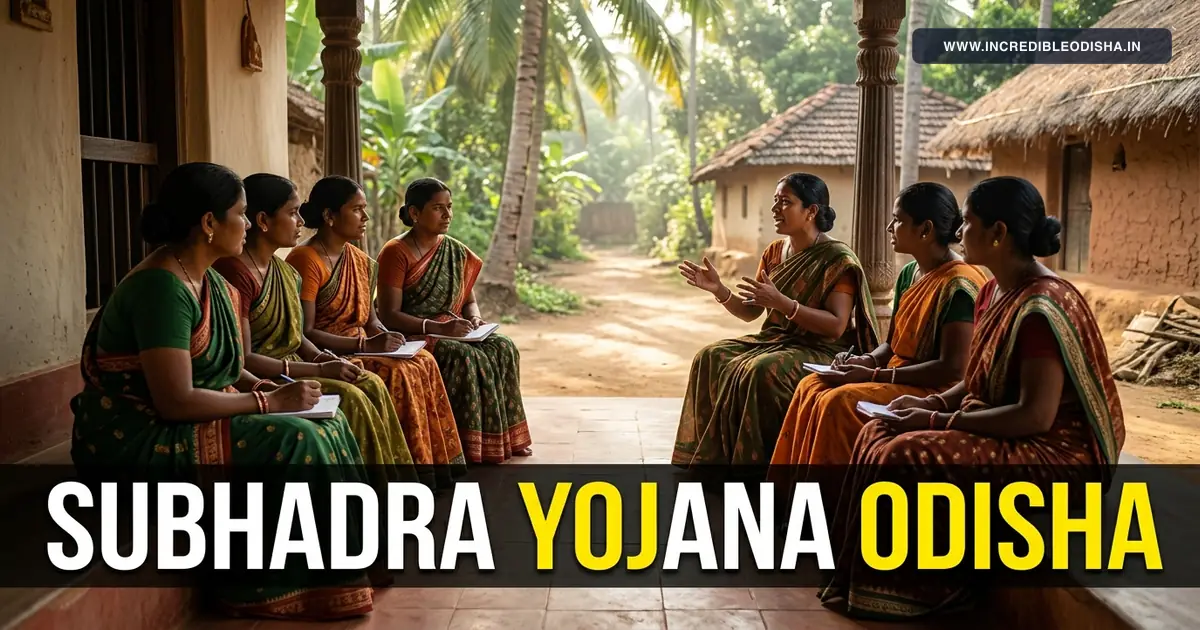
Subhadra Yojana stands as Odisha’s largest direct financial empowerment initiative designed to strengthen the economic security of women across the state. Launched by the Women and Child Development Department with an allocated budget of ₹55,825 crore, the program delivers direct income support to more than one crore eligible beneficiaries across all thirty districts.
Key Takeaways
- Subhadra Yojana provides ₹50,000 in direct financial assistance to eligible women in Odisha across five operational years since initiation through 2029.
- Beneficiaries receive ₹10,000 annually split into two equal ₹5,000 installments disbursed on Rakhi Purnima and International Women’s Day.
- Eligible women must be permanent residents of Odisha aged between 21 and 60 years belonging to NFSA or SFSS ration card households or earning under ₹2.50 lakh annually.
- All disbursements are credited via Direct Benefit Transfer into single-holder Aadhaar-seeded bank accounts mapped through the NPCI gateway.
- Citizens can resolve application queries or submit grievances by dialing the official toll-free helpline number 14678.
What Is Subhadra Yojana and How Does It Empower Women in Odisha?
Subhadra Yojana is a statewide cash transfer welfare initiative that provides ₹50,000 over five years to economically vulnerable women between 21 and 60 years of age. The program operates to enhance female household decision-making, expand livelihood investments, and promote digital payment adoption across rural and urban Odisha.
The scheme covers beneficiaries across all thirty districts, ensuring financial resources flow directly into personal savings accounts without administrative leakage. State administrators coordinate the distribution network through the Women and Child Development Department Welfare Schemes portal to guarantee end-to-end transparency.
By establishing direct banking integration for female heads of families, the program complements existing state social safety programs such as the Biju Swasthya Kalyan Yojana card healthcare system. Beneficiaries utilize these annual cash transfers to invest in micro-enterprises, fund family healthcare requirements, and support children’s higher education.
Financial Assistance Structure and Installment Disbursement Calendar
The total assistance package of ₹50,000 is distributed across five operational financial cycles since program inauguration through 2029. Each registered woman receives ₹10,000 per calendar year, divided into two predictable installments of ₹5,000 each.
The state government schedules these payouts on dates of cultural and social significance. The first installment of ₹5,000 is released during Rakhi Purnima, while the second installment of ₹5,000 is transferred on International Women’s Day on March 8.
| Disbursement Phase | Installment 1 (Rakhi Purnima) | Installment 2 (Women’s Day: March 8) | Annual Total Benefit |
|---|---|---|---|
| Phase 1 (Inaugural Cycle) | ₹5,000 | ₹5,000 | ₹10,000 |
| Phase 2 (Cycle Two) | ₹5,000 | ₹5,000 | ₹10,000 |
| Phase 3 (Cycle Three) | ₹5,000 | ₹5,000 | ₹10,000 |
| Phase 4 (Cycle Four) | ₹5,000 | ₹5,000 | ₹10,000 |
| Phase 5 (Cycle Five) | ₹5,000 | ₹5,000 | ₹10,000 |
| Total Assistance | ₹25,000 | ₹25,000 | ₹50,000 |
Beyond the core cash transfer, the state rewards cashless commerce through a targeted digital literacy incentive. In every Gram Panchayat and Urban Local Body, the top 100 women who record the highest volume of verified digital transactions receive an additional cash reward of ₹500 directly in their accounts. Beneficiaries also receive a dedicated Subhadra ATM card to facilitate fee-free cash withdrawals and secure point-of-sale merchant payments.
Comprehensive Eligibility Criteria, Age Limits, and Disqualification Rules
Applicants must be permanent residents of Odisha aged 21 years or older and under 60 years on the designated scheme qualifying date. Eligible applicants must come from families covered under the National Food Security Act or State Food Security Scheme, or demonstrate a total family income not exceeding ₹2.50 lakh.
Specific statutory exclusions apply to ensure benefits reach low-income families. Women holding permanent government positions, income tax assessees, and individuals already receiving ₹1,500 or more per month from other state or central pension programs are not qualified to apply.
Detailed qualification conditions are outlined in the official Odisha Social Welfare Administrative Guidelines document issued by the state secretariat. Families owning more than five acres of irrigated farmland or more than ten acres of non-irrigated farmland are excluded from enrolment.
| Eligibility Criterion | Mandatory Requirement | Disqualification Threshold |
|---|---|---|
| State Residency | Permanent resident of Odisha | Non-residents or migrant workers without Odisha domicile |
| Age Bracket | 21 to 60 years | Below 21 years or 60 years and above |
| Food Security / Income | NFSA / SFSS cardholder or family income under ₹2.50 lakh | Annual household income exceeding ₹2.50 lakh |
| Government Employment | Informal worker or private sector employee | Regular state, central, or public sector employees |
| Land Ownership | Marginal or small agricultural landholder | More than 5 acres irrigated or 10 acres non-irrigated land |
| Social Security Pensions | Below ₹1,500 monthly benefit | Receiving ₹1,500 or higher monthly pension support |
Agricultural families verifying their land holdings before applying can consult the official Bhulekh Odisha land records portal to confirm acreage classifications. Small and marginal farming households that qualify under agricultural thresholds remain fully eligible to enrol in the scheme.
Multiple Beneficiaries Per Household, ASHA Workers, and College Students
A frequent question among applicants is whether benefits are restricted to one female per household. The state government has explicitly clarified that there is no single-beneficiary cap per family. If a household has two or three women who meet the age threshold, each woman is entitled to receive the full ₹50,000 assistance in her personal bank account.
Community health workers and grassroots volunteers receive special operational protection. ASHA workers, Anganwadi workers, and helpers remain fully eligible because their earnings are classified as honorariums rather than formal civil service salaries. In addition, female college students aged 21 and above who receive state or central educational scholarships continue to qualify without penalty.
Step-by-Step Application Process: Online Portal and Offline Mo Seba Kendras
Applicants can complete Subhadra registration either in person through local government service counters or electronically through the official web application. Printed physical application forms are distributed free of cost at Anganwadi centres, block development offices, and Mo Seba Kendras across the state.
When applying in person, the applicant fills in personal details and attaches a photocopy of their Aadhaar card and single-holder bank passbook. The completed form is handed over to the local Anganwadi worker or Mo Seba Kendra operator, who scans the documents and generates a stamped physical acknowledgement receipt.
Online registration takes place directly on the state portal at subhadra.odisha.gov.in, where applicants enter their twelve-digit Aadhaar number and complete biometric e-KYC. The online portal offers face-authentication technology via mobile cameras, allowing applicants to verify their identity without visiting physical biometric kiosks.
[!TIP] Never pay private agents for application forms or queue tokens. Printed Subhadra Yojana application forms are strictly free of cost across all government offices, Mo Seba Kendras, and Anganwadi centres.
Citizens seeking wider employment and welfare security cards can also explore our detailed guide to the Odisha Nirman Shramik Card registration to access supplementary building worker support. Combining state welfare cards guarantees full coverage across healthcare, income, and insurance programs.
How to Check Subhadra Yojana Application Status and Beneficiary Lists
Registered citizens can monitor their application progress in real time through the state portal using their registered mobile number or unique application reference number. The system displays exact administrative milestones, from initial data entry to bank account validation and final approval.
Applicants access the tracking interface on the Government of Odisha Citizen Services Portal directory and select the Subhadra verification module. After entering their credentials and completing one-time password verification, the screen presents the application review status and any required rectification steps.
[!NOTE] Application Review Workflow
- Initial Submission & Acknowledgement Generated
- Document & Identification Matching
- Field Verification & Panchayat Invalidation Check
- Bank Account NPCI Mapper Validation
- Final Approval & DBT Disbursement Clearance
Gram Panchayat and Urban Local Body offices publish verified beneficiary lists on village notice boards ahead of every disbursement cycle. Citizens can download block-wise and ward-wise PDF registers from the portal to verify their names, application numbers, and linked bank account codes.
If an application is flagged with a provisional rejection status, the portal provides a specific cause code explaining the issue. Most provisional rejections involve name spelling differences between identification cards and bank records or missing mobile linkages on Aadhaar cards.
Resolving Common Rejections: NPCI Aadhaar Seeding and Bank Account Setup
Direct Benefit Transfer rejections happen most frequently when a beneficiary’s bank account lacks an active link to the National Payments Corporation of India gateway. A standard bank account linked to an Aadhaar card for identification purposes is not automatically enabled to receive direct welfare subsidies.
The central disbursement system operates through the National Payments Corporation of India Direct Benefit Transfer Framework, which requires an explicit Aadhaar Payment Bridge mandate. Applicants must visit their bank branch in person and submit a written mandate to link their specific savings account for government DBT credits.
Beneficiaries can verify their current Aadhaar seeding status before visiting a physical bank counter. Dialing the national banking code *99*99*1# from an Aadhaar-linked mobile number displays the primary seeded bank institution. Alternatively, users can check active seeding through their mobile banking application or the official UIDAI resident portal.
Joint bank accounts are disqualified under program guidelines because system logic requires individual female identification for every payment. Beneficiaries must maintain an independent, single-holder savings account opened at a commercial bank, regional rural bank, or India Post Payments Bank.
[!IMPORTANT] Confirm with your bank manager that your account is seeded under the NPCI Aadhaar mapper. Request a written DBT confirmation slip to verify that your account is ready to receive government cash transfers.
Farmers who receive agrarian support through the Odisha Krushak Portal and KALIA scheme follow an identical DBT mapping framework. Once the bank branch updates the NPCI mapper, the Subhadra system automatically routes upcoming payments to the updated account.
Citizen Grievance Redressal and Official Toll-Free Helpline Support
Beneficiaries experiencing payment delays, biometric verification failures, or unofficial fee demands can register formal complaints through the state grievance redressal system. The Women and Child Development Department operates a centralized toll-free helpline at 14678 to assist citizens statewide.
Telephone lines operate daily with multilingual operators who log complaints and issue trackable ticket numbers directly to callers. Citizens can also consult official contact points published on the Women and Child Development Department Contact Directory to reach district welfare officers.
For unresolved localized disputes, applicants can file a written grievance with the child development project officer or block development officer. Field inspection teams investigate disputed land holdings or ration card omissions, updating the state database to restore qualifying families.
Households planning long-term energy savings alongside state welfare benefits can also review our walkthrough on PM Surya Ghar Muft Bijli Yojana to reduce domestic utility expenses. Integrated state and central initiatives help low-income households achieve lasting economic stability.
Frequently Asked Questions About Subhadra Yojana Odisha
Who is eligible to apply for Subhadra Yojana in Odisha?
Women between 21 and 60 years of age who are permanent residents of Odisha qualify if their household holds an NFSA or SFSS ration card or earns under ₹2.50 lakh annually. Regular government employees, income-tax payees, and recipients of pensions over ₹1,500 monthly are excluded from the scheme.
How is the ₹50,000 financial assistance disbursed to beneficiaries?
The total amount is paid over five financial years as ₹10,000 annually, divided into two equal ₹5,000 installments. These disbursements are transferred directly into verified Aadhaar-enabled bank accounts on Rakhi Purnima and International Women’s Day.
Can more than one woman from the same household receive Subhadra Yojana benefits?
Yes, every eligible woman in a family between 21 and 60 years of age can apply and receive benefits independently. The scheme does not impose a single-beneficiary limit per household, provided all applicants meet the core eligibility rules.
Are ASHA workers, Anganwadi workers, and college students eligible for the scheme?
Yes, ASHA workers, Anganwadi helpers, and community resource persons qualify because their honorariums are not classified as government salaries. Female college students aged 21 and older who receive merit or post-matric scholarships are also fully eligible to apply.
Can I receive Subhadra Yojana payments in a joint bank account?
Payments cannot be processed into joint bank accounts because the direct benefit transfer protocol requires individual beneficiary identification. Applicants must open or provide an active single-holder savings account that is properly seeded with Aadhaar on the NPCI gateway.
What should I do if my Subhadra Yojana application is rejected due to e-KYC issues?
Applicants should visit their local Mo Seba Kendra or bank branch to update their biometric details and verify active mobile linking on their Aadhaar card. Once the bank completes NPCI mapper seeding, the state verification system automatically re-evaluates the application for the next payment cycle.
What is the official toll-free helpline number for Subhadra Yojana assistance?
Citizens can dial the dedicated state toll-free helpline number 14678 for real-time guidance on application forms, payment status, and grievance redressal. Support is available across all thirty districts without any service charges.