Panchalingeswar Temple Nilagiri Balasore: Timings & Guide
Plan your visit to Panchalingeswar Temple in Nilagiri, Balasore. Discover submerged Shiva lingas, 260 steps climb, timings, history, and nature camps.
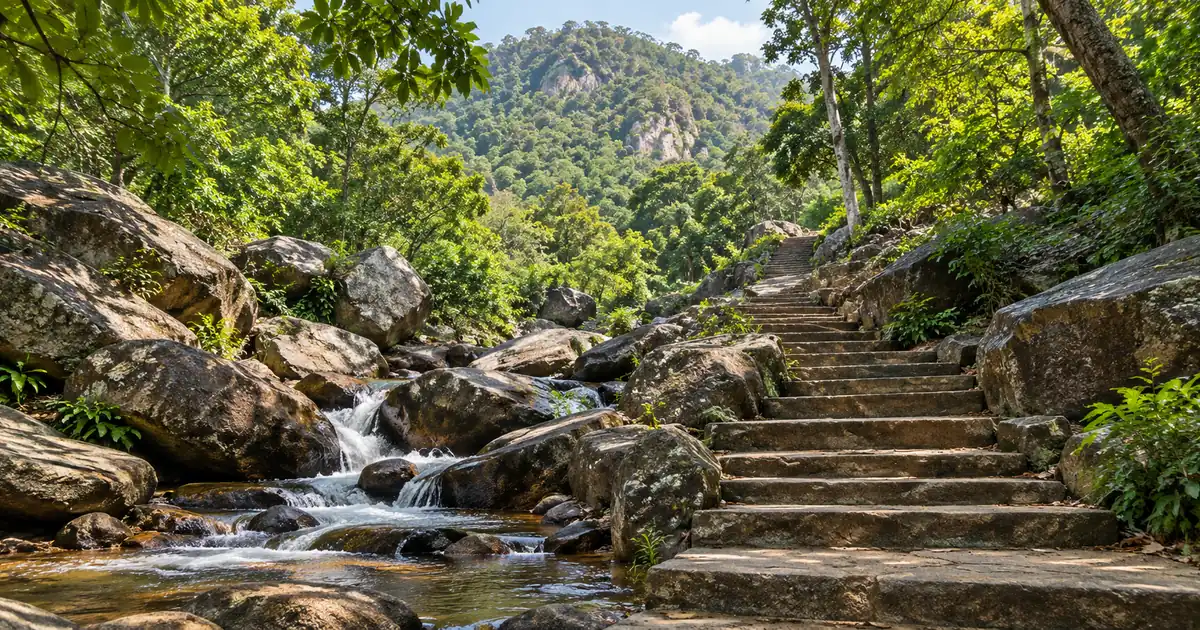
Panchalingeswar Temple is a historic hill shrine located on the lush slopes of the Nilagiri ranges in Baleswar district. The temple draws pilgrims and nature lovers from across eastern India to witness five naturally formed Shiva lingas. These sacred emblems lie submerged beneath a sparkling perennial mountain spring flowing over polished granite rocks.
Unlike traditional shrines with towering stone sanctums, the sanctum at Panchalingeswar invites devotees to bend down directly into cool spring water. Visitors must ascend roughly 263 stone steps cut through a thick canopy of sal, teak, and wild bamboo trees. This forest landscape connects directly with the neighboring Kuldiha wildlife corridor, offering travelers a rewarding mix of heritage and ecotourism.
When exploring the best places to visit in Balasore Odisha, this hillside destination stands out for its cool mountain microclimate and tranquil forest walks. Travelers regularly pair their morning temple climb with visits to Chandipur sea beach Balasore or riverside retreats like Balramgadi beach Chandipur Balasore. This verified guide provides practical logistical details, ritual procedures, nature camp bookings, and travel advice for an easy trip.
Key Takeaways
- Sacred Submerged Lingas: Five naturally carved Swayambhu Shiva lingas lie immersed under a continuous freshwater hill spring. Devotees touch and worship them underwater.
- Ascent Requirements: Accessing the rock cavern requires climbing approximately 263 broad stone stairs shaded by dense sal forests. The climb takes 15 to 25 minutes at a steady pace.
- Verified Timings and Entry: Temple gates open daily from 6:00 AM to 6:00 PM without any admission ticket fee.
- Transit Distances: Situated 30 kilometers southwest of Balasore railway station and 10 kilometers west of Nilagiri town along smooth state highways.
- Nature Camp Stay: Eco Tour Odisha operates well-appointed forest cottages at the hill base with full meal packages and online booking facilities.
At-a-Glance: Temple Timings, Location & Visitor Summary
Planning a journey to Panchalingeswar requires understanding hill road logistics and temple opening routines. The temple operates every day from dawn to dusk, allowing visitors ample daylight to complete the stone staircase climb and return safely to the base.
| Parameter | Verified Detail | Practical Travel Notes |
|---|---|---|
| Presiding Deity | Five Swayambhu Shiva Lingas | Immersed in a running natural hill brook |
| Geographic Location | Nilagiri Block, Balasore District | 30 km southwest of Balasore railway hub |
| Temple Timings | 6:00 AM to 6:00 PM daily | Morning darshan between 7:00 AM and 10:30 AM is ideal |
| Entry Fee | Free public entry | Special puja offerings range from ₹50 to ₹201 |
| Staircase Count | Approximately 263 stone steps | Shaded pathway with stone railing and resting landings |
| Climb Duration | 15 to 25 minutes | Elderly travelers can use handrails and resting benches |
| Eco Accommodation | Panchalingeswar Nature Camp | Managed cottages booked through Eco Tour Odisha |
| Ideal Visiting Window | October to March | Cool winter breezes and pleasant trekking weather |
| Nearest Railhead | Balasore Railway Station (BLS) | Major stop on Howrah to Chennai main trunk line |
| Official Tourism Board | Odisha Tourism | State administrative oversight and local tourist facilitation |
Temple Schedule & Daily Darshan Slots
The temple gates open promptly at 6:00 AM each morning as the resident pujaris carry out the morning ablutions and floral decorations. Devotees seeking verified panchalingeswar temple darshan timings and entry fee information will find that gates remain open continuously until sunset. Visiting between 6:30 AM and 8:30 AM offers quiet surroundings, cool forest air, and very short queues along the rock face.
Afternoon rituals take place around midday, though public access to the cavern stream remains open throughout the afternoon. Darshan lines close by 6:00 PM as darkness descends across the Nilagiri forest. Walking the mountain stairs after sunset is strictly discouraged due to reduced visibility and local wildlife movements from adjoining jungle tracks.
Key Facts & Natural Setting
Panchalingeswar sits at an elevation of roughly 150 meters above sea level within the Nilagiri hill range. The hill forms an important green watershed, channeling rainwater into natural underground aquifers that feed the temple spring continuously even during dry summer months.
The surrounding forest reserve merges smoothly with the Kuldiha Wildlife Sanctuary. Giant Indian squirrels, langurs, spotted deer, and numerous species of woodland birds inhabit the surrounding forest canopy. This unique union of mountain topography, living hydrology, and deep spiritual heritage makes Panchalingeswar one of the most distinctive famous temples in Odisha.
Sacred Origins: Banasura Legend & Ramayana Folklore on Nilagiri Hills
The sacred roots of Panchalingeswar blend classical Puranic traditions with local tribal folklore preserved by the communities of the Nilagiri foothills. The presence of five natural rock emblems bathed by mountain water has inspired devotion for centuries.
The Thousand-Armed Banasura and Lord Shiva’s Boon
According to regional Puranic legends, King Banasura, the mythical demon ruler endowed with a thousand arms, was an ardent devotee of Lord Shiva. Banasura sought a solitary, undisturbed forest retreat in the mountains to perform intense penance and please Mahadeva.
Guided by divine visions, Banasura traveled to the forested slopes of the Nilagiri hills. There he discovered five naturally formed lingas emerging from the bedrock beneath a mountain stream. Overjoyed by this sacred sight, he consecrated the site and worshipped the lingas daily with spring water and wild forest flowers.
Pleased by his unyielding devotion, Lord Shiva granted Banasura protection and blessed the site, declaring that the sacred stream would bathe the five lingas for eternity. Even today, local priests recite verses honoring Banasura during special worship ceremonies.
Goddess Sita and the Exile Traditions of Nilagiri
Another ancient tradition links Panchalingeswar to the epic Ramayana during the period of Lord Rama’s forest exile. Local lore recounts that Lord Rama, Goddess Sita, and Lakshmana traversed through these ancient forests during their wanderings across eastern India.
Fascinated by the peaceful ambiance of the hill stream, Goddess Sita expressed a desire to offer worship to Lord Shiva. Lord Rama is said to have revealed the five submerged lingas to her, allowing her to offer prayers using the sacred mountain waters.
Centuries later, the royal house of Nilagiri adopted Panchalingeswar as a prime family deity, providing endowments for stone steps, masonry shelters, and temple maintenance. This long royal patronage transformed a secluded tribal forest shrine into a prominent regional pilgrimage hub.
The Perennial Mountain Stream & Unique Submerged Darshan Ritual
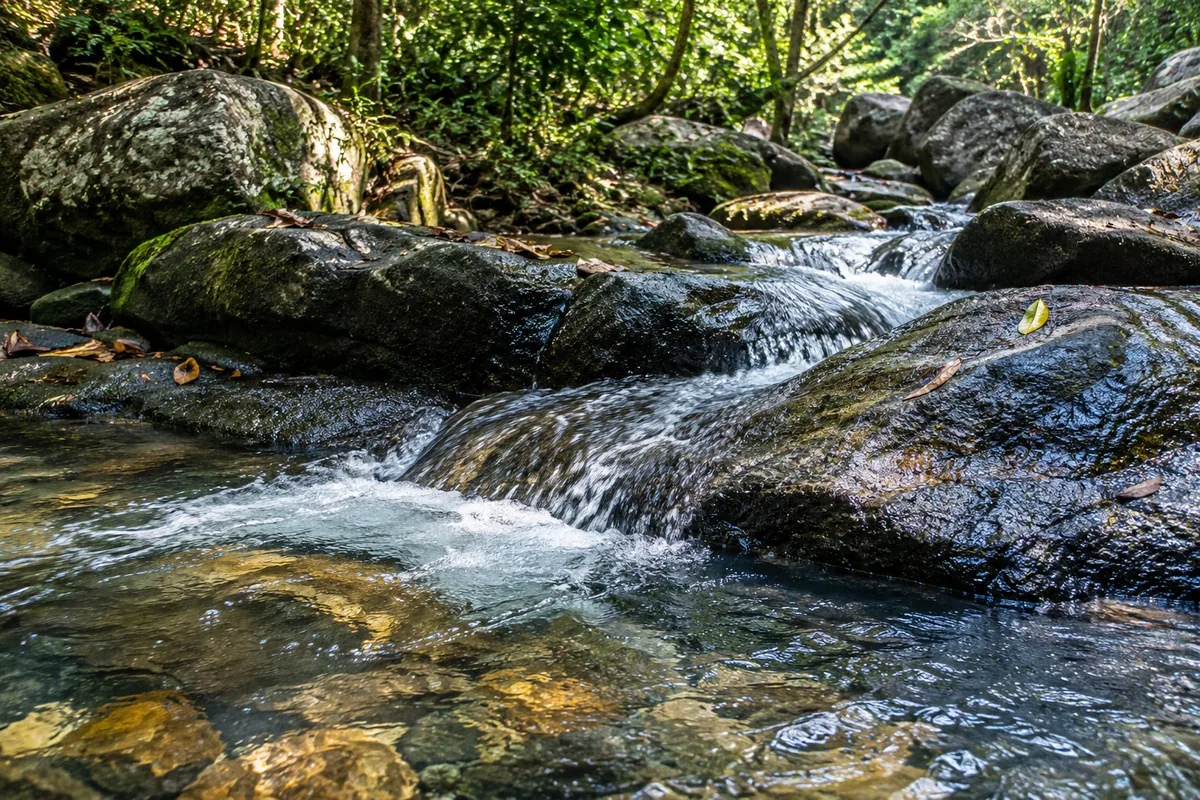
The most remarkable feature of Panchalingeswar Temple is its open-air sanctum where nature and faith meet. Unlike conventional temples where deities rest inside walled chambers behind decorated metal grilles, Panchalingeswar preserves a direct, intimate encounter with nature.
| Hydrological Stage | Physical Feature | Pilgrim Experience |
|---|---|---|
| Upper Ridge Aquifer | Dense sal forest canopy collecting seasonal rainwater | Absorbs precipitation and feeds deep underground granite fissures |
| Hillside Spring | Natural rock fracture emitting pure filtered water | Clear mountain water cascades perennially across open bedrock |
| Sacred Sanctum | Submerged shiva lingas in natural stream | Pilgrims reach underwater to touch the five carved stone emblems |
| Valley Runoff | Downstream brook cascading into Nilagiri pools | Creates a cooling microclimate along the lower hillside trail |
Touching the Five Submerged Shiva Lingas
To offer worship at the sanctum, devotees must stand on flat granite stones directly beside the flowing mountain stream. The crystal-clear water cascades continuously over the dark rock face at a depth of a few inches.
Priests guide each visitor to lean forward or crouch low over the smooth bedrock, extending their right hand into the cool rushing water. Devotees slide their fingers beneath the stream flow to physically feel the submerged shiva lingas in natural stream rock beds.
Touching the underwater emblems while listening to the rushing sound of forest water creates a deeply memorable spiritual sensation. Pilgrims offer bel leaves, marigold flowers, raw milk, and sacred water directly into the current, watching their offerings float downstream across the stone bed.
Geological Hydraulics of the Perennial Spring
Geologists identify the Nilagiri hills as part of the ancient Eastern Ghats belt, composed primarily of fractured charnockite and khondalite rock formations. Dense sal and mixed deciduous forest cover across the upper ridges acts as a massive natural sponge.
During the monsoon months, rainwater saturates the mountain soil and collects in deep subterranean fissures. The water gradually filters through underground mineral layers and emerges at a natural fracture point directly above the temple sanctum.
Because this underground reservoir is substantial and sheltered from direct sunlight, the spring flows uninterrupted across all twelve months of the year. The water remains crisp, clear, and cool even in the heat of May, ensuring an unbroken ritual bath for the sacred stones.
The 263 Stone Steps Trek, Sal Forests & Physical Accessibility
Reaching the sacred rock cavern of Panchalingeswar requires an invigorating walk through green hillside forest. The pathway has been developed into an organized stone staircase designed to handle pilgrim traffic safely.
Ascending the Hillside Stone Stairway
The climb begins from the parking square and vendor market at the foot of the hill. A paved entrance gateway leads directly to the staircase, which consists of roughly 263 broad stone and concrete steps.
The steps are relatively wide with moderate rise heights, making the ascent comfortable for individuals with average physical fitness. Sturdy iron railings border the staircase on both sides, providing dependable handholds along steeper sections.
Multiple covered masonry platforms appear at regular intervals along the pathway. These resting shelters feature concrete benches where families with young children or senior citizens can pause, sip drinking water, catch their breath, and enjoy views of the Nilagiri valley below.
Flora, Fauna, and Forest Canopy of Nilagiri
The stone stairway winds through a mature forest canopy dominated by majestic sal (Shorea robusta), along with mahua, kendu, karanja, and wild bamboo clumps. The dense tree leaves filter out direct sunlight, keeping the stair path pleasantly shaded during early morning hours.
As you ascend, the forest echoes with the songs of jungle babblers, Asian koels, black drongos, and paradise flycatchers. Troops of bonnet macaques and grey langurs frequently sit along the stone railings and tree branches.
Visitors must carry food items and puja offerings inside closed backpacks or sturdy cloth bags. Holding open polythene bags or loose fruit invites curious monkeys to snatch items from your hands. Keeping your hands free and walking quietly ensures an enjoyable walk through the forest.
Panchalingeswar Nature Camp & Kuldiha Eco-Tourism Gateway
For travelers seeking overnight accommodations, the base of Panchalingeswar hill hosts one of northern Odisha’s leading eco-hospitality properties. It serves as an ideal basecamp for touring regional forests and heritage monuments.
Eco-Cottages and Nature Camp Booking
Panchalingeswar Nature Camp is managed under the community ecotourism model of the Odisha Forest Department through the official Eco Tour Odisha portal. Travelers organizing their panchalingeswar eco retreat booking balasore itinerary can choose between well-appointed air-conditioned and non-air-conditioned units.
The property sits within walking distance of the temple entrance stairway amidst quiet groves of native trees. When evaluating panchalingeswar nature camp vs kuldiha ecotour stays, Panchalingeswar offers immediate walking access to the temple steps, whereas Kuldiha camp places visitors deeper into the core elephant forest.
| Cottage Category | Approximate Nightly Tariff | Inclusions | Booking Mode |
|---|---|---|---|
| AC Deluxe Cottage | ₹4,000 to ₹5,500 for 2 guests | Breakfast, lunch, dinner, forest guide | Eco Tour Odisha online |
| Non-AC Forest Cottage | ₹3,000 to ₹3,800 for 2 guests | Breakfast, lunch, dinner, forest guide | Eco Tour Odisha online |
| OTDC Panthanivas | ₹1,500 to ₹2,800 per room | Room-only or breakfast package | OTDC booking portal / offline |
Booking cottages three to six weeks in advance is essential during peak winter weekends between November and February. The crisp evening air, stargazing conditions, and forest hospitality make an overnight stay truly restorative.
Exploring Kuldiha Wildlife Sanctuary & Rissia Dam
Panchalingeswar is the primary entry point for visiting the Kuldiha Wildlife Sanctuary, a sprawling 272-square-kilometer tropical forest reserve. The sanctuary is renowned for its sizable population of Asian elephants, leopards, gaur (Indian bison), sambar, and giant squirrels.
Day visitors can arrange forest safari permits and registered safari vehicles through the local forest beat office. The sanctuary roads lead deep into ancient deciduous woodlands, terminating at the scenic Rissia Dam reservoir.
A watchtower overlooking the Rissia water body offers wonderful chances to observe wild elephant herds bathing and drinking during late afternoon hours. Pairing the spiritual darshan of Panchalingeswar in the morning with an afternoon forest safari in Kuldiha provides a well-rounded holiday.
Visitor Guidelines: Safety on Wet Rocks, Dress Code & Rules
A trip to a mountain hill shrine requires preparation and attention to ground conditions. Observing local customs and safety measures guarantees a smooth visit for everyone in your group.
[!NOTE] Visitor Preparation and Site Protocols
- Panchalingeswar temple dress code: Modest attire is required; traditional Indian clothing like dhotis, kurtas, or salwar suits is recommended.
- Footwear management: Deposit shoes at the base counter stalls before starting the upper climb.
- Wet rock precautions: Avoid standing on mossy boulders; hold metal handrails firmly when leaning over running water.
- Parking at Panchalingeswar temple: Secure paid parking lots operate at the base for bikes (₹20) and four-wheelers (₹50).
- Is camera allowed in Panchalingeswar temple: Photography of the general forest steps is allowed, but filming directly above the submerged sanctum requires priest permission.
Footwear, Dress Code and Slippery Rock Precautions
Footwear must be deposited at designated stalls located near the base of the staircase before beginning the final climb. Some visitors prefer walking in socks or bare feet across the stone steps.
The rock surfaces surrounding the submerged lingas are constantly wet from flowing spring water. Algae growth can make certain granite boulders slick. Devotees should step deliberately on textured rocks and maintain a firm grip on fixed metal handrails when leaning over to touch the lingas.
Modest attire is expected at the shrine. Traditional Indian clothing such as kurtas, dhotis, sarees, or salwar suits is ideal. Avoid loose, flowing garments that can drag through running water or trip you along the stairs.
Maha Shivratri Celebrations and Festive Congestion
The annual maha shivratri festival at panchalingeswar is celebrated with immense fervor in February or March. Tens of thousands of devotees from Balasore, Mayurbhanj, Bhadrak, and West Bengal assemble along the hillside for overnight vigils.
The entire staircase and temple compound are decorated with oil lamps, bright marigold garlands, and temporary lights. Priests perform round-the-clock Rudrabhishek rituals over the submerged lingas.
If visiting during Shivratri, expect significant queues, tightly managed crowd barricades, and delays along the Nilagiri approach road. For a relaxed, quiet experience, plan your trip on regular weekdays during the winter season.
How to Reach Panchalingeswar Temple from Balasore, Kolkata & Bhubaneswar
Panchalingeswar Temple enjoys convenient highway and rail connectivity, making it an accessible destination for weekend excursions from eastern metropolitan centers.
Train Connections via Balasore Junction
Understanding how to reach panchalingeswar temple from balasore station is straightforward for first-time visitors. The exact balasore railway station to panchalingeswar distance is 30 kilometers via Sergarh and Nilagiri. Balasore is a major A-category junction on the Howrah to Chennai main trunk route, served by dozens of express and high-speed trains daily.
Superfast trains like the Howrah to Puri Vande Bharat Express, Dhauli Express, and Coromandel Express connect Balasore to Kolkata in approximately 3 to 3.5 hours. From Bhubaneswar and Cuttack, regular trains reach Balasore in 2.5 to 3 hours.
Auto-rickshaws, app cabs, and private taxis wait directly outside Balasore railway station. A dedicated round-trip taxi to Panchalingeswar typically costs between ₹1,200 and ₹1,600, including waiting time at the hill base.
Driving Routes via NH-16 and Nilagiri Road
Motorists traveling by car or motorcycle enjoy good road surfaces throughout the journey. It is one of the most favored weekend getaway from kolkata and bhubaneswar routes in northern Odisha. The standard route from Balasore town follows the State Highway toward Nilagiri for 20 kilometers before turning southwest along the forested approach road to Panchalingeswar for another 10 kilometers.
| Origin City | Total Distance | Standard Driving Route | Approximate Travel Time |
|---|---|---|---|
| Balasore Town | 30 km | Balasore – Sergarh – Nilagiri – Panchalingeswar | 45 minutes |
| Baripada (Mayurbhanj) | 65 km | Baripada – Udala – Kaptipada – Nilagiri | 1 hour 45 minutes |
| Bhubaneswar | 225 km | NH-16 via Cuttack, Bhadrak, Soro, and Nilagiri | 4.5 to 5 hours |
| Kolkata (Howrah) | 240 km | NH-16 via Kharagpur, Jaleswar, and Balasore | 4.5 to 5 hours |
Outside the parking area, numerous pure vegetarian odia food stalls nilagiri cater to travelers with hot dalma, rice, puri sabzi, and fresh chhena sweets. The surrounding foothills also serve as popular picnic spots near balasore nilagiri during winter months.
Panchalingeswar vs Chandaneswar Temple & Circuit Pairings
Travelers comparing panchalingeswar vs chandaneswar temple will find two distinct spiritual atmospheres. Panchalingeswar offers a tranquil hillside nature pilgrimage amidst forest springs and wildlife, whereas Chandaneswar Temple near Jaleswar is an active coastal plain shrine famous for its massive Uda Parba festival gatherings.
After completing morning prayers at Panchalingeswar, visitors can tour the historic Nilagiri Palace situated in Nilagiri town. The route can then continue toward the Mayurbhanj forest foothills to visit Devkund waterfall Mayurbhanj or the heritage rooms of Belgadia Palace Baripada Mayurbhanj.
For coastal wildlife enthusiasts, pairing Panchalingeswar with Chandipur nature camp Balasore allows guests to explore both the hills and the vanishing sea beach over a three-day weekend.
Frequently Asked Questions (FAQs)
What are the daily darshan timings of Panchalingeswar Temple?
Panchalingeswar Temple opens every day from 6:00 AM to 6:00 PM without any admission fee. Morning hours between 6:30 AM and 10:30 AM offer the calmest atmosphere and shortest waiting times.
Why are the Shiva lingas at Panchalingeswar submerged in water?
The five Shiva lingas sit naturally within a stone cavern bathed by a perennial mountain spring. Devotees bend down to slide their hands into running water to feel and revere the submerged stones.
How many steps must visitors climb to reach Panchalingeswar Temple?
Visitors must climb approximately 263 broad stone stairs from the hill base to reach the upper sanctum. The staircase features solid railings and multiple shaded resting pavilions along the shaded route.
What is the mythological story of King Banasura at Panchalingeswar?
Puranic folklore holds that King Banasura discovered the five natural lingas while performing severe penance on the Nilagiri hills. Lord Shiva granted him boons and decreed that the forest stream would wash the sacred emblems for eternity.
How far is Panchalingeswar Temple from Balasore Railway Station?
The temple is situated roughly 30 kilometers southwest of Balasore Railway Station along smooth state highways. Taxis and private auto-rickshaws cover the drive in approximately 45 minutes.
Are accommodation and food available at Panchalingeswar Nature Camp?
Yes, Eco Tour Odisha manages well-equipped forest cottages with dining facilities near the foot of the hill. Guests can book cottage stays with all three daily meals included through the official ecotourism website.