Ramachandi Temple Gadamanitri Khordha: Guide & Timings
Discover Maa Ramachandi Temple at Gadamanitri in Khordha. Explore the open-sky Swayambhu monolith, Paika warrior history, 80-step hill climb, and timings.
Rising above rural farmlands and dense mango orchards in the Begunia region of Khordha, the sacred hill of Gadamanitri houses one of the most distinctive Shakti shrines in eastern India. Unlike conventional walled sanctums, the divine presence here is venerated in the form of a towering black granite rock standing under the open sky.
Pilgrims and history buffs travel along state highways to explore the ancient grounds of ramachandi temple gadamanitri khordha to experience raw geological majesty paired with centuries of warrior heritage.
The site occupies a treasured place in the historical fabric of Khordha district. Revered by local communities as Gada Chandi or the Fort Goddess, the deity provided spiritual fortitude to the valiant Paik warriors who defended the regional kingdom against invaders. Today, the quiet hilltop surrounded by woodland trails serves as a scenic rural retreat.
Exploring this sacred landscape pairs spiritual devotion with heritage discovery. Travelers charting the celebrated shrines of famous temples in Odisha or looking for peaceful weekend getaways from Bhubaneswar will appreciate the tranquil hilltop breezes. The sacred complex is widely known across the district as the revered maa ramachandi temple gadamanitri.
Key Takeaways
- Open-Sky Monolith: Worships a self-manifested vertical black granite rock rather than a carved idol in a sanctum.
- Paika Warrior Stronghold: Served as the tutelary Fort Goddess (Gada Chandi) for heroic Paik militia fighters.
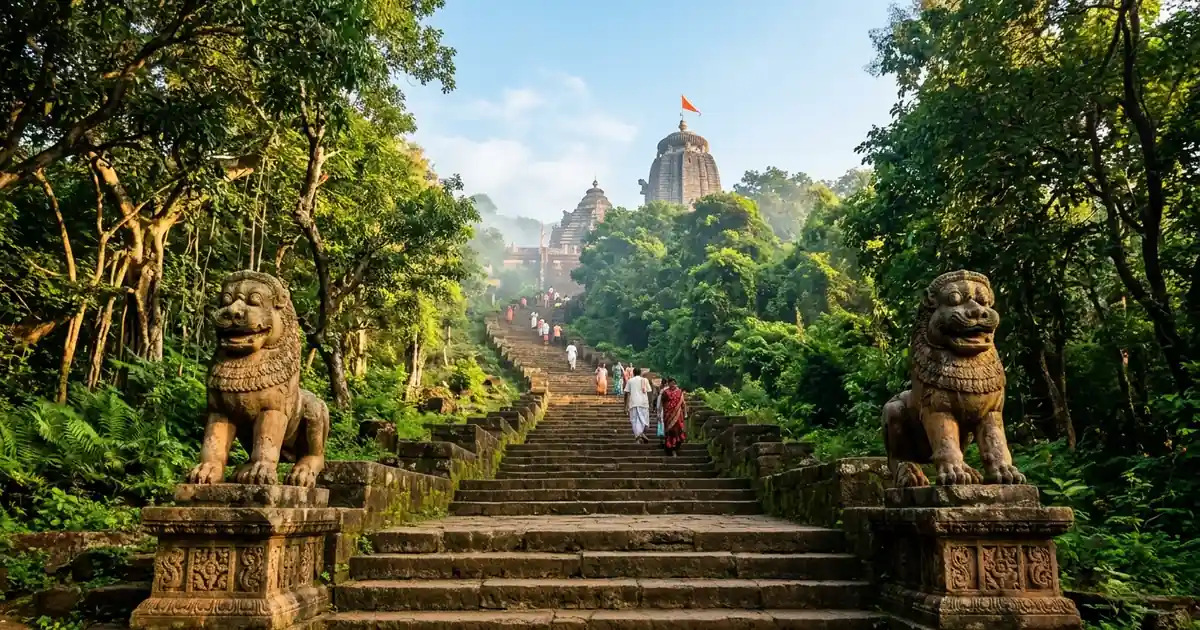
- Scenic Hill Ascent: Accessed by climbing an 80-step stone stairway flanked by pair of carved guardian lions.
- Tribal Priesthood: Rituals are conducted by hereditary Adivasi priests known as Jani under ancient traditions.
- Convenient Location: Situated 48 km southwest of Bhubaneswar and 16 km from Khordha town near Begunia.
Maa Ramachandi Temple Gadamanitri at a Glance: Timings & Essential Facts
Planning a visit to Gadamanitri requires familiarity with rural transit routes and daytime temple schedules. The hilltop shrine welcomes devotees from dawn until dusk throughout the week.
The surrounding slopes form part of the Gobardhan Thali range, offering panoramic views of fertile paddy plains and distant green ridges. The atmosphere remains peaceful, far removed from modern highway congestion.
The table below outlines the core operational facts and visitor specifications per Odisha Tourism:
| Dimension | Details |
|---|---|
| Temple Name | Maa Ramachandi Pitha (Gada Chandi) |
| Deity Form | Swayambhu Black Granite Monolith |
| Location | Gadamanitri Hill, Begunia Block |
| District | Khordha District, Odisha |
| Daily Timings | 6:00 AM to 6:00 PM (All days) |
| Entry Fee | Free public admission for all visitors |
| Staircase Climb | 80 stone steps with handrail sections |
| Nearest Town | Khordha (16 km east) and Begunia (8 km) |
| Distance from State Capital | 48 km southwest of Bhubaneswar |
| Governing Tradition | Hereditary Jani Tribal Servitors |
Visiting during early morning hours allows travelers to climb the hill in cool breezes before midday heat develops. The calm atmosphere at the summit provides an ideal environment for quiet meditation.
The shrine is also referred to locally as the historic gadamanitri ramachandi pitha.
Hilltop Geography of Gobardhan Thali
The geographical foundation of Gadamanitri adds to its spiritual reputation. The hill forms an isolated rocky promontory that rises naturally above the surrounding coastal plain.
Dense mango trees, mahogany belts, and wild creepers cloak the lower terraces. This strategic natural elevation allowed ancient sentinels to scan approaching military tracks across Khordha and Nayagarh.
The Swayambhu Monolith: Unique Open-Sky Deity and Tribal Priesthood
The central attraction of the sanctuary is its extraordinary geological form. While most prominent temples throughout Odisha feature intricate stone towers, the primary deity at Gadamanitri is entirely natural.
The sacred presence manifests as a colossal, vertically upright granite monolith emerging directly from the rocky hilltop soil under the open canopy of the sky.
Local faith considers the rock an eternal swayambhu granite monolith deity that has stood for millennia. Servitors apply heavy coats of vermilion paste, fragrant sandalwood, and turmeric across the sacred rock surface.
During festive gatherings, the holy monolith is draped in dark robes known as Kala Kachheni, accented by long garlands of red hibiscus and bright marigolds.
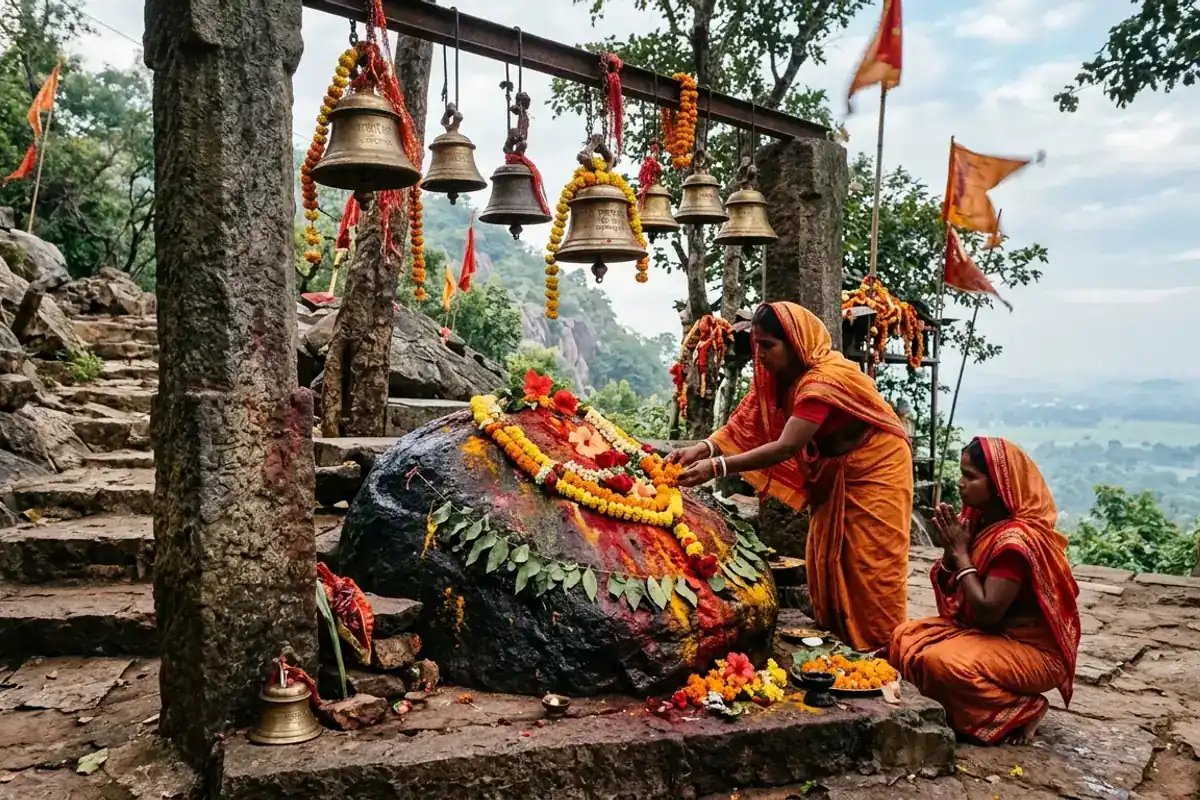
The daily rituals at the shrine are administered by hereditary servitors belonging to the local tribal community, known reverently as Jani priests. This ancient priestly tradition predates classical Brahminical temple administration, retaining ancient forest rituals.
Historical records note that the Gajapati rulers of Puri recognized the spiritual power of the deity by granting tax-free Jagir lands to support the daily worship and preservation of the hilltop sanctuary.
Paika Rebellion Legacy and the Fort Goddess of Khordha
Gadamanitri holds deep connections to the military history of Odisha. The surrounding rugged landscape formed a natural military redoubt for the legendary Paik militia of Khordha.
These peasant-warriors maintained martial training camps across the hills, using the high terrain as defensive observation posts and ambush redoubts against invading forces.
The warriors worshipped Maa Ramachandi as their fierce tutelary deity, invoking her divine protection before entering battle. Regional folklore links the shrine closely to the historic Paika Rebellion of 1817, when fighters resisted colonial policies across Khordha.
The hill offered refuge to rebel commanders seeking shelter among dense tree cover and natural rock caves.
Ancient lore also connects the region to the Treta Yuga epic. Local storytellers recount that Lord Rama and Sita traversed these forests during their exile in Dandakaranya.
Devotees believe Lord Rama himself offered prayers to Goddess Chandi upon this high rock, giving rise to the name Ramachandi. This twin legacy of epic mythology and genuine martial history creates an imposing aura around the hilltop.
The shrine is frequently noted in regional gazettes as the historic ramachandi temple begunia khordha.
The Hill Ascent: Steps, Guardian Lions and Scenic Countryside
Reaching the hilltop sanctuary requires a brief yet scenic outdoor climb. An organized flight of eighty stone steps ascends from the vehicle parking area at the base to the shrine terrace above.
The entrance to the staircase is flanked by two monumental guardian lions carved from regional sandstone in traditional Kalinga fashion, echoing royal motifs documented by the Archaeological Survey of India.
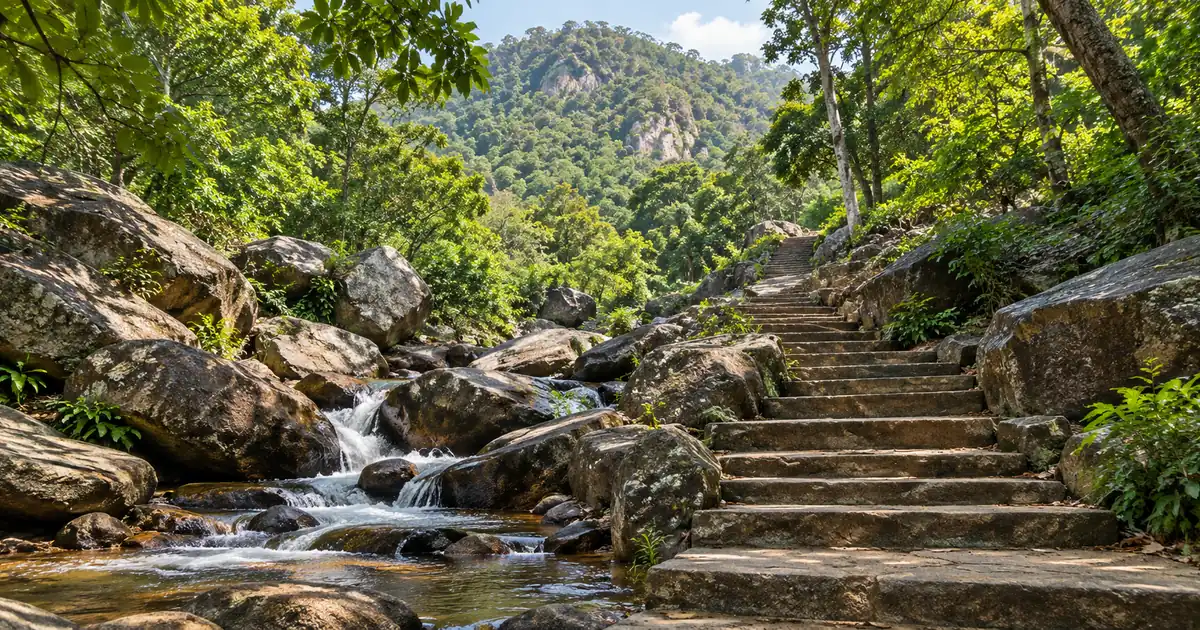
The stairs wind past weathered boulders and shade trees, making the climb manageable for visitors of all age groups. Well-placed resting ledges along the flight provide comfortable spots to pause and admire the landscape below.
The stone staircase is well maintained by the local temple committee, ensuring secure footing even during rainy months.
From the summit terrace, travelers enjoy panoramic views spanning thirty kilometers across green farmland and distant blue hill ranges. The surrounding orchards of sweet mangoes and jackfruit trees create shaded groves where family groups frequently gather for weekend picnics.
Visitors should note that the natural surroundings attract troops of playful macaque monkeys. Travelers are advised to keep food packets securely stowed in bags while climbing the stairway.
How to Reach Gadamanitri from Bhubaneswar and Khordha Town
Reaching Gadamanitri is straightforward for travelers driving from Bhubaneswar, Cuttack, or Khordha. The destination is connected by well-paved state highway roads running through scenic rural countryside.
Travelers depart Bhubaneswar along National Highway 16 toward Khordha town, branching onto State Highway 1 leading west toward Begunia and Bolagarh.
The table below summarizes driving distances, expected travel durations, and recommended transport options:
| Origin Point | Travel Distance | Approximate Duration | Recommended Route |
|---|---|---|---|
| Bhubaneswar Railway Station | 48 km | 1 hour 15 minutes | NH-16 to Khordha, then SH-1 toward Begunia |
| Bhubaneswar Airport (BPIA) | 45 km | 1 hour 10 minutes | Via Pitapalli junction and Khordha bypass |
| Khordha Town / Bus Stand | 16 km | 25 minutes | Direct state highway corridor to Gadamanitri |
| Atri Hot Spring | 18 km | 30 minutes | Rural connecting road via Baghamari |
| Barunei Hill Temple | 19 km | 30 minutes | State highway via Khordha town center |
Regular government and private buses run along the Khordha-Begunia route, with scheduled stops near the Gadamanitri turnoff. From the junction, local shared auto-rickshaws provide convenient transport to the base of the hill.
Spacious parking areas are available at the base of the staircase for two-wheelers and private cars, offering easy access to the ascent path.
Festivals, Best Season to Visit & Nearby Travel Pairings
The most spirited time to visit Gadamanitri is during major religious festivals, when thousands of pilgrims congregate from neighboring blocks.
The annual Ram Navami festival in spring features elaborate day-and-night rituals, folk music performances, and community feasts at the foothills.
Another major event is the traditional Panchu Dola Yatra held following Dola Purnima. Village deities from surrounding hamlets arrive in decorated wooden palanquins to pay homage to Maa Ramachandi.
During the monsoon festival of Raja Parba, village women set up decorative rope swings under the mango trees, filling the groves with festive folk songs.
For general travelers, the cool winter season from October through March offers the most comfortable weather for climbing the hill and exploring the surrounding forests. Daytime temperatures remain pleasant, ranging from 18°C to 27°C.
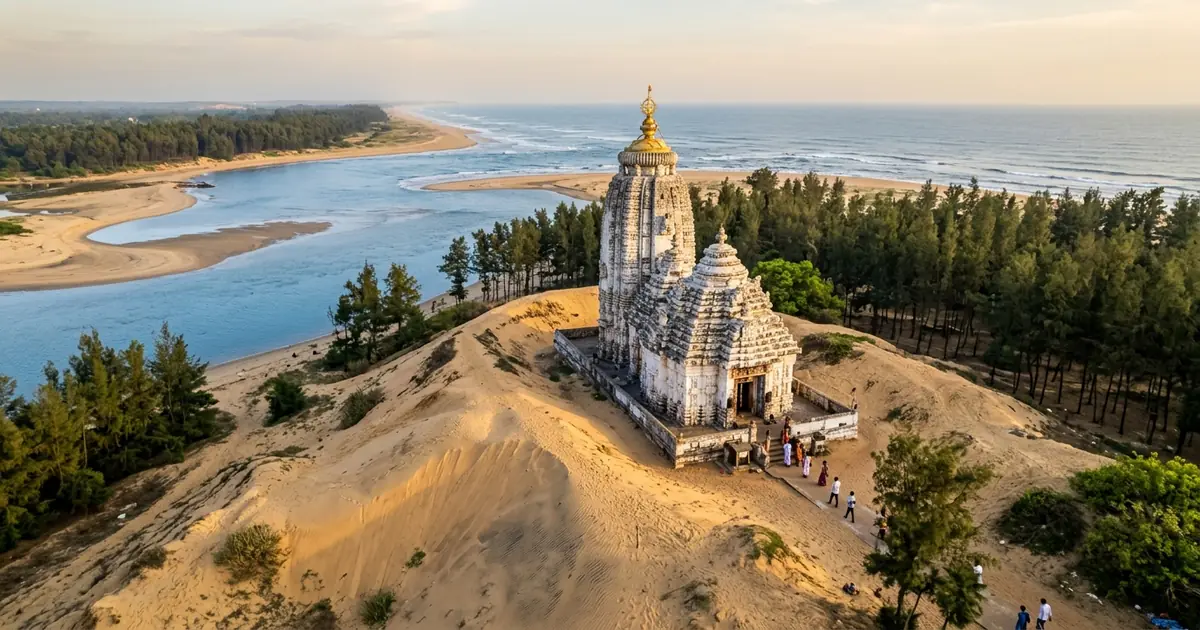
Travelers often compare this forest hill shrine with the coastal sanctuary at Konark. A quick review of gadamanitri ramachandi vs konark ramachandi highlights that while Konark offers beach water sports, Gadamanitri delivers raw highland heritage.
A day excursion to Gadamanitri pairs naturally with other prominent attractions in Khordha district. After morning darshan at the hill, visitors can soak in the therapeutic sulfur waters of Atri Hot Spring near Baghamari.
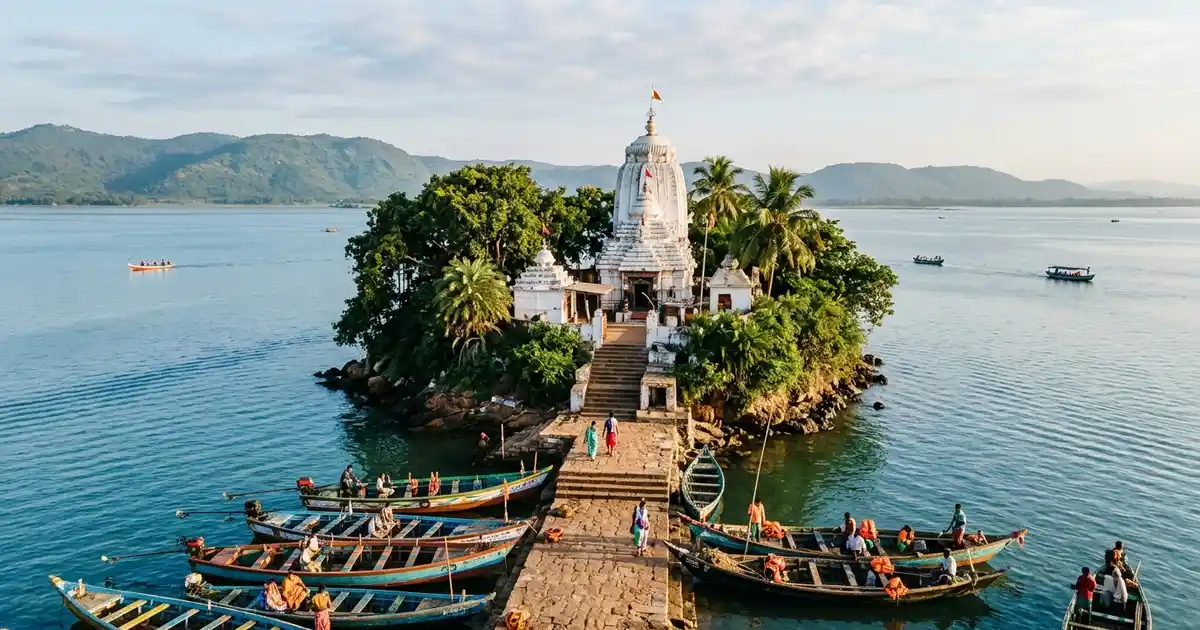
Travelers can also pay homage at the martial seat of Barunei Temple or explore coastal stopovers such as Ramachandi Temple at Konark.
Frequently Asked Questions (FAQs)
What are the opening and darshan timings at Ramachandi Temple Gadamanitri?
The temple is open for public darshan daily from 6:00 AM to 6:00 PM throughout the entire week. Visiting during morning or late afternoon hours provides pleasant temperatures for climbing the hill.
How does the Gadamanitri deity differ from Konark Ramachandi?
Gadamanitri features a natural open-sky black granite rock monolith worshipped atop a forested hill by tribal Jani priests. In contrast, the Konark temple features an enclosed riverfront sanctuary situated beside marine beach waters.
What is the historical connection between Gadamanitri and the Paika Rebellion?
Maa Ramachandi was worshipped as the protective Fort Goddess by the warrior Paiks who defended Khordha from invaders. The forested hill served as an observation redoubt and refuge during the historic Paika Rebellion of 1817.
How many steps must visitors climb to reach the hilltop shrine?
Visitors climb eighty well-built stone steps flanked by carved guardian lions to reach the summit terrace. The ascent is gentle and typically takes only five to eight minutes of comfortable walking.
How far is Gadamanitri Ramachandi Temple from Bhubaneswar?
The temple is located approximately 48 kilometers southwest of Bhubaneswar and 16 kilometers from Khordha town. The drive takes around one hour and fifteen minutes via National Highway 16 and State Highway 1.
Which major festivals are celebrated at Gadamanitri Pitha?
The shrine celebrates Ram Navami, Raja Parba, Durga Puja, and the festive Panchu Dola Yatra with grand devotion. During these festivals, traditional palanquin processions and festive gatherings draw thousands of devotees to the hill.