Kichakeswari Temple Mayurbhanj: Timings & Visitor Guide
Explore Kichakeswari Temple in Khiching Mayurbhanj with verified darshan timings, black chlorite architecture, museum exhibits, history, and route guide.
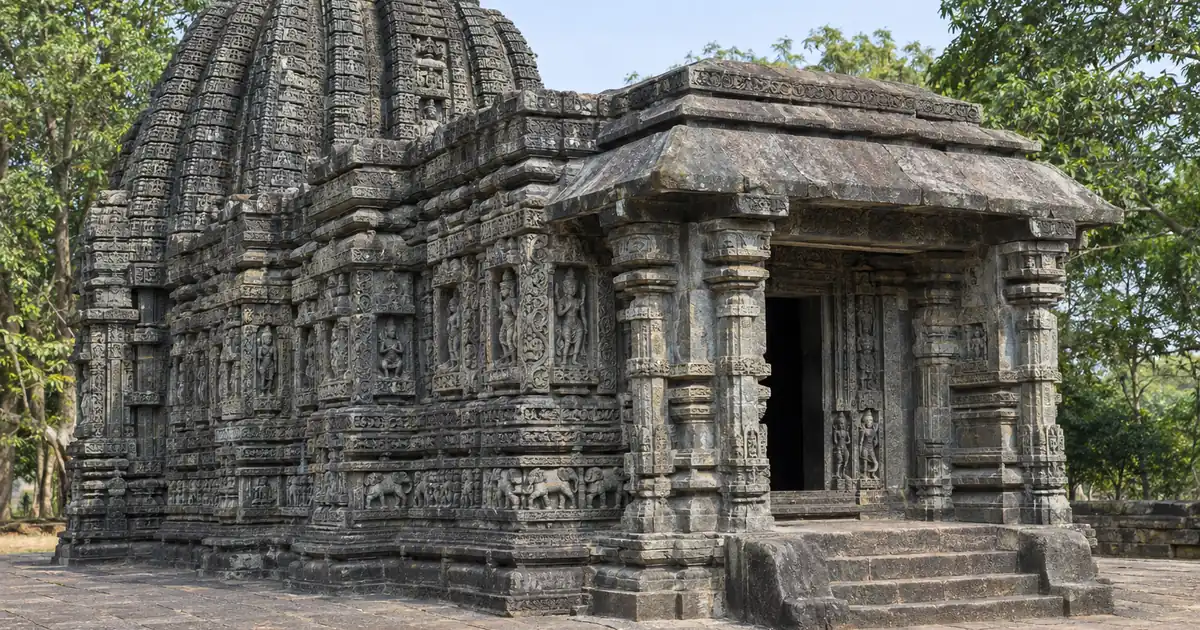
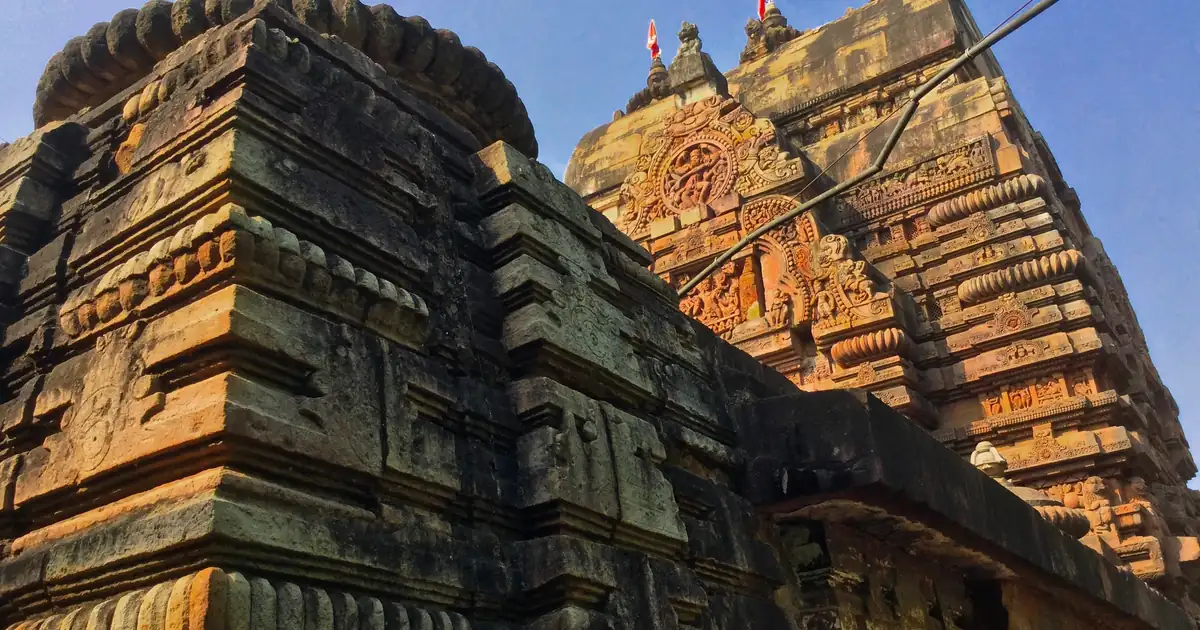
Kichakeswari Temple in Khiching is one of the most remarkable architectural treasures of northern Odisha. Located in the Sukruli block of Mayurbhanj district, this ancient pilgrimage shrine is constructed entirely of massive blocks of glistening black chlorite stone. Dedicated to Goddess Kichakeswari, a fierce manifestation of Goddess Chamunda, the temple served as the sacred royal shrine of the local rulers.
Travelers exploring northern Odisha often pair cultural heritage in Mayurbhanj with wildlife excursions. You can easily connect this temple tour with a trip across our comprehensive Mayurbhanj district guide. The temple complex displays sublime stone craft that rivals the finest specimens of the Kalinga architectural tradition.
Key Takeaways
- Location & Setting: Situated in Khiching village, Sukruli block, approximately 145 km west of Baripada and 50 km east of Keonjhar.
- Presiding Deity: Maa Kichakeswari, an eight-armed goddess manifestation of Chamunda revered as the patron deity of the Bhanja royal family.
- Architectural Uniqueness: The entire 100-foot Rekha deula is built from lustrous black chlorite stone without an attached front jagamohana porch.
- Daily Darshan Hours: Open daily from 6:00 AM to 12:00 PM, reopening from 3:00 PM to 8:00 PM, with free public entry.
- Adjacent Archaeological Museum: Established in 1922, the site museum houses rare 8th to 12th-century stone sculptures, closed on Fridays.
Khiching Shrine at a Glance: Timings, Deities & Key Facts
The historic temple represents an extraordinary chapter in regional sculpture and medieval royal history. The shrine is situated within an ancient archaeological complex that marks the capital of the historic Bhanja rulers, who governed the territory of Khijingakotta.
Planning your trip requires understanding daily ritual schedules, temple etiquette, and adjacent museum hours. The complex is maintained with care and attracts pilgrims, historians, and art lovers year-round.
| Parameter | Verified Details | Practical Notes |
|---|---|---|
| Temple Name | Maa Kichakeswari Temple Khiching | Historically revered royal Bhanja shrine |
| District & Block | Sukruli Block, Mayurbhanj District | Situated near the Keonjhar district border |
| Architectural Style | Kalinga Rekha Deula | Built purely from polished black chlorite stone |
| Morning Darshan | 6:00 AM to 12:00 PM | Morning arati at 7:00 AM |
| Evening Darshan | 3:00 PM to 8:00 PM | Sandhya arati at 6:30 PM |
| Temple Entry Fee | Free for all devotees | No tickets required for sanctum darshan |
| Museum Timings | 10:00 AM to 5:00 PM | Nominal entry ₹10, closed every Friday |
| Major Festivals | Maha Shivaratri, Durga Puja, Chaitra Parba | Grand fairs and special decorative rituals |
Quick Architectural Highlights
What sets the Khiching shrine apart from other famous temples in Odisha is its structural material and layout. While most temples in Bhubaneswar and Puri were constructed using yellow sandstone or khondalite, this temple is made completely of dense black chlorite.
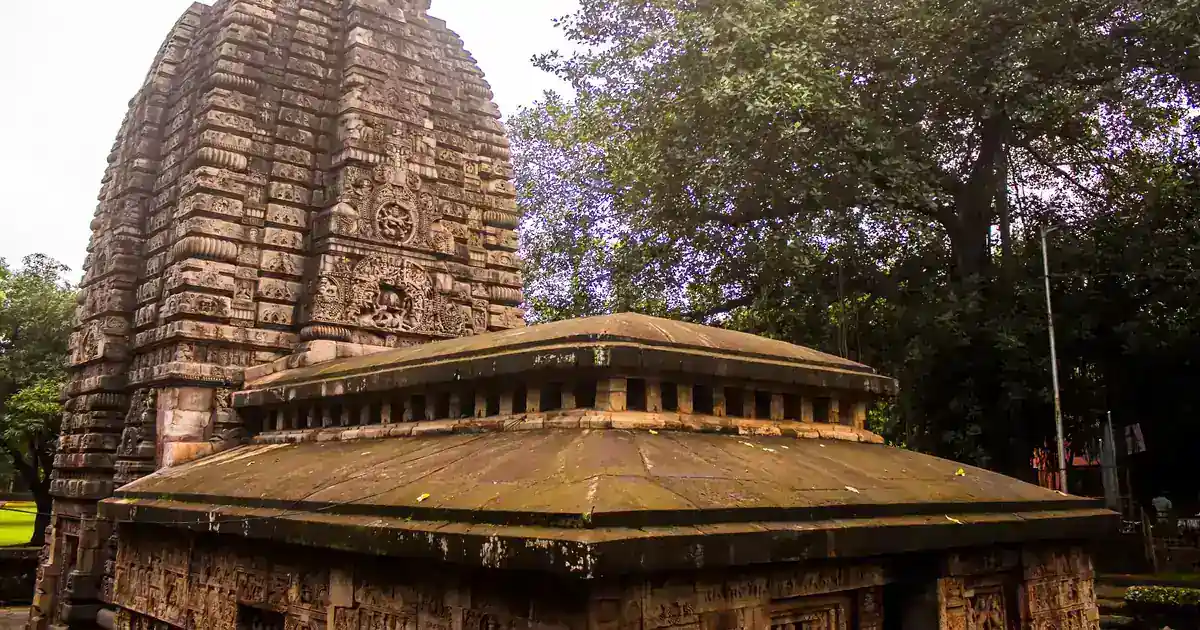
The sanctum tower stands approximately 100 feet tall, soaring gracefully with stepped curvilinear lines. Intricate stone scrollwork decorates the door jambs, featuring guardian figures, celestial maidens, and mythological scenes carved with astonishing depth.
Devotee Profile & Spiritual Atmosphere
The shrine retains a deeply devotional and tranquil rural atmosphere. Local villagers, pilgrims from surrounding districts, and travelers from Jharkhand and West Bengal visit to seek the blessings of the goddess.
Devotees offer flowers, coconuts, and traditional sweets during daily pujas. The spacious temple courtyard features stone platforms, shaded banyan trees, and subsidiary shrines that provide space for quiet meditation.
History & Royal Reconstruction of Khiching Temple
The history of Khiching extends over twelve centuries. Between the 8th and 12th centuries CE, the region flourished under the early Bhanja rulers as a major commercial and cultural center of the Khijingakotta kingdom and the Bhanja dynasty capital.
The kings of Khijingakotta were passionate patrons of art and religious architecture. They constructed numerous Shaivite and Shakta shrines across the river valleys of the Khairabhandana and Kantakhaira rivers.
The Presiding Deity: Maa Kichakeswari
Inside the cool, darkened sanctum stands the formidable image of Maa Kichakeswari. Carved from fine-grained black stone, the goddess is depicted as a multi-armed Chamunda seated in a triumphant posture.
Her image displays classic tantric iconography, including a garland of skulls, sacred weapons, and watchful attendant spirits. Revered as the sovereign guardian deity of the princely state of Mayurbhanj, the goddess was worshipped by the Bhanja maharajas before every state enterprise.
The 20th-Century Architectural Restoration
By the late 19th century, the original medieval temple tower had collapsed due to foundational shifting and centuries of weathering. The carved stone blocks lay scattered across the temple compound.
Recognizing the immense cultural value of the ruins, Maharaja Purna Chandra Bhanjdeo and his successor Maharaja Pratap Chandra Bhanjdeo commissioned an ambitious restoration project. Between 1934 and 1942, state archaeological engineers meticulously reassembled the temple. They reused the original 10th-century black chlorite stones, faithfully reconstructing the tower to its original proportions without altering its sacred geometry.
Exploring the Khiching Archaeological Museum
Adjacent to the temple stands the Khiching Archaeological Museum, established in 1922 by the Mayurbhanj state administration. It is one of the oldest heritage museums in Odisha and houses priceless sculptures excavated from the surrounding mounds.
Art historians consider the museum collection essential for understanding the unique regional Bhanja school of sculpture, which blended classical Gupta motifs with distinct Kalinga forms.
Masterpieces of the Bhanja Sculptors
The museum galleries display an array of life-size stone statues carved between the 8th and 11th centuries:
- Colossal Shivalingams: Smoothly polished black stone lingas excavated from ancient temple ruins across Khiching.
- Images of Durga & Mahishasuramardini: Dynamic stone panels depicting the goddess slaying the buffalo demon with fluid anatomical precision.
- Vishnu & Surya Sculptures: Exquisitely detailed statues of Lord Vishnu and the Sun God complete with celestial attendants and floating gandharvas.
- Intricate Vishnu Chakra: A monumental carved stone wheel adorned with the nine planetary deities (Navagrahas), designed to crown temple spires.
- Buddhist & Jain Icons: Statues of Avalokiteshvara, Dhyani Buddhas, and Jain Tirthankaras, proving that Khiching was a cosmopolitan spiritual center where diverse faiths coexisted.
[!NOTE] Photography is strictly prohibited inside the museum galleries to protect the historic antiquities. Visitors should purchase their tickets at the entry counter and allow approximately 45 minutes to inspect the exhibits.
Architecture & Sculptural Details of Kichakeswari Temple
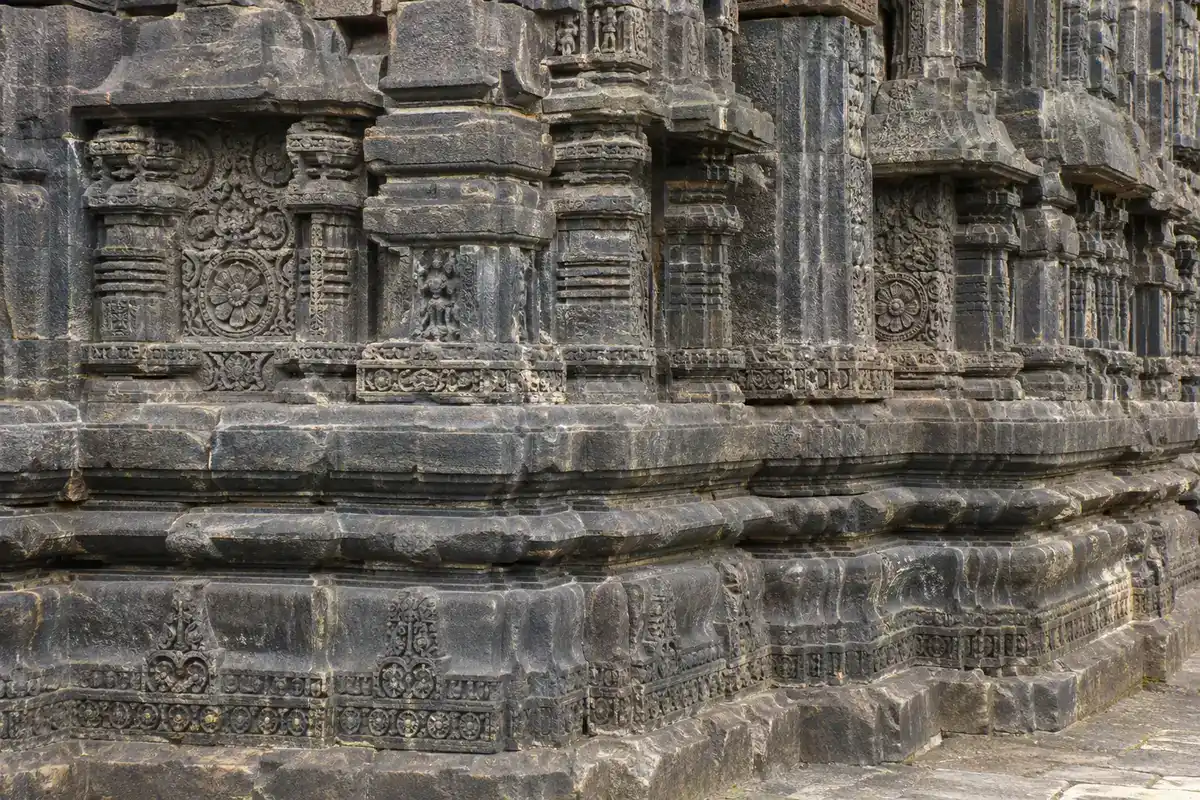
The architectural design of Kichakeswari Temple follows the pure Rekha deula order of the classical Kalinga tradition. However, its specific execution features several unique design choices that distinguish it from contemporary coastal shrines.
Examining the exterior facades reveals remarkable stonecraft achieved without modern tools.
Absence of the Front Jagamohana Porch
Most mature Odishan temples feature a dual structure consisting of a square vimana sanctum connected to a stepped pyramidal jagamohana hall. In contrast, the restored temple at Khiching consists solely of the towering sanctum deula.
This single-tower configuration allows visitors to appreciate the verticality and proportion of the shrine from every angle. The entrance doorway opens directly into the inner sanctum through an elaborately carved stone portal.
Intricate Black Chlorite Reliefs
Black chlorite is a remarkably dense stone that permits delicate, sharp carving while resisting weathering over centuries:
- Door Jamb Carvings: Multi-banded scrollwork featuring climbing vines, playful dwarf figures, and aquatic creatures framing the sanctum doorway.
- Ganga and Yamuna: Elegant full-length depictions of the river goddesses standing on their respective animal mounts on either side of the entrance.
- Exterior Niches: Carved niches displaying subsidiary deities (parshvadevatas), including Ganesha with his bowl of sweetmeats and Kartikeya with his mount peacock.
| Architectural Feature | Execution & Material | Historical Significance |
|---|---|---|
| Sanctum Tower (Vimana) | 100 feet tall Rekha deula in black chlorite | Reassembled 1934-1942 using original stones |
| Door Lintel & Jambs | Multi-tiered floral and figurative bas-relief | Displays early Bhanja school artistic purity |
| Presiding Deity | Multi-armed Goddess Chamunda | Sacred royal deity of Mayurbhanj princely state |
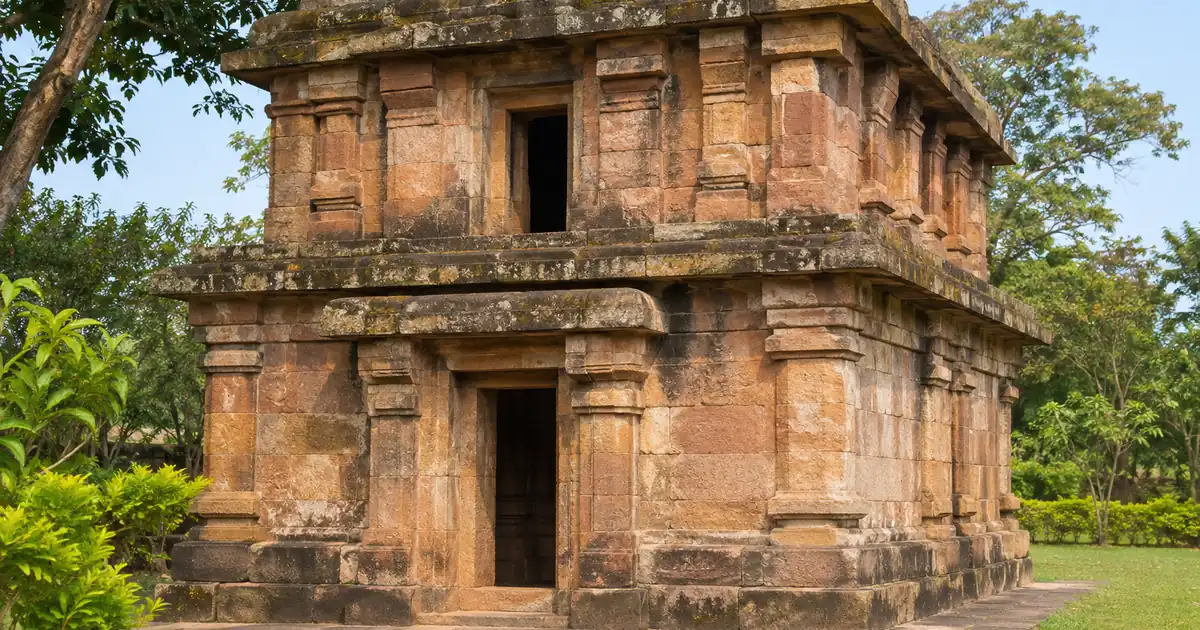
| Compound Shrines | Subsidiary temples of Chandrasekhar and Kutaitundi | Contemporary 10th-century Shaivite stone shrines |
Best Time to Visit Khiching
Weather in northern Mayurbhanj is shaped by its inland plateau location, featuring warm summers and refreshingly cool winters. Choosing the right time of year ensures comfortable temple exploration and smooth highway travel.
Understanding seasonal shifts helps travelers time their visits for festivals or peaceful spiritual touring.
Winter Season (October to February)
Winter is the ideal time to visit Khiching. Daytime temperatures stay between 16°C and 26°C, with cool breezes blowing across the plateau. The pleasant weather makes it comfortable to explore the sunlit temple courtyard and museum grounds.
Major cultural gatherings take place during winter. If your schedule permits, visiting during Maha Shivaratri offers an unforgettable spiritual experience with thousands of lamps illuminating the temple grounds.
Summer & Monsoon Months (March to September)
Summer temperatures from April to June frequently reach 38°C to 42°C during peak afternoon hours. If traveling in summer, plan your temple darshan early in the morning between 6:30 AM and 9:00 AM.
The monsoon season from July through September brings heavy rains that revive the rural landscape and fill the nearby river streams. Temple pathways can become wet, but the washed black chlorite stone gleams brilliantly under overcast skies.
[!TIP] Carry a light shawl or sweater when visiting in December and January, as early morning and evening temperatures in Sukruli drop noticeably after sunset.
How to Reach Kichakeswari Temple Khiching
Khiching is situated in western Mayurbhanj near the borders of Keonjhar district and Jharkhand state. The town connects via well-surfaced state highways to major regional cities.
Travelers can reach the temple easily by private car, taxi, or regional public buses.
Reaching by Road
Road connectivity is the most convenient option for reaching Khiching:
- From Keonjhar (50 km): Drive north along National Highway 20, turn east toward Sukruli, and reach Khiching in approximately 1 hour.
- From Baripada (145 km): Travel west via Bangriposi, Jashipur, and Karanjia along NH-49 and SH-49. The drive takes about 3.5 hours through scenic hill country.
- From Jamshedpur (140 km): Drive south through Chaibasa and Sukruli along interstate highway routes, taking about 3.5 hours.
- From Bhubaneswar (260 km): Travel via Cuttack, Panikoili, and Keonjhar to reach Khiching in roughly 6 hours.
Reaching by Train & Flight
Keonjhar Railway Station (code: KDJR) is the closest railhead, situated roughly 50 km southwest. Alternatively, Balasore Railway Station (code: BLS) and Tatanagar Junction (code: TATA) serve as major transit hubs on main railway trunks.
Biju Patnaik International Airport in Bhubaneswar is the nearest major airport, located 260 km south. Ranchi Airport in Jharkhand is roughly 220 km northwest.
Circuit Itineraries & Nearby Attractions
A pilgrimage to Kichakeswari Temple pairs naturally with other prominent cultural and ecological destinations across northern Odisha. Structuring a multi-day itinerary allows you to experience royal heritage, wild cascades, and deep forests.
Here are the top destinations you can combine with your Khiching trip.
Mayurbhanj Royal & Nature Circuit
Start your journey in Baripada with a stay at the heritage Belgadia Palace in Baripada, the ancestral residence of the Bhanja rulers. Explore local Chhau dance centers and taste authentic Mudhi Mansa.
From Baripada, travel through Similipal Tiger Reserve to marvel at the tiered plunge of Barehipani Waterfall and the holy pool of Devkund Waterfall before reaching Khiching.
Suggested 2-Day Cultural Itinerary
- Day 1: Arrive in Baripada, visit the historic Haribaldev Jiu Temple, and tour Belgadia Palace. Travel toward Jashipur for an overnight stay at an eco-camp.
- Day 2: Drive from Jashipur to Khiching via Karanjia. Attend morning darshan at Kichakeswari Temple and inspect ancient sculptures in the archaeological museum. Continue toward Keonjhar or begin your return journey.
Essential Visitor Guidelines & Temple Etiquette
Visiting this sacred site requires adhering to established traditions of temple etiquette:
- Footwear & Leather: Remove shoes, sandals, and leather belts at the designated footwear counter before entering the inner courtyard.
- Dress Code: Devotees should wear modest traditional clothing such as dhotis, kurtas, sarees, or salwar suits. Revealing clothing is not permitted.
- Sanctum Photography: Taking photos inside the sanctum sanctorum of Goddess Kichakeswari is strictly prohibited. Photography of exterior temple walls is allowed.
- Cleanliness & Respect: Keep the temple premises clean. Avoid littering flower baskets or plastic bags in the sacred compound.
- Official Guidance: Verify temple festival dates and official notices on the portal of Odisha Tourism or through the Archaeological Survey of India.
Frequently Asked Questions (FAQs)
Where is the Khiching shrine located in Odisha?
The sacred complex is located in Khiching village within Sukruli block of Mayurbhanj district. It sits approximately 50 km northeast of Keonjhar town and 145 km west of Baripada.
What is unique about the architecture of Khiching Temple?
The shrine is unique because it is constructed entirely from large blocks of polished black chlorite stone. Unlike most Odishan temples, it features a single 100-foot Rekha deula tower without an attached front jagamohana porch.
What are the daily darshan timings at Khiching?
The sanctum opens for darshan daily from 6:00 AM to 12:00 PM and reopens from 3:00 PM to 8:00 PM. The adjacent archaeological museum operates from 10:00 AM to 5:00 PM and remains closed on Fridays.
Who built the historic temple at Khiching?
The original shrine was established in the 10th century by the Bhanja rulers of Khijingakotta. Between 1934 and 1942, Maharaja Pratap Chandra Bhanjdeo of Mayurbhanj reconstructed the collapsed shrine reusing original stone carvings.
What exhibits are housed inside the Khiching Archaeological Museum?
The museum displays rare 8th to 12th-century stone sculptures, including colossal Shivalingas, images of Durga, a monumental Vishnu Chakra, and ancient Buddhist and Jain icons.
How to reach Khiching from Baripada and Keonjhar?
The temple is easily reached by road via National Highway 20 from Keonjhar in about one hour. From Baripada, travelers follow National Highway 49 through Jashipur and Karanjia, taking approximately three and a half hours.