Joranda Waterfall Simlipal Mayurbhanj: Height & Guide
Plan your trip to Joranda Waterfall in Similipal, Mayurbhanj. Check 181m height, safari permit fees, Jashipur gate timings, watchtower view & travel tips.
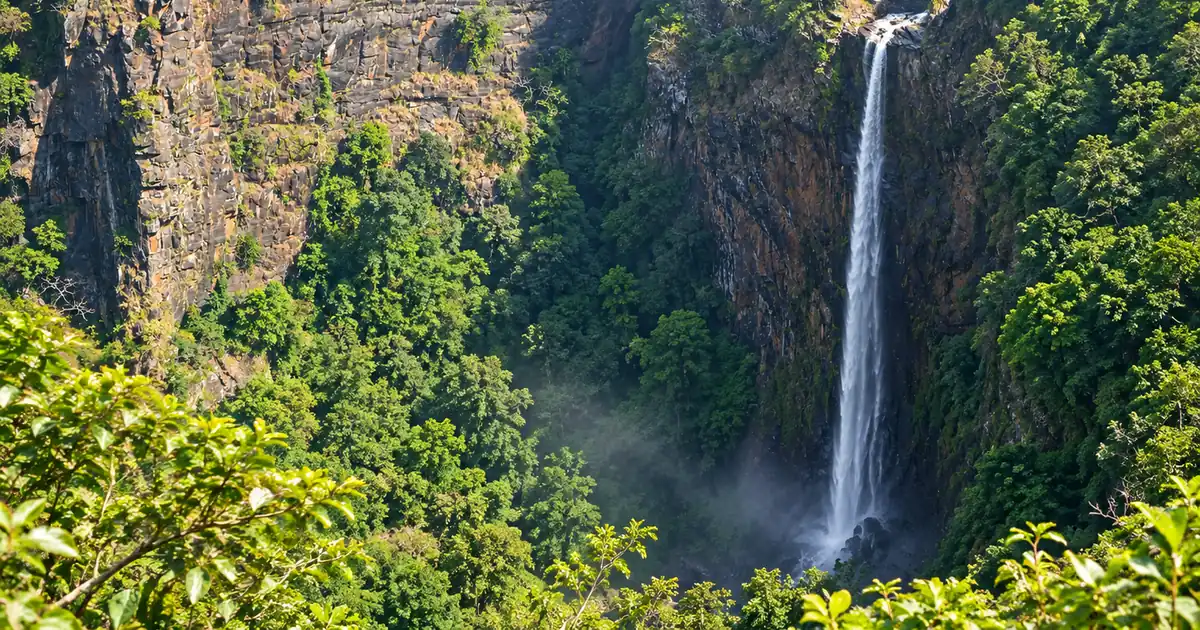
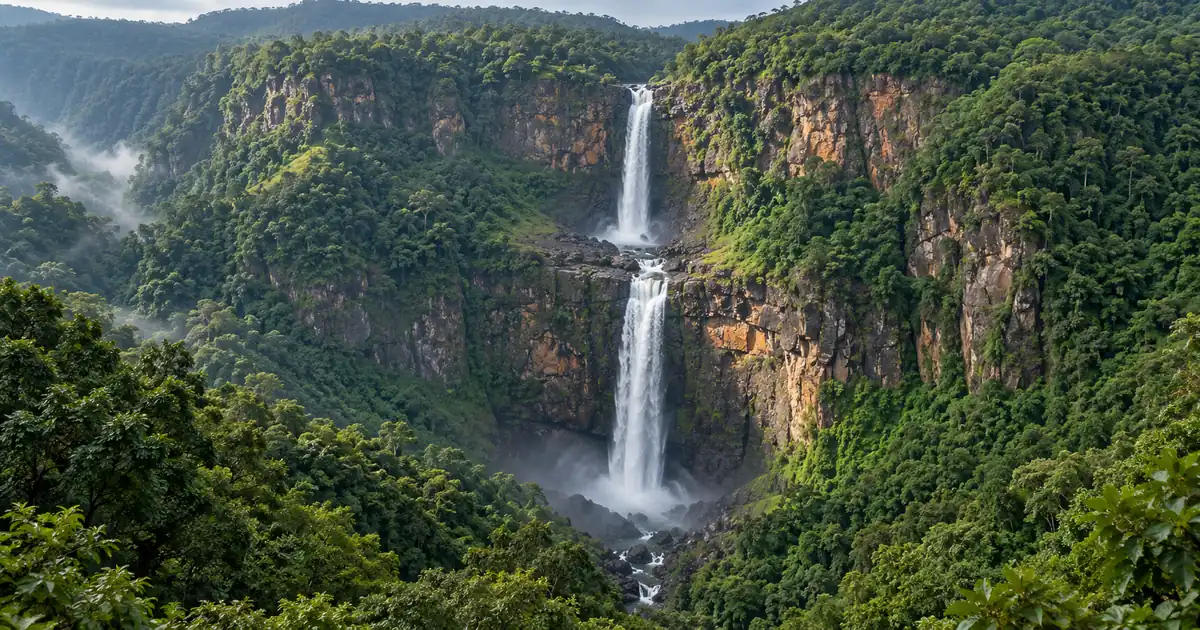
Dropping straight over an unbroken vertical precipice in the core highlands of Mayurbhanj district, joranda waterfall simlipal mayurbhanj ranks among the most spectacular wilderness spectacles in eastern India. Positioned deep inside the UNESCO-recognized Similipal Biosphere Reserve, this majestic cataract plunges 181 meters into a shadowed amphitheater gorge.
Unlike tiered cascades that tumble over stepped rock shelves, joranda waterfall simlipal descends in a clean, solitary plume without touching the underlying cliff face until it strikes the boulder-strewn canyon floor. The roaring column of white water produces perpetual clouds of fine mist that nourish moss-draped sal trees and wild orchids clinging to nearby granite walls.
Reaching this remote natural wonder requires traveling through dense tropical moist deciduous jungle that shelters wild Asian elephants, leopards, and Royal Bengal tigers. The sheer isolation of the canyon guarantees an authentic wilderness encounter far removed from crowded picnic parks.
Travelers organizing an ecological safari across Mayurbhanj district tourism destinations or exploring the statewide list of waterfalls in Odisha can use this practical visitor guide covering verified entry permit rules, gate timings, watchtower views, and seasonal road conditions.
Key Takeaways
- Joranda Waterfall features a dramatic 181-meter (594 feet) single-drop vertical plunge, making it India’s 19th highest cataract.
- The waterfall is located within the core zone of Similipal Tiger Reserve, approximately 30 kilometers south of Barehipani Falls.
- Daily entry permits are issued at Jashipur and Pithabata forest gates between 6:00 AM and 9:00 AM from November to mid-June.
- Visitors view the cascade safely from a multi-tiered stone watchtower platform situated across the canyon chasm.
- High-clearance four-wheel-drive safari vehicles and registered forest department eco-guides are strictly mandatory.
At-a-Glance: Joranda Waterfall Key Metrics & Visiting Summary
Preparing for an excursion into the Similipal interior requires close attention to forest regulations and seasonal operational schedules. Up-to-date entry rules and wildlife guidelines are published through the Odisha Tourism Official Portal.
Because the cascade sits inside a protected tiger reserve, independent pedestrian access is completely prohibited. All visitors must obtain official gate permits and travel inside registered safari vehicles accompanied by certified forest guides.
Core Metrics, Elevation & Drop Dimensions
The waterfall plunges from a high plateau elevation of approximately 800 meters above sea level. Fed by perennial tributaries of the Budhabalanga river system, the stream maintains strong flow throughout the post-monsoon and winter months before tapering during peak summer.
Visiting hours are governed strictly by forest gate timings. Vehicles must pass through the outer entry check-posts before 9:00 AM and must exit the reserve boundary before sunset at 5:00 PM.
| Parameter | Official Specification | Travel Planning Advice |
|---|---|---|
| Attraction Classification | Perennial Single-Drop Plunge Waterfall | India’s 19th highest vertical waterfall |
| Total Vertical Plunge | 181 meters (594 feet) | Single unbroken water column into canyon floor |
| Protected Area Status | Core Zone, Similipal Tiger Reserve | Strict wildlife regulations apply throughout |
| Daily Safari Window | 6:00 AM to 5:00 PM | Entry gates close at 9:00 AM; exit by 5:00 PM |
| Indian Visitor Permit Fee | ₹100 per person per day | Issued at Jashipur or Pithabata forest desks |
| Foreign Visitor Permit Fee | ₹1,000 per person per day | Valid passport and visa required at gate |
| Vehicle Entry Permit Fee | ₹200 per light motor vehicle | Four-wheel-drive or high ground clearance required |
| Mandatory Forest Guide Fee | ₹500 per vehicle per day | Certified local tribal naturalist assigned at gate |
| Seasonal Operating Period | November 1 to June 15 | Closed during monsoon season (June 16 to Oct 31) |
Geology & The Amphitheater Canyon Setting
The dramatic topography surrounding Joranda Waterfall was shaped over hundreds of millions of years through deep fluvial erosion of Precambrian metamorphic rock. The geological formation consists of hard spillite and quartzite layers resting above softer volcanic tuff.
As water carved away the underlying rock beds, vertical cliffs formed a semi-circular gorge resembling an ancient natural amphitheater. The sheer drop prevents erosion debris from accumulating at mid-levels, maintaining the clean vertical leap of the water stream.
The canyon walls create an acoustic funnel that amplifies the sound of falling water. Long before reaching the viewing platform, travelers can hear the deep, echoing thud of the cascade reverberating through the surrounding sal canopy.
Similipal Entry Permits: Gate Counters, Safari Tariffs & Online Booking
Entering Similipal Tiger Reserve to visit Joranda requires obtaining authorized government permits managed by the state forest department. Official lodging bookings across Similipal Tiger Reserve nature camps can be organized through the Eco Tour Odisha Official Portal.
Understanding gate locations and daily permitting limits helps travelers avoid unexpected delays on the morning of their safari.
Forest Entry Fee Schedule & Vehicle Tolls
Permit costs are standardized across all Similipal entry points. Fees contribute directly to local tribal eco-development committees and wildlife conservation funds within Mayurbhanj district.
Every passenger pays the individual forest admission charge, while separate tolls cover vehicle transit. In addition, every tourist vehicle must hire a licensed local guide whose presence is legally required to ensure compliance with forest fire, wildlife protection, and litter laws.
| Permit Category | Official Tariff Rate | Inclusions & Details |
|---|---|---|
| Domestic Visitor Permit | ₹100 per adult (₹40 per student) | Valid for one day of interior reserve access |
| International Visitor Permit | ₹1,000 per person | Valid for international passport holders |
| Four-Wheeler Entry Toll | ₹200 per vehicle | Covers private SUV or hired safari vehicle |
| Mandatory Eco-Guide Charge | ₹500 per safari vehicle | Local naturalist assisting with routes and spotting |
| Still Camera Fee | ₹100 per digital camera | Professional telephoto photography permit |
Entry Gate Permitting Hours & Daily Vehicle Quotas
The forest department operates two primary visitor entry gates: the western gate at Jashipur and the eastern gate at Pithabata near Baripada.
Both gates begin issuing entry permits at 6:00 AM and stop accepting new entries sharply at 9:00 AM. A strict quota limits entries to sixty vehicles per day at Jashipur and forty vehicles per day at Pithabata to minimize disturbance to wild fauna.
[!TIP] Arrive at the Jashipur or Pithabata permit counter by 5:30 AM, especially during December holidays or long winter weekends. Queues form early, and entry gates close promptly once the daily vehicle quota is filled.
EcoTour Odisha Online Safari Booking & On-Arrival Counters
Travelers booking overnight cottages at forest nature camps inside Similipal receive priority vehicle entry passes as part of their confirmed lodging package.
If you are visiting solely on a day safari without overnight accommodation, permits must be obtained directly at the physical gate booking counters on the morning of travel. Forest staff verify driving licenses, vehicle insurance, pollution certificates, and personal identity documents before stamping entry slips.
The Viewing Experience: Watchtower Platform & Surrounding Wildlife
Because the vertical gorge below Joranda Waterfall is extremely deep and treacherous, visitor movement is carefully channeled to ensure safety while delivering panoramic visual perspectives.
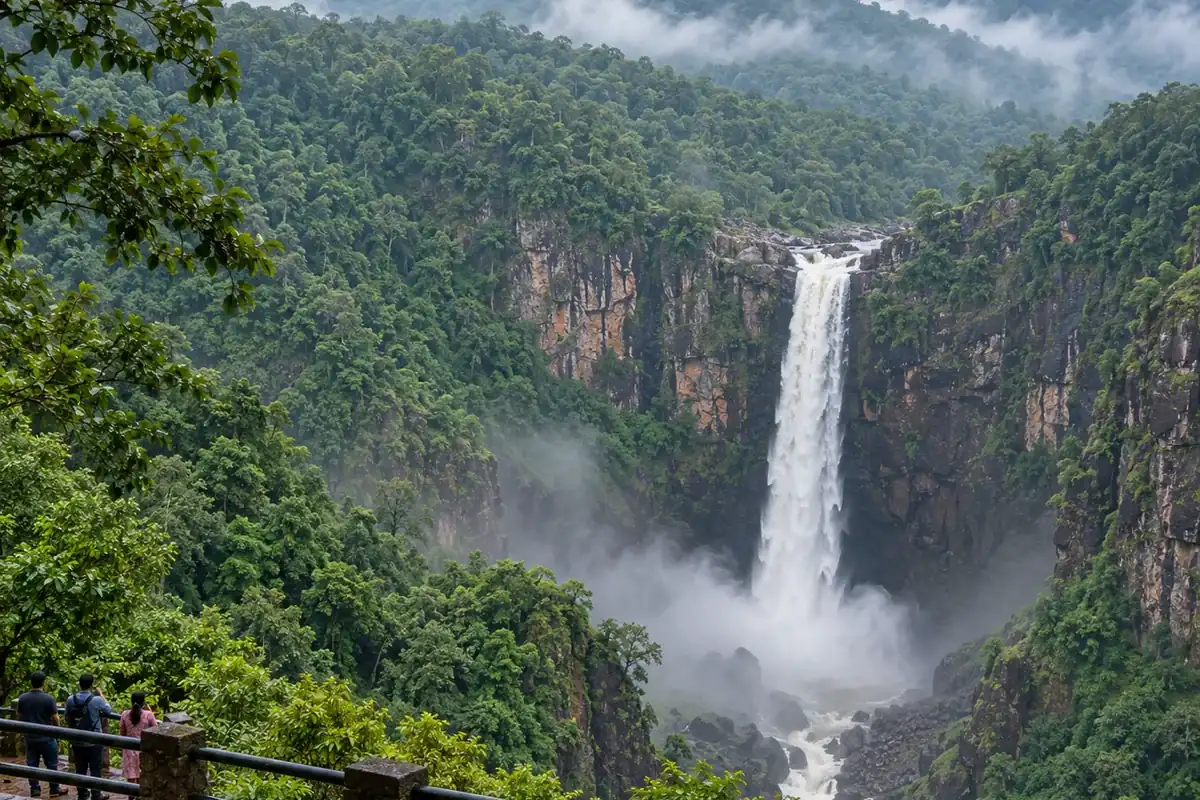
The viewing platform provides an exceptional window into the protected interior of the biosphere.
The Masonry Watchtower Vantage Point
The forest department has constructed an elevated stone and steel viewing watchtower on the canyon rim directly facing the waterfall. Perched safe distances from the crumbly cliff edge, this multi-tiered platform provides unobstructed photographic angles of the entire 181-meter drop.
From the upper deck, photographers can look straight across the canyon void at the water rushing over the rock lip before plunging into the emerald pool below. Sturdy safety railings protect visitors of all ages.
Benches positioned in shaded pavilions allow travelers to sit quietly and observe the rhythmic dance of mist rising from the gorge as sunlight shifts throughout the day.
Wildlife Sightings: Elephants, Giant Squirrels & Hornbills
The dense forest surrounding Joranda forms prime habitat for diverse wildlife species. The perennial water source draws animals from across the upper plateau, especially during dry winter mornings.
Looking up into the canopy of towering sal, asan, and arjuna trees, visitors frequently spot the Malabar giant squirrel, with its striking maroon-and-black coat and long bushy tail leaping across branches. Large flocks of Malabar pied hornbills fly across the canyon chasm, their heavy wingbeats producing rhythmic whistling sounds.
Fresh elephant tracks and broken bamboo culms along the access track serve as constant reminders that wild herds roam these valleys. Lucky travelers may also spot barking deer, sambar, wild boars, and troops of gray langurs along the road shoulder.
Strict Ban on Descending into the Gorge Base
Safety rules at Joranda are strictly enforced for obvious geographic reasons. The cliffs framing the waterfall drop sheer for hundreds of feet, coated in slick algae and crumbly quartzite rock.
There are no cleared trails, steps, or handrails leading down into the canyon floor. Attempting to scramble down the rock face is both illegal under the Wildlife Protection Act and extremely dangerous.
[!WARNING] Never cross the perimeter safety fence at the watchtower or venture near the unguarded cliff edges. The plastic ban inside similipal tiger reserve is absolute; carrying single-use polythene bags or discarding plastic bottles inside the reserve carries heavy financial fines.
How to Reach Joranda Falls: Entry Gates, Forest Routes & Road Map
Journeying to Joranda Waterfall requires navigating interior forest dirt tracks within Similipal Tiger Reserve. Planning your transit route around entry gate locations ensures a smooth overland journey.
Travelers can choose between two main approach corridors based on their starting city.
Approaching via Jashipur Entry Gate
Jashipur, situated along National Highway 49 in western Mayurbhanj, serves as the most popular entry base for visiting Joranda. The distance from Jashipur town to the waterfall is approximately eighty kilometers along forested dirt roads.
After clearing the permit gate at Jashipur, the trail ascends through sal forests toward the central meadows of Chahala. From Chahala, the track continues southeast through rolling hills, passing Barehipani Waterfall before terminating at the Joranda watchtower parking circle.
Driving this route requires approximately three to four hours due to the unpaved surface, rock outcrops, and speed limits enforced inside the tiger reserve.
| Route Leg | Distance | Road Surface Type | Typical Driving Time |
|---|---|---|---|
| Jashipur Gate to Chahala Meadow | 30 km | Forest dirt track | 1 Hour 15 Minutes |
| Chahala to Barehipani Falls | 35 km | Packed gravel & forest clay | 1 Hour 30 Minutes |
| Barehipani to Joranda Falls | 15 km | Forest road & stream crossings | 40 Minutes |
| Total Drive from Jashipur Gate | Approx. 80 km | Unpaved interior reserve roads | 3.5 to 4 Hours |
Approaching via Pithabata Gate from Baripada
Travelers based in Baripada town typically enter via the eastern gate at Pithabata, located twenty-five kilometers west of the district headquarters.
This approach climbs steeply through the forested ghat sections of Lulung. The scenic road winds upward through dense bamboo brakes, connecting to the central forest hub of Gurguria before continuing toward Barehipani and Joranda.
The total distance from Pithabata gate to Joranda is roughly 95 kilometers, requiring four to four and a half hours of careful driving. Visitors staying at the heritage Belgadia Palace in Baripada often arrange guided safari day tours starting from this eastern entrance.
Vehicle Suitability: Four-Wheel Drive & High-Clearance SUVs
Interior reserve tracks in Similipal consist of packed red laterite clay, loose gravel, and natural rock terraces. Stream crossings and muddy dips are common even during the dry season.
Standard low-slung city hatchbacks and sedans are completely unsuitable and will be denied entry at the forest check-posts. Travel inside a four-wheel-drive vehicle (such as a Mahindra Bolero Camper, Thar, or Scorpio) with high ground clearance of at least 180 millimeters.
Local safari vehicle operators rent sturdy four-wheel-drive taxis with experienced drivers outside both Jashipur and Pithabata gates, with day hire rates ranging from ₹3,500 to ₹4,500 including driver allowances.
Best Time to Visit, Monsoon Closure & Similipal Waterfall Pairings
Seasonal climate dictates forest accessibility across Mayurbhanj. Because Similipal experiences torrential monsoon rainfall and seasonal river flooding, the park enforces strict operational windows.
Planning your journey within the open season ensures pleasant weather and clear waterfall vistas.
Seasonal Calendar & Strict Monsoon Closure Window
Similipal Tiger Reserve opens for tourism on November 1 each year and closes firmly on June 15. Between June 16 and October 31, the entire reserve is closed to all tourist traffic for annual monsoon wildlife breeding and road stabilization.
The optimal months to visit Joranda are November through February. Winter brings crisp morning air with daytime temperatures between 18 degrees and 25 degrees Celsius, while night temperatures in the highland valleys can drop below 8 degrees Celsius.
Stream flow remains robust following the monsoon rains, filling the plunge pool with vigorous currents. By late March and April, temperatures rise significantly, and forest fires or dry weather reduce water volume, though wildlife sightings near waterholes increase.
Joranda vs Barehipani vs Devkund: Mayurbhanj Waterfall Comparison
Mayurbhanj district is blessed with three monumental waterfalls, each providing a unique geographic character.
Joranda is celebrated for its sheer vertical plunge and deep canyon acoustic ambiance. Barehipani Waterfall, located just fifteen kilometers away, features a massive Barehipani Waterfall two-tiered plunge dropping 399 meters over two terraces, making it India’s second tallest cataract.
Outside the tiger reserve core, Devkund Waterfall in outer Mayurbhanj cascades over rocky boulders into a sacred plunge pool with the temple of Goddess Ambika, offering an accessible nature outing with freshwater swimming opportunities. Together, they represent the crowning highlights among forested picnic spots in Odisha.
| Waterfall Landmark | Total Drop Height | Drop Character | Location & Setting |
|---|---|---|---|
| Joranda Waterfall | 181 meters (594 feet) | Single unbroken vertical plunge | Core Similipal gorge with masonry watchtower |
| Barehipani Waterfall | 399 meters (1,309 feet) | Two-tiered stepped cascade | Meghasani gorge view from opposite ridge |
| Devkund Waterfall | Approx. 30 meters | Multi-stream cascade into pool | Outer Similipal periphery with Ambika temple |
Forest Safety Guidelines & Eco-Cottage Night Stays
A trip into Similipal requires respecting the natural environment and abiding by strict wilderness protocols. Maintain low vehicle speeds (maximum 30 km/h) to protect crossing wildlife.
Never discard food scraps, plastic wrappers, or cigarette butts along the trails. To experience the magic of the forest after twilight, book an overnight stay at government-run nature camps in Gurguria, Chahala, or Jamuani through the official EcoTour Odisha portal.
[!NOTE] Ensure your vehicle leaves your starting city with a full fuel tank. There are zero petrol pumps or mechanic workshops inside the reserve boundary; the nearest fuel stations are located in Jashipur and Baripada.
Frequently Asked Questions (FAQs)
What is the height of Joranda Waterfall in Similipal?
Joranda Waterfall features an unbroken vertical plunge of 181 meters (594 feet) from a high plateau into a deep rock gorge. This makes it the 19th highest waterfall in India and the tallest single-drop cataract in Odisha.
How to reach Joranda Waterfall in Mayurbhanj?
Visitors reach the waterfall by driving through the Jashipur or Pithabata entry gates of Similipal Tiger Reserve using high-clearance four-wheel-drive vehicles. The interior dirt drive takes approximately three to four hours along forested reserve tracks.
What is the difference between Barehipani and Joranda Waterfall?
Barehipani Waterfall is a two-tiered cascade dropping 399 meters over two stepped rock ledges, while Joranda is a single unbroken plunge of 181 meters falling straight into an amphitheater canyon. Both waterfalls sit within fifteen kilometers of each other in the Similipal core zone.
Is Joranda Waterfall open throughout the year?
No, Joranda Waterfall is open to visitors only from November 1 to mid-June each year. The reserve closes strictly between June 16 and October 31 for the monsoon season and wildlife breeding period.
What are the entry permit fees for Similipal and Joranda Waterfall?
Entry permits cost ₹100 per adult Indian visitor and ₹1,000 for foreign visitors, plus ₹200 for vehicle entry and ₹500 for a mandatory licensed forest guide. Permits are issued at the gate counters in Jashipur and Pithabata between 6:00 AM and 9:00 AM.
Which entry gate is best for Joranda Waterfall?
The Jashipur entry gate is the most convenient starting point for most travelers arriving via National Highway 49 from western Odisha or Kolkata. It offers smoother access to the central Chahala and Barehipani-Joranda circuit.
Can visitors trek down to the pool of Joranda Waterfall?
No, descending into the canyon pool is strictly prohibited due to sheer vertical cliffs, dangerous rockfalls, and dense wildlife habitat. Visitors observe the waterfall safely from the multi-tiered masonry watchtower platform built on the opposite canyon rim.
What wildlife can be seen near Joranda Waterfall in Similipal?
Common wildlife sightings in the surrounding sal forest include Malabar giant squirrels, hornbills, Asian elephants, barking deer, sambar, and wild boars. Royal Bengal tigers and leopards also inhabit the core zone, though sightings of big cats remain rare.