Aul Palace Kendrapara: History, Architecture & Visitor Guide
Explore Aul Palace in Kendrapara, Odisha. Discover the 1590 CE riverfront fort of Raja Ram Chandra Deva, Kharasrota river architecture, timings, and route.
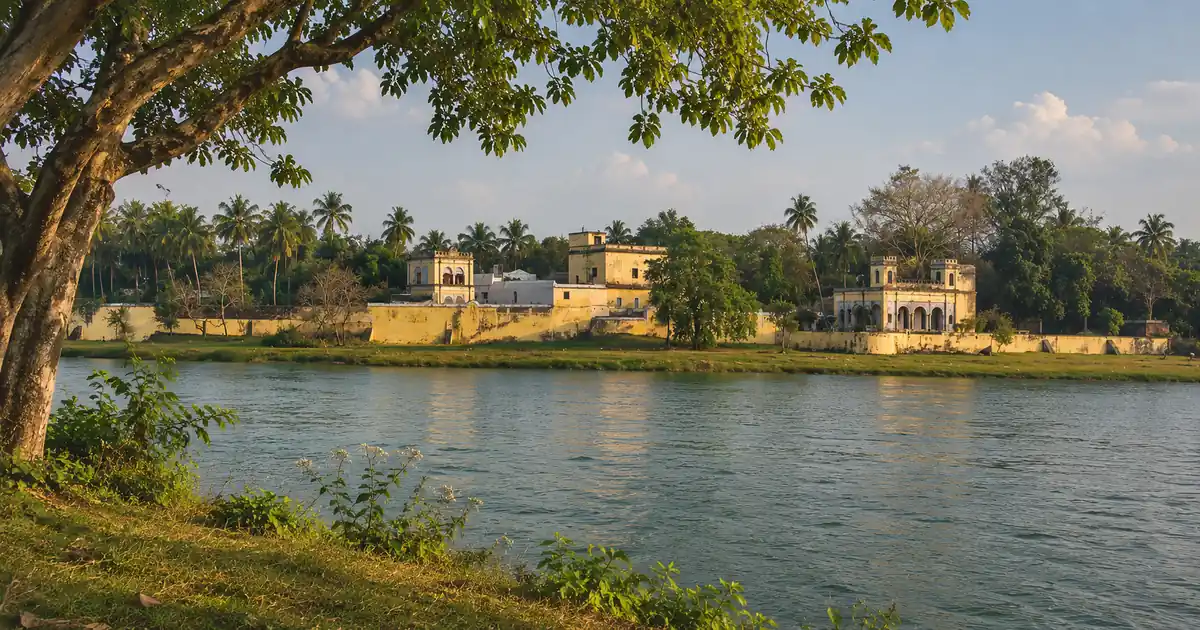
Surrounded by the tidal waters of the Kharasrota River in coastal Odisha, Aul Palace Kendrapara stands as one of the most historically significant living royal fortresses in eastern India. Also known across the region as Killa Aul, Aali Rajbati, or Ali Palace, this fortified riverside estate spans over 35 acres of heritage courtyards, ancient family shrines, and classical residential quarters.
Unlike royal residences that were abandoned or turned entirely into public museums, Aul Palace has remained the active ancestral home of the Deb royal dynasty across nineteen consecutive generations. It carries direct lineage to Gajapati Mukunda Deva, the last independent emperor of medieval Kalinga, offering visitors an authentic encounter with centuries of Odia royal tradition.
Key Takeaways
- Foundation in 1590 CE: Established by Raja Ram Chandra Deva, the eldest son of Gajapati Mukunda Deva, following strategic treaties during the Mughal era.
- Jaladurga Concept: Built directly on a looping bend of the Kharasrota River, utilizing tidal river currents as a natural defensive moat against invading cavalry.
- Continuous Royal Lineage: Maintained as an active royal residence across nineteen generations over 435 years by the Deb family.
- Architectural Blend: Features a distinctive yellow-painted facade constructed from river stone, burnt clay bricks, and traditional lime-surki mortar.
- Location & Travel: Situated in Aali block of Kendrapara district, roughly 50 km from Kendrapara town and 110 km northeast of Bhubaneswar.
Aul Palace Kendrapara at a Glance: Timings, Entry & Facts
Before planning your trip to coastal Kendrapara, review these verified operational facts compiled from the Kendrapara District Administration, heritage archives at Odisha Tourism, and our comprehensive Kendrapara district travel guide.
| Feature | Details |
|---|---|
| Official Name | Killa Aul Palace (Aali Rajbati) |
| Location | Aul (Aali) Block, Kendrapara District, Odisha |
| Founder | Raja Ram Chandra Deva (Eldest son of Gajapati Mukunda Deva) |
| Year of Establishment | 1590 CE (Late 16th Century) |
| Riverside Setting | Banks of the Kharasrota River (Brahmani River tributary) |
| Estate Area | Approximately 35 to 40 acres |
| Visiting Hours | 9:00 AM to 5:00 PM (Monday through Sunday) |
| Entry Fee | Free exterior grounds; private quarters require royal family permission |
| Nearest Railway Station | Jajpur Keonjhar Road (55 km) and Cuttack (95 km) |
| Recommended Time | 1.5 to 2 hours |
Key Heritage and Location Highlights
Aul Palace occupies a strategic riverfront vantage point where the Kharasrota River bends gracefully around the northern and western perimeter. This natural water barrier historically protected the estate while providing direct navigational access to coastal estuaries and maritime trading routes.
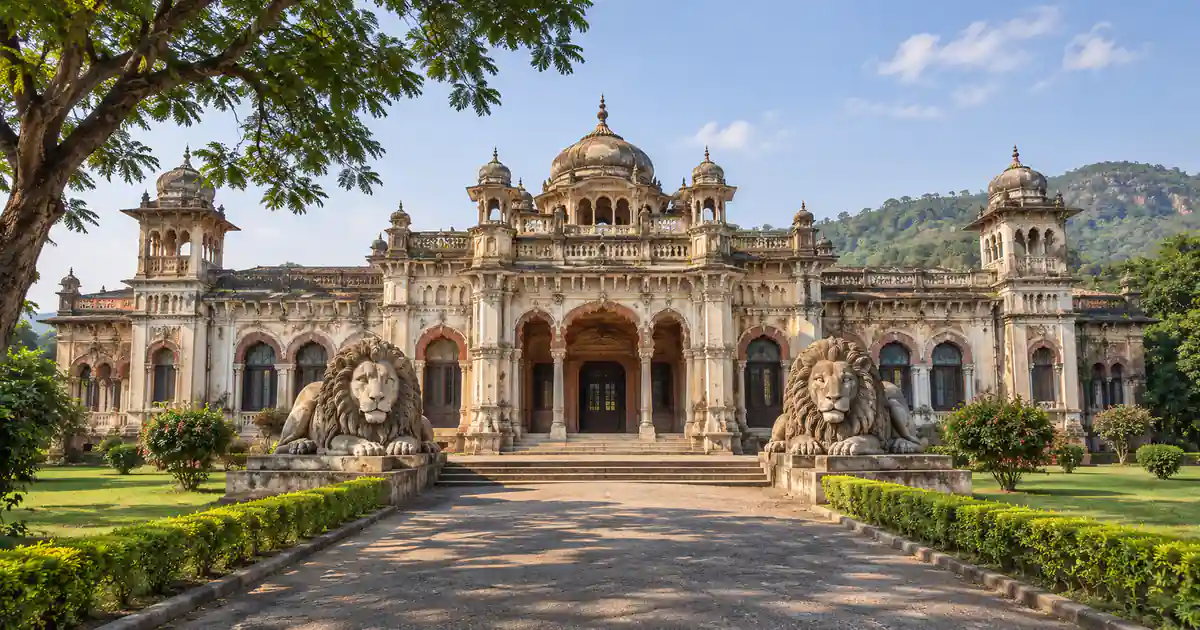
The estate is characterized by its cheerful yellow lime-washed exterior, high compound walls, arched wooden entryways, and ancient watchtowers. Within the sprawling complex, manicured gardens, open courtyards (angana), and shady banyan trees create an atmosphere of timeless pastoral calm.
Who Will Enjoy Visiting Aul Palace
Travelers who love authentic heritage properties off the tourist highway will find Aul Palace deeply captivating. The absence of commercial tour groups allows you to explore the grounds at a relaxed pace, photographing historic masonry and listening to river birds along the riverbank.
History enthusiasts seeking to understand the turbulent transition between the fall of the medieval Gajapati empire and the consolidation of Mughal rule will find Aul an indispensable stop. The estate preserves royal documents, antique weaponry, and architectural traditions that survived four centuries of political change.
The Royal History of Killa Aul and the Heirs of Mukunda Deva
The origins of Aul Palace are rooted in one of the most poignant chapters in the broader history of medieval Odisha.
Fall of Cuttack and the 1590 CE Foundation
In 1568 CE, the central throne of Kalinga collapsed following the death of Gajapati Mukunda Deva during internal rebellions and Afghan invasions at the medieval citadel of Barabati Fort in Cuttack. The fall of Mukunda Deva marked the end of an era of independent Hindu imperial rule across the region.
The royal heirs faced grave existential threats as regional factions fought for control of Utkal. In 1590 CE, Raja Ram Chandra Deva (known in regional chronicles as Telenga Ramachandra Deba), the eldest son of the deceased emperor, established a new sovereign fortified seat at Aul along the Kharasrota River.
Mughal Treaties under Raja Man Singh and Todar Mal
The survival of the fledgling Aul kingdom was secured through high-level diplomatic diplomacy. When Mughal Emperor Akbar sent his celebrated general Raja Man Singh and finance minister Raja Todar Mal to pacify Odisha, the Mughal administrators recognized the legitimate bloodline of Mukunda Deva.
Through a negotiated treaty, the Deb family was confirmed in hereditary possession of the Killa Aul zamindari estate. The rulers were granted autonomy in local administration, ritual traditions, and defense, enabling the principality to flourish through successive Afghan, Maratha, and British colonial eras.
Nineteen Generations of the Deb Royal Dynasty
For over four centuries, nineteen consecutive generations of the Deb dynasty have resided in Aul Palace. The rulers served as dedicated custodians of local culture, constructing irrigation tanks, establishing Sanskrit tols, and supporting local artisan communities.
During India’s freedom struggle, the royal family supported nationalist initiatives and democratic transitions. Today, direct descendants of the royal lineage, including Raja Braj Keshari Deb, continue to reside on the premises, actively preserving their family heirlooms and heritage architecture.
Riverfront Fort Architecture on the Banks of the Kharasrota
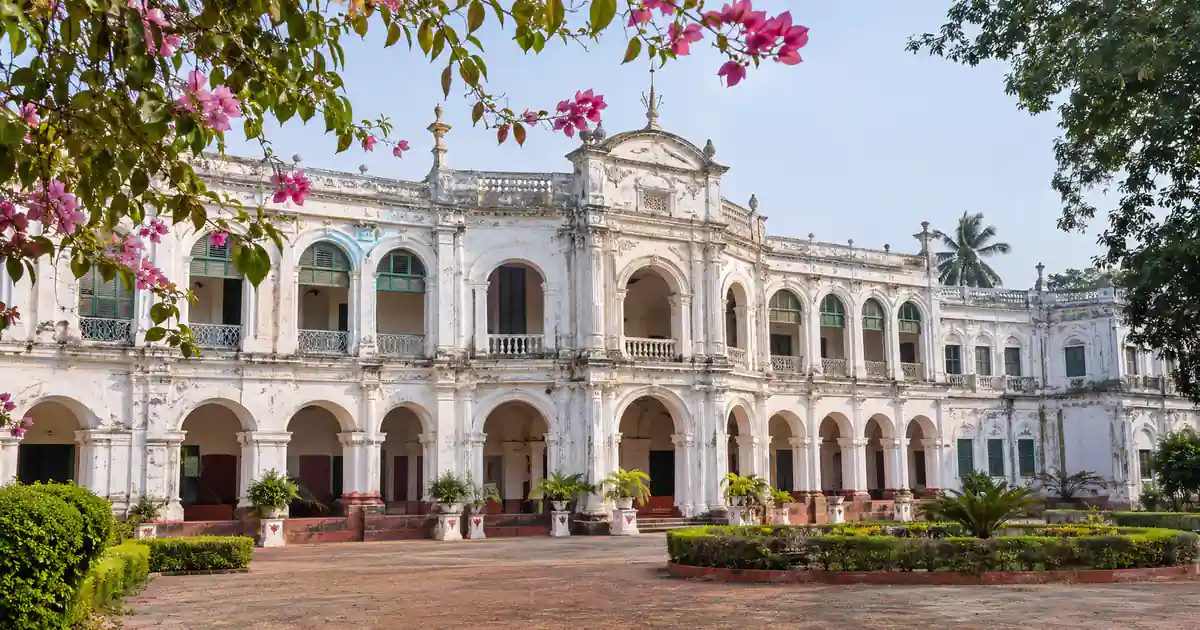
The layout of Aul Palace is a fascinating study in regional riverfront military engineering and indigenous residential design, presenting an interesting contrast to the colonial European styling of nearby colonial estate of Rajkanika Palace.
Jaladurga Natural Water Defensive Concept
In ancient Indian military treatises, a Jaladurga refers to a fortress protected by wide natural bodies of water. The builders of Aul applied this concept brilliantly by choosing a deep loop of the Kharasrota River.
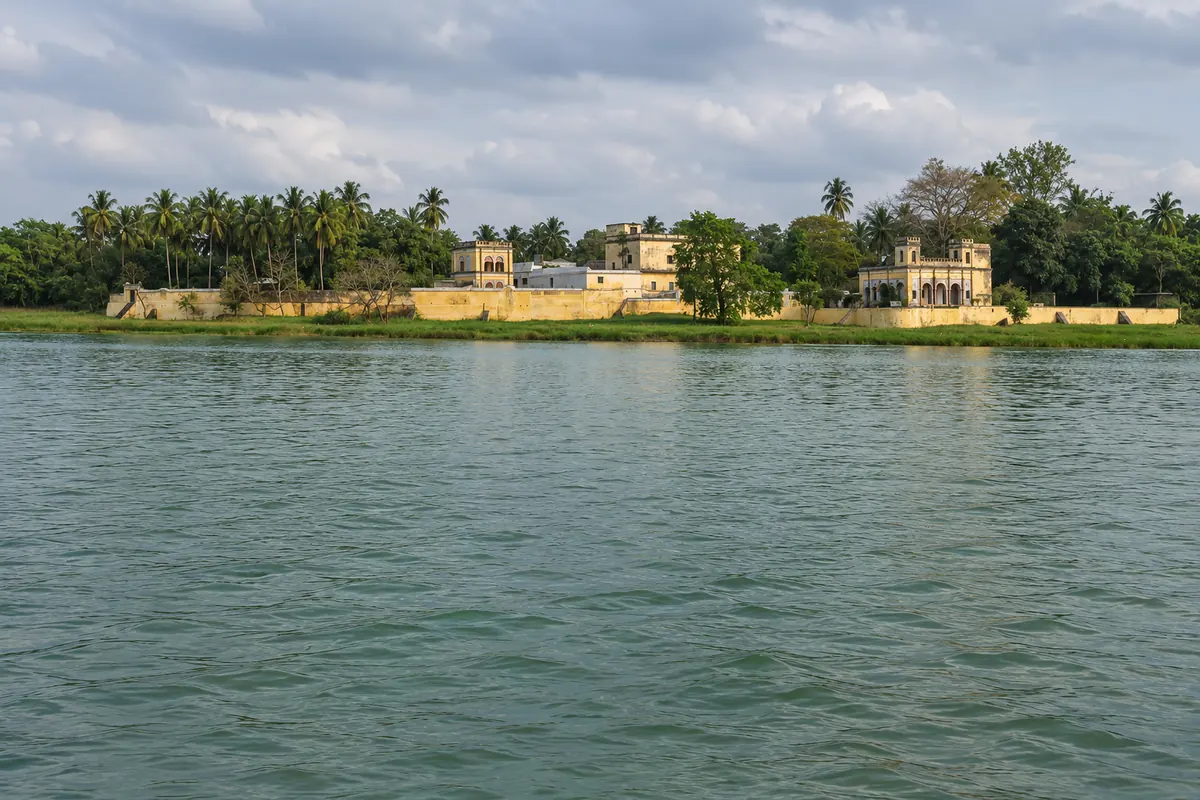
The river’s swift tidal currents acted as an impassable moat along two entire flanks of the palace. Sentinels posted on riverfront parapets could spot approaching war boats and river barges miles away, ensuring that surprise naval raids from coastal pirates or rival warlords were virtually impossible.
Distinctive Yellow Lime-Surki Exterior and Watchtowers
The entire palace complex was erected using native laterite stone blocks, burnt clay bricks, and mortar prepared from lime, river sand, and crushed brick powder (surki). This traditional mortar allowed the masonry to breathe in coastal humidity, preventing the internal decay common in modern concrete buildings.
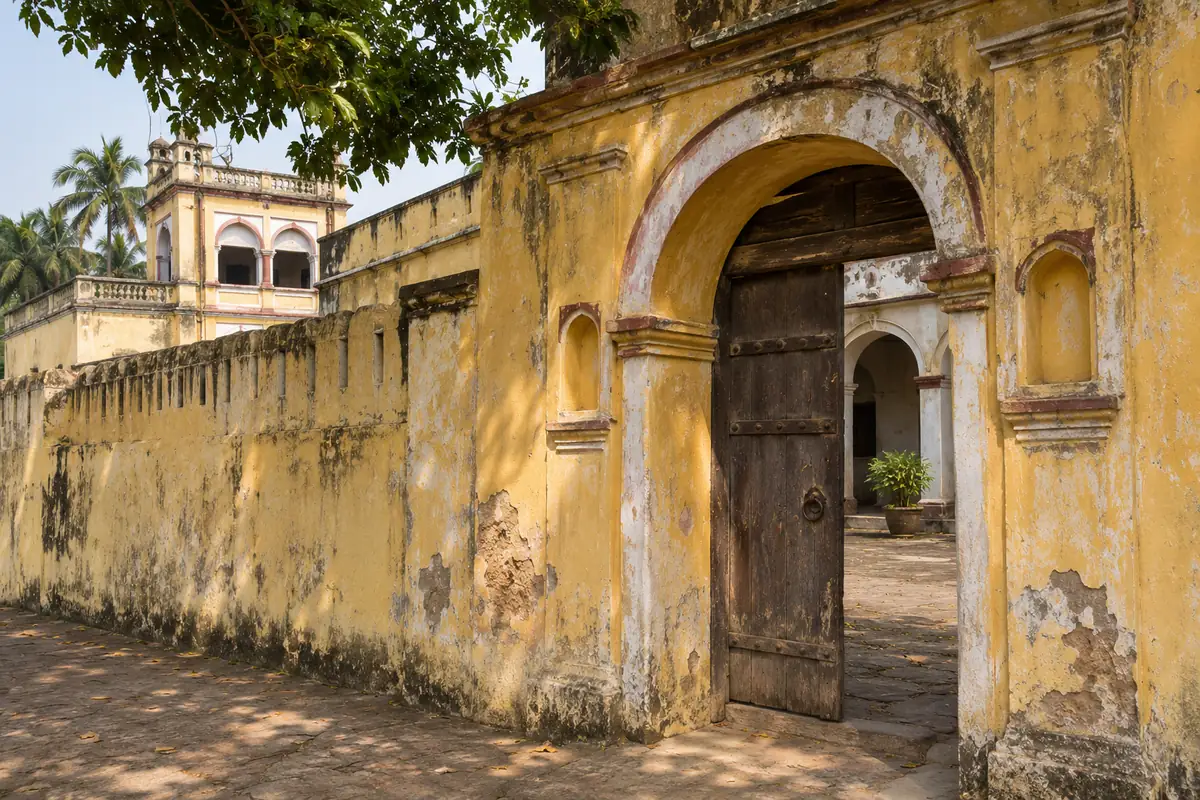
The exterior walls are finished in a signature ochre-yellow wash that reflects the intense coastal sunlight. Squat octagonal watchtowers placed at critical corners retain narrow musket slits, reminding modern visitors that this peaceful manor was once a battle-ready fortress.
The Historic Darbar Hall and Private Rani Mahal
The interior of the palace is organized into public administrative zones and private domestic enclosures:
- The Darbar Hall: Comparable to a Diwan-e-Aam, this open-sided court hall features heavy square masonry pillars, a raised royal dais, and high timbered ceilings where the Raja held judicial councils.
- Rani Mahal: The secluded residential wing reserved for the royal ladies, built around quiet inner courtyards with decorative wooden jali screens and shaded corridors.
- Ghodashala (Royal Stables): Large stone-walled stable compounds that once housed the palace cavalry horses and royal carriage elephants.
- Bhandara (Granaries): High-capacity grain storehouses designed to hold rice reserves during coastal famines and river flood seasons.
Living Heritage: Temples, Granaries, and Restored Guest Quarters
Aul Palace remains an active center of regional spiritual life and cultural hospitality.
Royal Family Deities and Ancestral Shrines
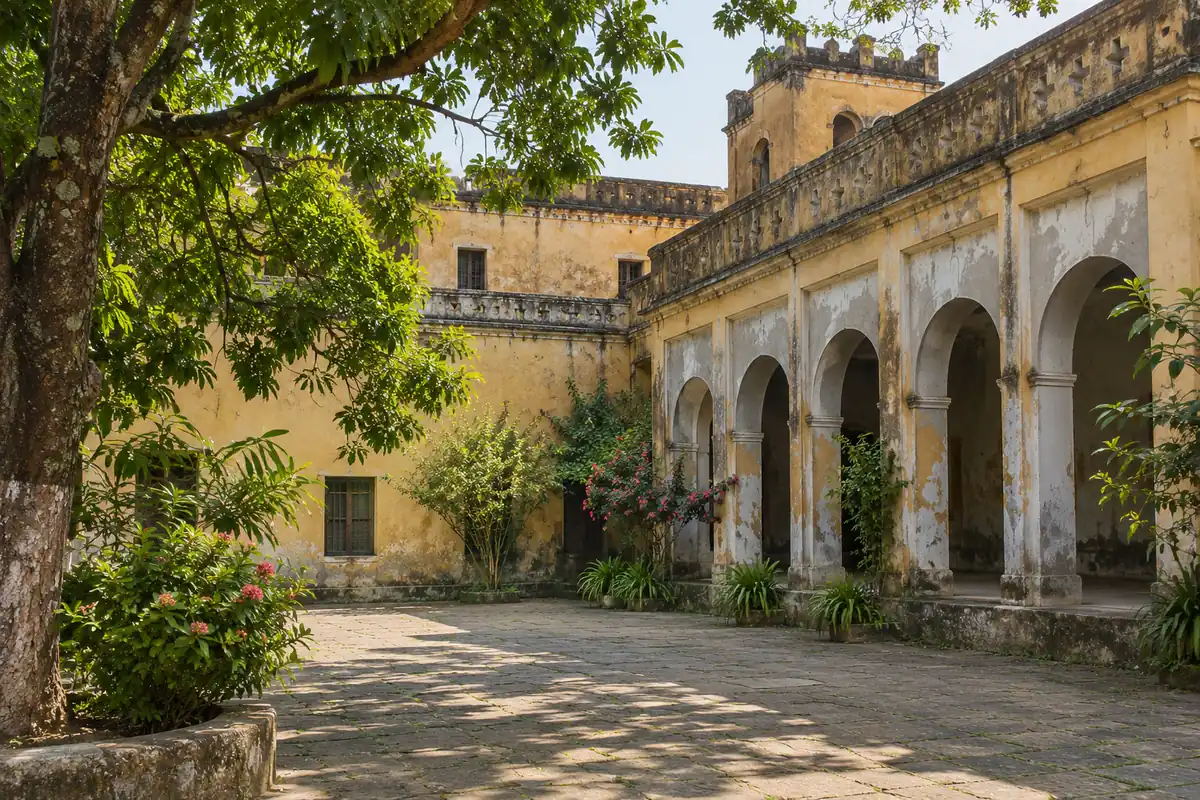
Within the palace walls stand several ancient shrines dedicated to the family’s tutelary deities. Daily morning and evening pujas are conducted by hereditary royal priests following centuries-old Vedic rituals.
The prominent Devi Temple inside the courtyard features classic Kalinga pidha deula architecture. During annual festivals such as Durga Puja, Raja Parba, and Kartika Purnima, the palace courtyards come alive with traditional Odissi hymns, folk dance performances, and community feasts.
Heritage Homestay Wings: Tungi and Pakshi Niwas
To protect the historic buildings against damp river winds, the royal family initiated careful conservation projects. Portions of the estate have been thoughtfully restored as exclusive heritage homestay rooms:
- Tungi (Guest House): Historic garden pavilions restored with antique four-poster beds, vintage brass fittings, and private shaded verandas.
- Pakshi Niwas: Riverside rooms offering quiet views across the Kharasrota River, where kingfishers, egrets, and cormorants can be observed in the morning mist.
Staying at the heritage wing offers visitors authentic home-cooked Odia royal cuisine prepared with fresh river fish, organic garden vegetables, and traditional coastal spices.
Best Time to Visit Aul Palace and Coastal Weather
Kendrapara district experiences a tropical maritime climate characterized by cool winters, warm humid summers, and refreshing coastal monsoon rains.
| Season | Months | Daytime Temperature | Visiting Experience |
|---|---|---|---|
| Winter (Best Time) | October to March | 16°C to 28°C | Cool morning breezes, pleasant afternoon sunshine, ideal for river walks and exploring courtyards. |
| Summer | April to June | 32°C to 40°C | Warm and humid; midday walking can be exhausting without adequate shade and hydration. |
| Monsoon | July to September | 26°C to 34°C | The Kharasrota River flows with full volume and fields turn lush green; periodic showers require umbrellas. |
Winter Season (October to March)
The months from October through March offer the most comfortable weather for exploring Aul Palace. The humidity drops significantly, daytime temperatures remain moderate, and clear skies provide excellent photography conditions.
Winter also corresponds with the migratory bird season in neighboring river wetlands, making it easy to combine your palace tour with wildlife excursions.
Summer Heat and Monsoon River Swells
Summer from April to June brings high humidity and strong daytime sun across coastal Kendrapara. If traveling during these months, plan your palace visit in the early morning between 8:30 AM and 10:30 AM or late in the afternoon.
The monsoon season brings heavy coastal showers that replenish the Brahmani and Kharasrota basins. While the lush green countryside looks scenic, check local road conditions before driving, as low-lying coastal bridges can experience temporary waterlogging during extreme weather.
How to Reach Aul Palace Kendrapara: Road, Rail & Route
Aul Palace is accessible via well-paved state highways connecting coastal Kendrapara with Cuttack, Bhubaneswar, and Jajpur.
| Route Stage | Distance & Road | Travel Time |
|---|---|---|
| Kendrapara Town to Aul | 50 km via State Highway 9A | 1 hour 15 minutes by car or bus |
| Cuttack to Aul | 95 km via Salipur and Pattamundai | 2 to 2.5 hours by taxi or bus |
| Bhubaneswar to Aul | 110 km via NH-16 and Kendrapara | 2.5 to 3 hours by private car |
| Jajpur Road to Aul | 55 km via Mangalpur and Aali | 1 hour 15 minutes by car |
Driving from Cuttack and Kendrapara Town
From Cuttack, take the Cuttack-Chandabali State Highway passing through Salipur and Kendrapara town:
- Follow State Highway 9A east through Kendrapara and Pattamundai.
- Cross the Kharasrota river bridge approaching Aali block.
- Follow signboards toward Killa Aul Palace along the riverbank road.
The entire road is well-paved and passes through scenic rural agricultural landscapes dotted with coconut groves and freshwater ponds.
Route from Bhubaneswar via Cuttack-Chandabali Highway
From Bhubaneswar:
- Drive north along National Highway 16 up to Cuttack or Jagatpur bypass.
- Divert onto the four-lane highway toward Kendrapara town.
- The total distance of 110 km takes approximately 2.5 to 3 hours by car or rented taxi.
Nearest Railheads: Jajpur Keonjhar Road and Cuttack
The nearest major railway stations are:
- Jajpur Keonjhar Road (JJKR): Approximately 55 km northwest, connected by regular express trains from Howrah, Bhubaneswar, and Puri. Taxis from Jajpur Road reach Aul in about 75 minutes.
- Cuttack Junction (CTC): Roughly 95 km away, offering round-the-clock rail connections and inter-district bus services from Badambadi bus terminus.
Nearby Attractions in the Kendrapara Tourism Circuit
A visit to Aul Palace fits naturally into an enriching full-day or weekend itinerary exploring the coastal heritage and biodiversity of Kendrapara.
Bhitarkanika National Park Mangrove Safari
Located roughly 40 km northeast, the world-famous mangrove wilderness of Bhitarkanika National Park is India’s second-largest mangrove ecosystem. Boat safaris from Khola and Gupti entry gates provide up-close sightings of giant saltwater crocodiles, spotted deer, kingfishers, and rare monitor lizards.
Colonial Crocodile Skull Museum at Rajkanika Palace
Situated just 25 km from Aul, the historic Kanika Palace in Rajkanika displays nineteenth-century European architecture and a unique private museum. Visitors can view vintage hunting trophies and the world’s largest preserved saltwater crocodile skull recorded in the Guinness Book of Records.
Historic False Point and Hukitola Island
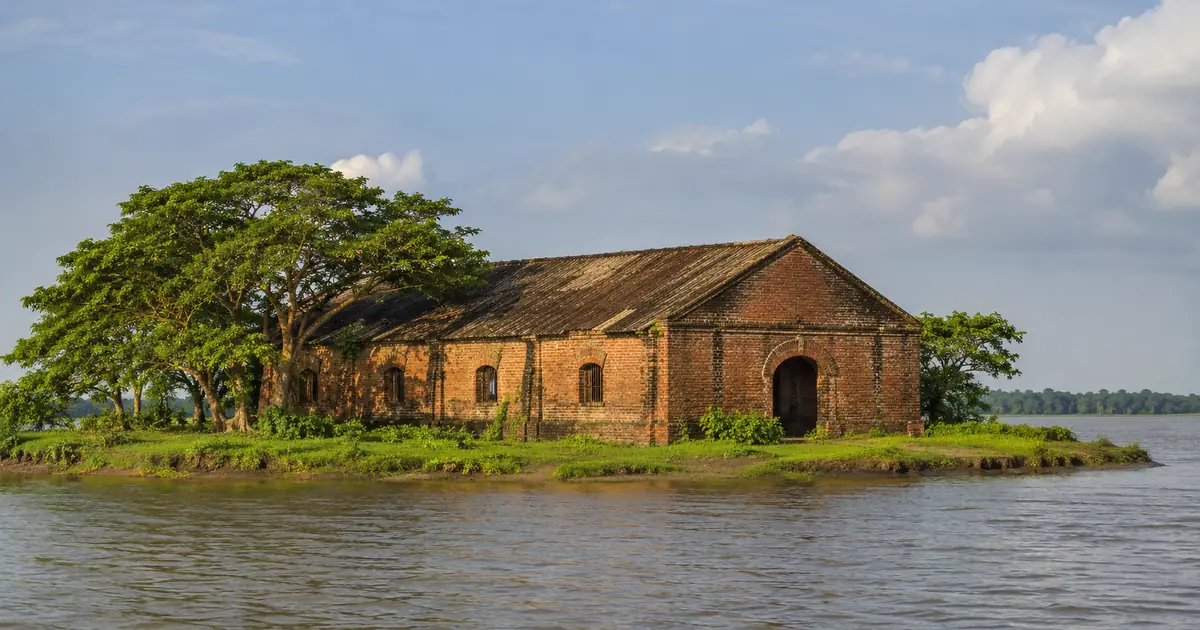
Further southeast along the coast lies the historic maritime outpost at Hukitola Island. Accessible by boat through the tidal creeks of False Point harbor, Hukitola features a massive nineteenth-century British storm refuge building with an ingenious rainwater harvesting roof system.
Visitor Tips, Photography Rules, and Heritage Etiquette
Because Aul Palace is both a historic monument and a living family estate, keeping a few thoughtful etiquette tips in mind will ensure a pleasant visit.
[!TIP] Respect the privacy of the residential family quarters. Visitors should inquire at the front entrance gatehouse before entering inner courtyards or photographing residential areas.
Guidelines for Exploring Private Living Quarters
- Inquire at the Gate: Speak with the estate staff or gatekeeper upon arrival to confirm which sections of the palace and temples are open for viewing.
- Dress Modestly: Casual, respectful clothing is recommended, especially when visiting the family temples inside the inner compound.
- Footwear in Temples: Remove your shoes before stepping onto the raised platforms of ancestral shrines and the central Darbar Hall.
Responsible Riverfront Heritage Tourism
- Preserve Historic Masonry: Do not touch, scratch, or lean against antique lime-surki plaster or carved wooden door frames.
- Leave No Trace: Place all snack wrappers and beverage bottles in disposal bins or return them to your vehicle to maintain the scenic beauty of the riverbank.
- Support Local Communities: Sample regional culinary delicacies such as authentic Kendrapara Rasabali in local sweet shops when traveling through nearby Pattamundai or Kendrapara town.
Frequently Asked Questions (FAQs)
Where is Aul Palace located in Odisha?
Aul Palace is situated in Aali (Aul) block of Kendrapara district in coastal Odisha, positioned on a scenic bend along the Kharasrota River. It lies roughly 50 km from Kendrapara town and approximately 110 km northeast of Bhubaneswar.
Who founded Aul Palace and in which year?
The palace was established in 1590 CE by Raja Ram Chandra Deva, the eldest son of Gajapati Mukunda Deva, the last independent ruler of medieval Kalinga. It has remained the ancestral seat of the Deb royal family for nineteen generations.
Why is Aul Palace called a Jaladurga or water fort?
Aul Palace was strategically built on a natural loop of the Kharasrota River, which encircles two sides of the estate like a defensive moat. This water boundary provided natural protection against cavalry invasions while enabling direct river trade.
What are the visiting hours of Aul Palace?
The exterior grounds and courtyard areas are generally open to visitors daily from 9:00 AM to 5:00 PM. Exploring the public exterior sections typically takes between one and two hours during daylight hours.
Is there an entry fee to visit Aul Palace?
Walking around the outer grounds and viewing the palace exterior is free of charge for tourists. Access to private residential apartments, heritage rooms, or guided family tours is subject to the permission of the royal estate caretakers.
Can travelers stay overnight at Aul Palace?
Yes, portions of the historic estate have been restored as a private heritage homestay operated by royal family descendants. Guests can reserve heritage suites and enjoy authentic coastal Odia cuisine with advance booking.
What nearby attractions can be combined with Aul Palace?
Travelers can easily combine Aul Palace with wildlife safaris in Bhitarkanika National Park, located about 40 km away. Other nearby attractions in the circuit include the colonial Rajkanika Palace and the historic maritime monument on Hukitola Island.