Bhulekh Odisha Mutation 2026: Apply Online and Check Status
Learn how to apply for Bhulekh Odisha mutation in 2026, track case status, and understand the documents needed for land record updates.
The process of land mutation, locally known in Odisha as Dakhila Kharaj, is the critical legal bridge between the registration of a property and the official recognition of ownership by the state government. While a registered sale deed serves as proof of a transaction, the mutation process updates the Record of Rights (ROR), ensuring that the new owner’s name is reflected in the government’s land revenue database. In 2026, this process has been modernized through the digital initiatives of the Revenue & Disaster Management Department, significantly increasing transparency and efficiency for citizens across the state.
For property owners in Odisha—whether dealing with urban plots in Bhubaneswar or agricultural land in rural districts—completing the mutation is essential. It establishes the legal right to pay land revenue, simplifies the process of obtaining home loans, and is a mandatory prerequisite for any future sale or transfer of the property. This guide provides an authoritative, step-by-step breakdown of the online and offline procedures for Bhulekh Odisha Mutation, the documentation required, and the technical aspects of tracking application status.
What is Land Mutation (Dakhila Kharaj) in Odisha?
Land mutation is the formal process of recording the transfer of title of a property from one person to another in the government’s land records. In Odisha, these records are maintained in the form of the Record of Rights (ROR), commonly referred to as the ‘Patta.’ The mutation process is overseen by the Tahasildar of the respective jurisdiction.
There are three primary instances where mutation is required:
- Sale/Purchase: When a property is bought or sold via a registered deed.
- Inheritance/Succession: When the original owner passes away and the land is transferred to legal heirs.
- Gift/Partition: When land is gifted to a relative or legally partitioned among family members.
Without a completed mutation, the previous owner’s name remains on the official records, which can lead to legal disputes, difficulties in securing utility connections (electricity/water), and the inability to use the land as collateral for bank loans. For a deeper understanding of the administrative history of the region, readers may consult the History of Odisha, which details the evolution of land governance in the state.
Why the DWIST Odisha Portal is a Game Changer
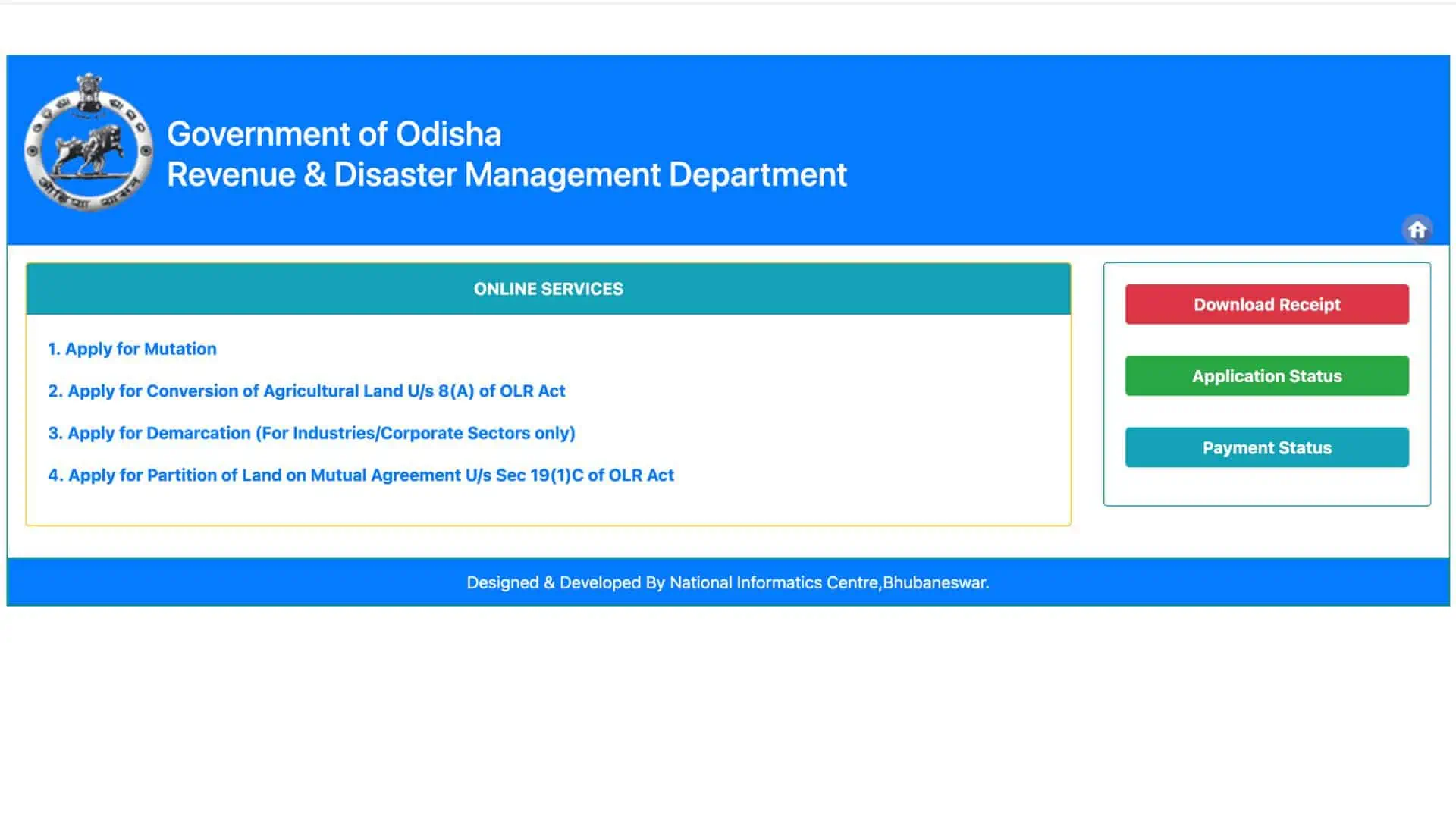
The Dynamic Web Information System for Tahasils (DWIST), accessible at dwistodisha.nic.in, is the primary digital gateway for land administration services in Odisha. This portal provides a centralized platform for citizens to apply for mutation, track their cases, and interact with the Tahasil office without the need for frequent physical visits.
Key features of the DWIST portal include:
- Real-time Tracking: Applicants can view the exact stage of their file within the Tahasil workflow.
- SMS Integration: Automated alerts are sent to the applicant’s registered mobile number at every milestone.
- Document Verification: Scanned copies of deeds and ID proofs are stored securely and verified digitally by revenue officials.
The integration of DWIST with the Bhulekh Odisha Plot Details and Map database ensures that the mutation process is based on accurate, verified land data, reducing the margin for clerical errors and fraudulent entries.
Pre-requisites: Mandatory Documentation
The success of a mutation application depends heavily on the accuracy and clarity of the submitted documents. As of 2026, all documents must be uploaded in high-resolution PDF or JPG formats, typically with a file size limit of 2MB per document.
The following documentation is mandatory for a standard sale-based mutation:
- Registered Sale Deed: All pages of the deed, including the registration stamps and signatures.
- Current ROR (Patta): A copy of the existing land record showing the seller’s name.
- Identity and Address Proof: Aadhaar Card is the preferred document for both buyer and seller.
- Land Revenue Receipt: Proof of the most recent land tax payment (e-Pauti).
- Encumbrance Certificate: Often required to prove the land is free from existing legal liabilities.
- Succession Certificate: Required specifically for cases involving inheritance.
Failure to provide legible copies or missing pages of the sale deed are among the leading causes of application rejection in the Odisha revenue system.
Step-by-Step Guide: Online Mutation Application Process
The digital application process for Bhulekh Odisha Mutation is designed to be user-friendly. In 2026, the interface has been optimized for both desktop and mobile devices.
1. Portal Access and Registration
Navigate to the DWIST Odisha portal. Locate the ‘Land Record Services’ section and select the ‘Mutation’ option. Users are required to register using a valid mobile number, which will be used for all future correspondence.
2. Identity Verification (OTP)
Enter the applicant’s name and contact details. A One-Time Password (OTP) will be sent to the registered mobile number. Verification of this OTP is mandatory to proceed to the application form.
3. Property Details Entry
Select the relevant District, Tahasil, and Village (Mouza). Applicants must then enter the Khata Number and Plot Number exactly as they appear on the registered sale deed. For verification of administrative boundaries, the Odisha Map and Networks guide serves as a useful reference.
4. Buyer and Seller Information
Input the full legal names and addresses of both the transferor (seller) and the transferee (buyer). In cases of death-related transfers, the ‘Succession’ category must be selected, requiring details of all legal heirs.
5. Document Upload and Submission
Attach the digital copies of the pre-requisite documents. After a final review of the entered data, submit the application. The system will generate a unique Application Number, which is essential for tracking.
How to Decipher Your Odisha Patta (ROR): Understanding the Columns
The Record of Rights (ROR) is the primary legal document for any property in Odisha. Understanding its structure is vital for landowners.
- Khata Number: The account number representing a group of plots under one owner.
- Plot Number: Each piece of land has a unique identifier on the village map. In 2026, many of these are linked to high-resolution satellite imagery.
- Kissam (Type of Land): Specifies land classification (e.g., Gharabari for homestead, Saradhya for agricultural). The tax rate and conversion potential depend on this classification.
- Area: Typically measured in Acres and Decimals (100 Decimals = 1 Acre).
- Rayat (Owner) Details: Lists the current owner’s name, parentage, and category.
- Revenue (Khajana): The annual tax amount determined by the land’s area and type.
Precise knowledge of these details is essential during field verification by the Revenue Inspector.
The 5T Vision: Transforming Land Governance in Odisha
The 5T framework (Teamwork, Technology, Transparency, Time, and Transformation) has revolutionized land administration in Odisha. Under the “Mo Sarkar” initiative, officials are now directly accountable to the public.
Key advancements include:
- Automatic Triggering: In modernized tehsils, property registration automatically initiates a mutation case.
- Real-time Monitoring: Citizens can track applications online, reducing the need for physical visits.
- Standardized Timelines: Disposal of mutation cases is now subject to strict time-bound rules.
This transformation ensures that land services are delivered efficiently across all 30 districts, from metropolitan hubs to remote villages.
Succession Mutation: The Legal Framework for Inheritance
Succession mutation is the process of updating land records after the death of the registered owner. This process emphasizes the equal rights of all legal heirs, including women, in ancestral property.
Core Requirements:
- Death Certificate: Mandatory proof of the previous owner’s passing.
- Legal Heir Certificate: Obtained from the Tahasil office to verify legitimate successors.
- Notice Period: A mandatory 30-day public notice is issued to identify potential objections from other family members.
Ensuring that inheritance is legally recorded prevents long-term family disputes and secures the legacy of the deceased for future generations.
The e-Pauti Portal: Integrating Land Revenue with Mutation
A critical component of land ownership in Odisha is the regular payment of land revenue, traditionally known as Khajana. In the modern administrative ecosystem of 2026, the e-Pauti portal functions as the digital ledger for these payments. Mutation and land revenue are inextricably linked; a Tahasildar will typically not approve a mutation if there are outstanding revenue dues on the property.
Technical Integration: The e-Pauti system is integrated with the Bhulekh database. When a mutation is completed and a new Khata number is generated, the system automatically creates a corresponding revenue profile. Property owners can then use their Khata number to pay annual taxes online. This digital receipt (Pauti) is a vital supporting document for various government transactions and is often required by banks during the annual review of agricultural loans.
Classification of Deeds: Understanding the Basis of Mutation
Not all mutations are based on a standard ‘Sale Deed.’ The legal basis for a mutation can vary depending on how the property was acquired. Understanding these classifications is essential for providing the correct information on the DWIST portal.
- Sale Deed (Bikraya Kabala): The most common basis, representing a commercial transaction between a buyer and a seller.
- Gift Deed (Dana Kabala): Used when property is transferred without monetary consideration, usually between close relatives. While the process is similar to a sale mutation, stamp duty and registration fees differ.
- Exchange Deed (Badala Kabala): Occurs when two parties agree to swap properties of similar value. This requires a double mutation—one for each plot involved.
- Relinquishment Deed: When a legal heir gives up their right to a shared ancestral property in favor of another heir.
- Settlement Deed: Often issued by the government or a trust (like the Jagannath Temple Administration) to settle land in favor of an individual.
Each deed type has specific legal nuances that the Tahasildar must verify before updating the Record of Rights.
The Administrative Hierarchy of Revenue Governance
To navigate the land mutation process effectively, it is important to understand the hierarchy of the Revenue & Disaster Management Department in Odisha.
- Revenue Inspector (RI): The primary ground-level official responsible for field verification and maintaining the Halkabandi records.
- Tahasildar / Additional Tahasildar: The quasi-judicial authority empowered to pass mutation orders. They act as the “Judge” in the revenue court.
- Sub-Collector: The first appellate authority. If an applicant is aggrieved by a Tahasildar’s order, they can file an appeal before the Sub-Collector.
- Collector (District Magistrate): Oversees the overall land administration of the district and handles complex land ceiling and settlement cases.
- Revenue Divisional Commissioner (RDC): Coordinates revenue administration across multiple districts.
Understanding this structure helps property owners know where to go if their mutation case encounters legal or administrative hurdles.
Digitization of Historical ‘Sabak’ Records
One of the most ambitious projects in Odisha’s land governance has been the digitization of historical ‘Sabak’ (old) records. Before the ‘Hal’ (current) settlement, many land records were maintained in manual ledgers, some dating back to the pre-independence era.
In 2026, the government has completed the high-resolution scanning of these legacy documents. This is particularly useful for inheritance mutations where the chain of ownership must be traced back several generations. Accessing these digitized historical records via the Bhulekh portal allows for a more accurate verification of “Succession” claims, reducing the likelihood of fraudulent inheritance mutations.
District-Specific Variations in Land Administration
While the DWIST portal provides a unified interface, there are minor variations in how land is managed across Odisha’s 30 districts due to historical administrative differences.
- Coastal Districts (Puri, Cuttack, Ganjam): High density of ‘Trust’ lands (like Debottar or Amrutamanohi) and complex tidal area classifications.
- Western Districts (Sambalpur, Bolangir): Prevalence of ‘Gountia’ historical records and specific irrigation-based land classifications (Bahal, Bernat, Mal).
- Tribal Districts (Mayurbhanj, Koraput): Strict enforcement of Section 22 of the OLR Act and special focus on Forest Rights Act (FRA) settlements.
Property owners should be aware of the specific land ‘Kissam’ (type) prevalent in their district to ensure accurate application filing.
The Role of ‘Ameens’ in Modern Land Surveying
The Ameen is a technical official within the Tahasil who specializes in land measurement. In the past, Ameens used traditional chains (Gari) for measurement. In 2026, the department has transitioned to:
- ETS (Electronic Total Station): For high-precision boundary marking.
- DGPS (Differential Global Positioning System): For mapping large tracts of land with centimeter-level accuracy.
- Drone Surveying: Increasingly used for updating village maps in hilly or densely populated areas.
When a mutation involves a ‘Partition’ (dividing one plot into two), the Ameen’s technical report is the primary document used by the Tahasildar to create the new map entries in the Bhulekh system.
Legal Remedies: What to Do if a Mutation is Contested
In a state with a high valuation of land, it is not uncommon for mutation cases to be contested. If an objection is filed during the 30-day notice period:
- Notice of Hearing: The Tahasildar will issue a notice to both the applicant and the objector.
- Revenue Court Proceeding: Both parties are given an opportunity to present evidence (deeds, possession proofs, earlier RORs).
- Order on Merit: The Tahasildar passes a speaking order either allowing or rejecting the mutation based on the evidence.
If a party is unsatisfied, they can file a Mutation Appeal within 30 days before the Sub-Collector. This legal structure ensures that the mutation process is not just an administrative task but a fair, judicial exercise of power.
Inter-departmental Linkages: Registration to Mutation
A major development in 2026 is the seamless integration between the Sub-Registrar’s office and the Tahasil office via the LRMS (Land Records Management System). When a deed is registered, the data is pushed to the revenue database, facilitating a faster mutation process.
This integration serves as a safeguard against fraudulent transactions, as the system can verify ownership in real-time. For more on the legal landscape, see our History of Odisha article.
How to Correct Errors After Mutation (Case No. 1)
Clerical errors in the ROR, such as name misspellings or incorrect plot areas, can be rectified through a Case No. 1 (Correction of Record) filing. Applicants must provide primary evidence, such as the original sale deed or Aadhaar, to justify the correction. Early detection and correction of these errors are advised to prevent future title complications.
Linking Land Records with Other Schemes (PM-Kisan & KALIA)
The Bhulekh database is the primary source for identifying beneficiaries for state and central agricultural schemes. Mutated records are essential for:
- PM-Kisan: Central financial support for farmers.
- KALIA Scheme: Odisha’s specialized support for cultivators and landless laborers.
Updated land records ensure that financial aid reaches the actual owner and cultivator. For health safety nets, residents should also look into the Biju Swasthya Kalyan Yojana.
Land Conversion (Non-Agricultural) vs. Mutation
Mutation updates ownership, while conversion changes land use. If agricultural land is intended for residential use, a separate application for conversion under the OLR Act is required after the mutation is completed. Conversion typically involves a premium fee and a specific verification process to ensure the change in land use complies with local zoning laws.
Understanding Land Measurement Units in Odisha
Accurate measurement is the foundation of land records. While decimal/acre is the official standard, traditional units remain in local use.
| Unit | Decimal Equivalent | Context |
|---|---|---|
| 1 Decimal | 435.6 sq. ft. | Standard small unit |
| 1 Guntha | 4 Decimals | Common in Western Odisha |
| 1 Mana | 100 Decimals (1 Acre) | Coastal Odisha standard |
| 1 Bigha | 33 - 80 Decimals | Variable regional unit |
Precise unit conversion is essential when filling out mutation applications to avoid technical rejections.
The Role of the Sub-Registrar vs. Tahasildar
Land transactions in Odisha involve two distinct administrative pillars:
- Sub-Registrar: Responsible for the registration of sale deeds and collection of stamp duty.
- Tahasildar: The custodian of land records who oversees the mutation process and updates the ROR.
Understanding this distinction ensures that citizens approach the correct office for each stage of their property transaction.
A Historical Perspective on Land Settlements
Modern land records are the result of periodic Major Settlements where land was surveyed and settled. These operations replaced ‘Sabak’ (Old) records with ‘Hal’ (Current) records. In 2026, these historical records are digitized, preserving the state’s administrative heritage while providing a secure foundation for modern commerce.
Protecting Tribal Lands: Sections 22 and 23 of the OLR Act
Odisha maintains strict legal protections for tribal lands. Under Section 22 of the OLR Act, land belonging to a Scheduled Tribe (ST) person cannot be transferred to a non-ST person without prior permission from the Sub-Collector. The mutation process includes a mandatory verification of these permissions to prevent illegal alienation of tribal property.
Tips for Non-Resident Odias (NROs) and NRIs
For those residing outside the state or country, the digital mutation process is a vital tool. NROs should:
- Utilize the DWIST portal for remote application and tracking.
- Ensure a registered Power of Attorney (POA) is in place if physical presence is required for field visits.
- Regularly verify their records on the Bhulekh Odisha portal.
Expert Procedural Guidelines for Complex Cases
For property owners dealing with non-standard transactions, the following expert guidelines are recommended:
- Encumbrance Verification: Always obtain a 13-year or 30-year Encumbrance Certificate (EC) before purchase to ensure the chain of ownership is clear.
- Benchmark Valuation: Verify the government’s benchmark valuation for the plot. Under-valuation in the sale deed can lead to issues with both registration and subsequent revenue verification.
- Public Notice Monitoring: During the 30-day notice period, it is advisable to ensure that the notice is properly displayed at the Tahasil and Gram Panchayat offices to avoid future claims of “non-receipt of notice.”
- Digital Record Backup: Always maintain digital copies of the final ‘Order Sheet’ of the mutation case, in addition to the updated ROR.
Frequently Asked Questions (FAQ)
1. How long does the mutation process take in Odisha?
Typically, mutation cases are processed within 45 to 90 days, including the 30-day notice period.
2. Is land mutation mandatory?
Yes, it is essential for establishing legal title, paying land revenue, and for any future sale of the property.
3. What is the difference between Bhulekh and DWIST?
Bhulekh is a viewing portal for land records; DWIST is the transactional portal for revenue services like mutation.
4. Can I apply for mutation without a Sale Deed?
Standard mutations require a registered deed. Inheritance cases require a Legal Heir Certificate and Death Certificate.
5. What is the fee for land mutation in 2026?
The standard fee is approximately ₹100, plus applicable online service charges.
6. Can I check mutation status without an application number?
The application number is required for online tracking. If lost, the Tahasil office can assist using Khata/Plot details.
7. What is ‘Chaka’ land?
It refers to consolidated land holdings. Mutation of such land must comply with consolidation laws to prevent fragmentation.
8. How do I download my updated ROR?
After the mutation order is passed, the updated ROR can be downloaded from the Bhulekh Odisha portal.
9. What is ‘Abada Jogya Anabadi’ land?
This is cultivable government land. It cannot be mutated without a formal settlement or lease from the government.
10. Can mutation be done for mortgaged land?
Yes, but the bank’s lien will typically be recorded in the ‘Remarks’ column of the ROR.
11. What is ‘Bhoodan’ land and can it be mutated?
Bhoodan land was donated during the Bhoodan movement. Mutation of such land is subject to specific restrictions and requires verification from the Bhoodan Yagna Samiti records.
12. Can mutation be done for property within a Municipal Corporation?
Yes. While the Municipal Corporation handles ‘Holding Tax,’ the land records (ROR) are still maintained and mutated by the Tahasil office under the Revenue Department.
13. What is an ‘Exchanged ROR’?
This is a term sometimes used when two parties swap land. Both parties must register an Exchange Deed and then file for separate mutations to update their respective names on the new plots.
14. How do I correct a boundary error on the Bhu-Naksha (Map)?
Boundary corrections are handled through a ‘Demarcation’ case. An Ameen will survey the land, and if an error is found, the Tahasildar will order a map correction in the digital database.
15. Is mutation required for flats and apartments?
Yes. While the land is often held ‘undivided,’ the individual flat owner must mutate their ‘Undivided Share’ (UDS) in the Tahasil records to be recognized as the legal owner of that portion of the land.
16. What is ‘Sthitiban’ status in an ROR?
‘Sthitiban’ indicates that the tenant has permanent, heritable, and transferable rights over the land. This is the most secure form of private land ownership in Odisha.
17. Can mutation be done if there is a ‘Caveat’ filed?
If a caveat or a stay order from a civil court is active, the Tahasildar is legally barred from proceeding with the mutation until the stay is vacated or the court passes a final judgment.
18. What is the ‘Halkabandi’ system?
It is the administrative division of a Tahasil into ‘Halkas,’ each overseen by a Revenue Inspector. Knowing your Halka number can speed up interactions at the RI office.
19. Can I mutate land that was gifted via an oral agreement?
No. Under the Registration Act and the OLR Act, any transfer of immovable property must be through a written, registered document to be eligible for mutation.
20. How does the government handle ‘Unsettled’ land?
Unsettled land is usually recorded as government land (Abada Jogya Anabadi). Mutation can only happen after the government formally settles the land in favor of an individual through a lease or settlement order.
21. What is the ‘Khatian’ number?
In some districts, ‘Khatian’ is used interchangeably with ‘Khata Number.’ It represents the record of all plots held by a specific person or family in a village.
22. Can a mutation be cancelled after it is approved?
Yes, but only through a ‘Mutation Revision’ case filed before the Collector or if it is proven that the order was obtained through fraud or misrepresentation of facts.
23. What is ‘Jagir’ land?
Historically, land given for services rendered. In 2026, most Jagir lands have been settled into ‘Sthitiban’ status, but some may still have specific conditions attached to their mutation.
24. How do I find the ‘Sabak’ equivalent of my ‘Hal’ plot?
The Bhulekh portal provides a ‘Conversion Table’ or ‘Revisional Survey’ data that links old plot numbers with new ones. This is essential for verifying historical titles.
25. What is the ‘Encroachment’ column in some RORs?
If someone is illegally occupying government land, the revenue department may record the encroachment. This does not grant ownership and can lead to eviction proceedings.
26. Can mutation be done for land under ‘Trust’ (Devottar)?
Mutation of Trust land requires an NOC (No Objection Certificate) from the Commissioner of Endowments or the specific Trust Board (e.g., Lord Jagannath Temple Office).
27. What is ‘Kissam Paribartana’ fee?
This is the fee paid for land conversion. It is separate from the mutation fee and is based on the benchmark valuation of the land in that area.
28. How does ‘Computerized ROR’ differ from manual ROR?
The computerized ROR is digitally signed and pulled from a live database, making it more secure and easier to verify than older, handwritten documents.
29. Is mutation required for long-term leases (99 years)?
Yes. The lessee’s name must be recorded in the ROR to establish their legal right to possess and use the land as per the lease terms.
30. Can I apply for mutation if the seller’s name is not on the ROR?
This is a ‘Broken Chain’ case. The seller must first mutate the land into their name (based on how they acquired it) before they can legally sell it and you can mutate it into yours.
Conclusion: The Importance of Accurate Land Records
Maintaining an updated and accurate Record of Rights through the Bhulekh Odisha Mutation process is a fundamental aspect of property ownership. It secures legal title, prevents litigation, and facilitates access to economic opportunities and government welfare schemes. Through the digital integration of portals like DWIST and the accountability of the 5T initiative, Odisha has established a robust framework for transparent land management.
For all property owners, from the Waterfalls of Keonjhar to the Beaches of Puri, ensuring that land records are legally secure is the final and most important step in the property journey.
Disclaimer: This guide is intended for informational purposes based on current administrative procedures in Odisha as of 2026. Land laws and digital systems are subject to periodic updates. For specific legal matters, consult with a qualified revenue professional.