India Post Odisha GDS Recruitment: Merit List & Apply Guide
Check India Post Odisha GDS recruitment details with merit list cutoff criteria, BPM and ABPM salary slabs, eligibility, and document verification rules.
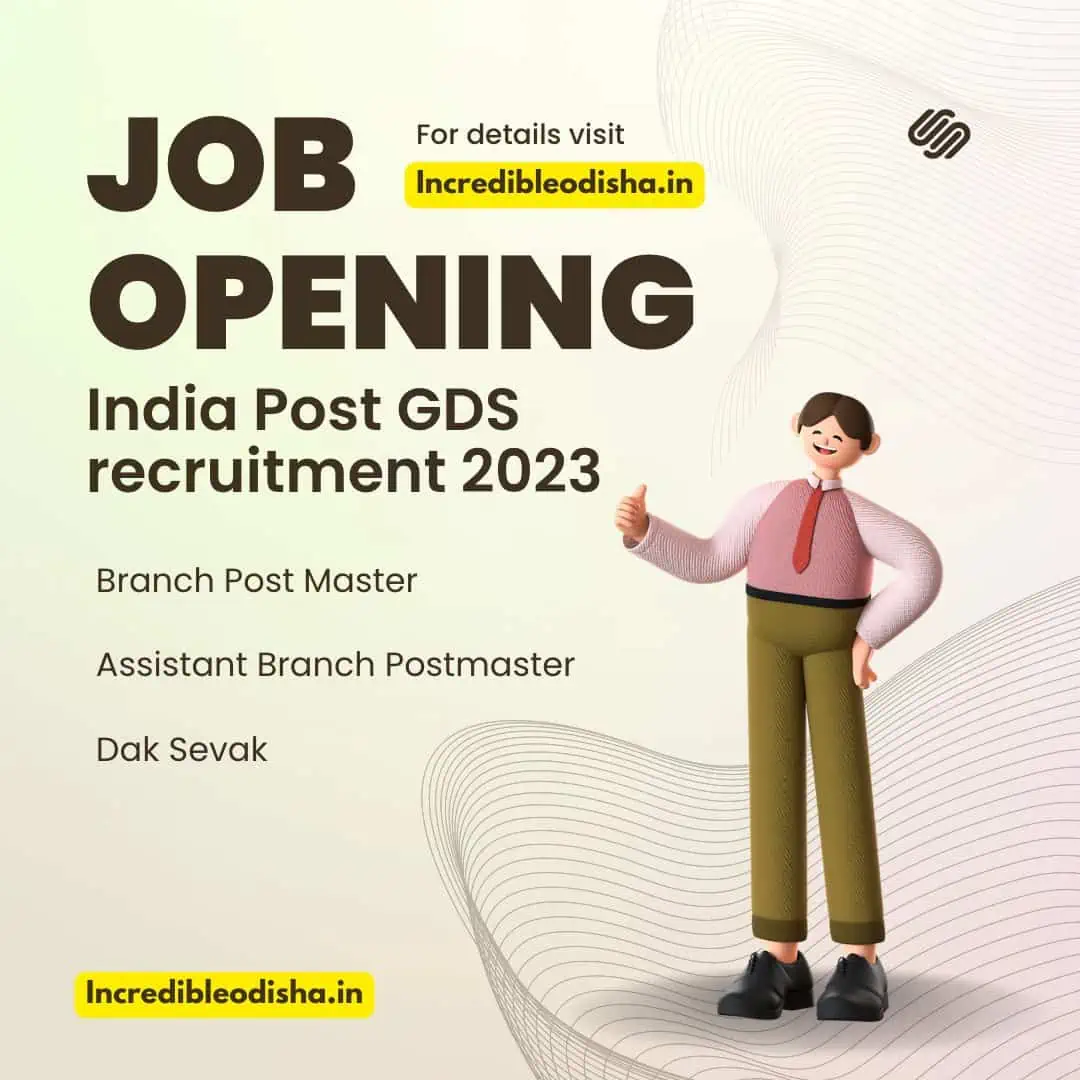
The Department of Posts operates an extensive rural communication network connecting remote villages across Odisha. Through the Gramin Dak Sevak (GDS) recruitment framework, the Odisha Postal Circle recruits candidates for essential village post office roles based purely on merit.
Key Takeaways
- India Post selects Gramin Dak Sevaks across the Odisha Postal Circle entirely through an automated Class 10 board merit list without any written examination.
- Vacancies encompass Branch Postmaster (BPM), Assistant Branch Postmaster (ABPM), and Dak Sevak positions across rural postal divisions.
- Candidates must be between 18 and 40 years of age and must have studied Odia as a compulsory or elective subject up to Class 10.
- Branch Postmasters receive a monthly Time-Related Continuity Allowance (TRCA) from ₹12,000 to ₹29,380, while ABPM roles offer ₹10,000 to ₹24,470.
Aspirants tracking civil service careers across Odisha can also consult our comprehensive OSSSC recruitment exam guide for state ministerial vacancies.
At-a-Glance Overview of Odisha Postal Circle GDS Recruitment
The following table summarizes core eligibility criteria, selection rules, and operational parameters governing Odisha GDS recruitment cycles:
| Recruitment Parameter | Specification | Details for Odisha Circle |
|---|---|---|
| Recruiting Agency | Department of Posts, Ministry of Communications | Odisha Postal Circle (Bhubaneswar Headquarters) |
| Position Profiles | BPM, ABPM, and Dak Sevak | Deployed across rural branch and sub-post offices |
| Selection Methodology | 100% Merit-Based | Calculated from Class 10 marks without written exams or viva |
| Mandatory Language | Regional Language Proficiency | Odia studied as a compulsory subject up to Class 10 |
| Age Bracket | 18 to 40 Years | Category relaxations: SC/ST 5 years, OBC 3 years, PwD 10 years |
| Base Monthly TRCA | ₹10,000 to ₹14,500 Base Slabs | Incremental allowances up to ₹35,480 based on shift hours |
Post Profiles and Role Responsibilities: BPM, ABPM, and Dak Sevak
The Gramin Dak Sevak cadre comprises three primary designations, each assigned distinct operational duties:
Branch Postmaster (BPM)
The Branch Postmaster serves as the administrative head of a designated Branch Post Office (BO). Responsibilities include managing postal savings accounts, supervising Sukanya Samriddhi Yojana deposits, disbursing cash through the India Post Payments Bank (IPPB), and maintaining village postal logistics.
Assistant Branch Postmaster (ABPM)
The Assistant Branch Postmaster assists in day-to-day counter operations, handles letter bookings, sells postage stamps, and conducts door-to-door mail delivery in assigned rural beats. ABPMs also assist in operating hand-held point-of-sale biometric devices.
Dak Sevak
Dak Sevaks operate primarily at departmental Sub-Post Offices (SOs) or Head Post Offices (HOs). Their duties involve mail sorting, bag dispatch, counter assistance, and official transport of mailbags between transit hubs and railway mail offices.
Candidates considering legal and judicial administrative careers can compare entry scales with the Orissa High Court ASO recruitment examination framework.
TRCA Salary Structure and Remuneration Slabs Across Odisha Divisions
Gramin Dak Sevaks receive a Time-Related Continuity Allowance (TRCA) structured around daily working hours rather than standard civil service pay bands:
| Cadre Designation | Engagement Shift Duration | Minimum TRCA Slab | Maximum TRCA Slab |
|---|---|---|---|
| Branch Postmaster (BPM) | 4 Hours Daily Shift (Level 1) | ₹12,000 per month | ₹29,380 per month |
| Branch Postmaster (BPM) | 5 Hours Daily Shift (Level 2) | ₹14,500 per month | ₹35,480 per month |
| ABPM / Dak Sevak | 4 Hours Daily Shift (Level 1) | ₹10,000 per month | ₹24,470 per month |
| ABPM / Dak Sevak | 5 Hours Daily Shift (Level 2) | ₹12,000 per month | ₹24,470 per month |
In addition to basic TRCA pay, Gramin Dak Sevaks receive applicable Dearness Allowance (DA), service discharge benefits, and annual cycle maintenance allowances.
Eligibility Criteria: Educational Qualifications, Age Limits, and Language
Statutory notification rules define clear minimum qualifications that every applicant must satisfy before submitting online applications:
- Secondary School Examination (Class 10): Candidates must have passed the 10th standard board exam with passing marks in Mathematics and English from any recognized school education board.
- Compulsory Odia Language Proof: Candidates must have studied Odia as an official subject at least up to the secondary school level. Applicants lacking Odia in their Class 10 mark sheet are disqualified during physical scrutiny.
- Computer Training Certification: Applicants should possess a basic computer training course certificate of at least 60 days duration from a recognized private or government training institute.
- Bicycle Riding Proficiency: Candidates must possess practical bicycle or two-wheeler riding skills for rural delivery rounds, confirmed through an official self-declaration.
Prospective applicants managing farm households alongside part-time postal work can reference our walkthrough of the Odisha Krushak Portal and farmer services for rural welfare integration.
Merit List Preparation and Automated Selection Algorithm
The selection algorithm functions with complete transparency, eliminating human discretion or discretionary interview marks:
- Mark Aggregation: The system calculates a candidate’s merit percentage based strictly on the marks obtained in Class 10 board examinations.
- Grade Point Conversion: For educational boards using grading systems (such as CBSE or ICSE), grade points convert to percentage figures using an approved multiplier of 9.5.
- No Higher Qualification Weightage: Holding higher academic degrees (such as Intermediate, Bachelor of Arts, or Master of Science) confers zero additional advantage.
- Tie-Breaking Parameters: If multiple candidates share identical Class 10 percentages, ties resolve sequentially based on date of birth (older candidate ranked higher), gender preference, and caste category priority.
Historical background regarding India’s vast rural communication infrastructure is preserved on the India Post Universal Postal Network Archive.
Step-by-Step Online Application and Preference Submission Process
Candidates submit applications through the official central recruitment portal during active notification cycles:
- Primary Registration: Enter your active mobile number, valid email address, father’s name, date of birth, gender, and category to generate a unique registration number.
- Identity Authentication: Ensure personal demographic details match your government identity records on the Unique Identification Authority of India (UIDAI) Official Portal.
- Document Upload: Upload scanned digital copies of your Class 10 mark sheet, passport photograph (under 50 KB), and official signature file (under 20 KB).
- Division and Post Preference Selection: Select the Odisha Postal Circle and choose specific postal divisions such as Cuttack, Puri, Sambalpur, Berhampur, or Balasore. Candidates can rank multiple post office preferences within their chosen division.
- Fee Payment: Male applicants in General, OBC, and EWS categories pay a non-refundable online fee of ₹100, while female, SC, ST, and PwD applicants are fully exempt from application charges.
Document Verification Protocol and Reporting Desks
Following merit list publication, shortlisted candidates receive automated SMS alerts directing them to report to designated Divisional Heads for physical verification:
Shortlisted applicants must present their original Class 10 mark sheet, board pass certificate, caste certificate, medical fitness certificate issued by a government medical officer, and Aadhaar identity card.
Failure to produce original documents within the stipulated 15-day reporting window results in immediate cancellation of provisional candidature. Candidates working across informal employment sectors can verify state welfare records on the Odisha Nirman Shramik Card list portal.
State employment programs and allied youth welfare initiatives are administered through the Government of Odisha Employment & Citizen Welfare Schemes.
Postal Circle Holidays and Work Schedules in Odisha
Rural branch post offices adhere to standardized central and state gazetted holiday schedules throughout the calendar year. Candidates planning their working schedule can review full annual breaks in our guide to the official Odisha holidays list.
Frequently Asked Questions About India Post Odisha GDS Recruitment
Is there a written exam or interview for India Post Odisha GDS recruitment?
No written exam or personal interview is conducted for India Post Gramin Dak Sevak selection. The selection is generated automatically through a computer-generated merit list based strictly on Class 10 (Secondary School Examination) percentage scores.
What is the monthly TRCA salary for a Branch Postmaster in Odisha?
Branch Postmasters receive Time-Related Continuity Allowance (TRCA) ranging from ₹12,000 to ₹29,380 per month for four hours of daily engagement. For five hours of daily engagement, the remuneration slab increases to ₹14,500 to ₹35,480 per month plus applicable Dearness Allowance.
Is knowing the local language Odia mandatory for applying to the Odisha Postal Circle?
Studying Odia as a compulsory or elective subject up to Class 10 is an essential statutory qualification for applying to the Odisha postal circle. Candidates unable to provide documentary proof of passing Class 10 with Odia are disqualified during document verification.
What documents are required during physical verification for Odisha GDS?
Shortlisted candidates must present their original 10th mark sheet, school leaving certificate, category certificate (SC/ST/OBC/EWS/PwD), and government photo identity proof. Verification authorities also require a medical fitness certificate and basic computer training certificate.