Utkal Gourav Madhusudan Das: Life and Legacy
Discover the life and legacy of Madhusudan Das, lawyer, reformer, industrialist, and a key architect of modern Odisha today.
The first time I walked through the gates of Shailabala Women’s College in Cuttack, I didn’t just see a premier educational institution. I felt the weight of history in the very air. This grand building was once ‘Madhukothi’, the home of a man who literally dreamt Odisha into existence. As I stood there, imagining the ‘Grand Old Man’ pacing his corridors, I realized that many of us know the name Madhusudan Das, but few truly understand the fire that burned within him.
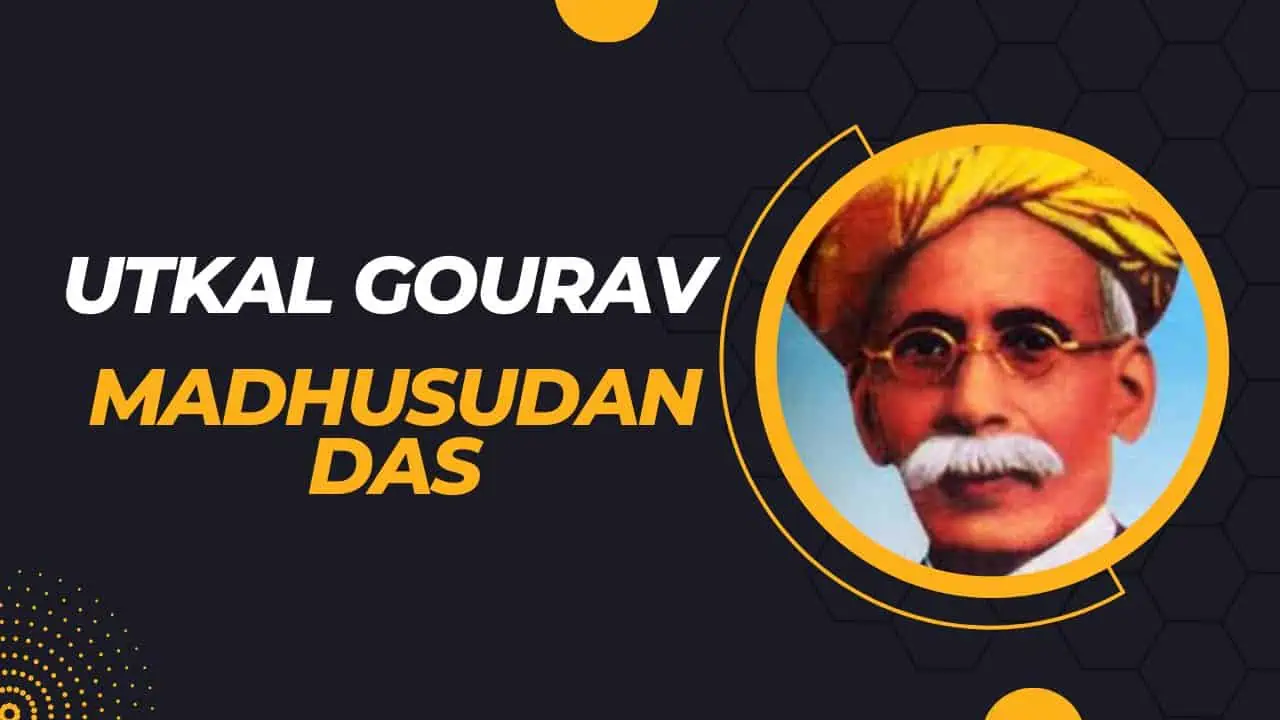
Madhusudan Das, or Madhu Babu as he is affectionately called in every Odia household, wasn’t just a leader; he was a force of nature. He was the first to graduate, the first to become an advocate, and the first to tell the British that the Odia people deserved their own identity. But beyond the titles of ‘Utkal Gourav’ (Pride of Odisha) and ‘Kulabruddha’ (Grand Old Man), there lies a story of immense sacrifice, a conversion that shook his family, and a passion for quality that saw him burning his own factory’s shoes.
In this deep dive, let’s journey back to the dusty lanes of Satyabhamapur and the courtrooms of Cuttack to rediscover the man who gave us our pride.

Who Was Madhusudan Das? The Grand Old Man of Odisha
When we talk about modern Odisha, we are essentially talking about the vision of Madhusudan Das. Born at a time when the Odia-speaking people were scattered across different provinces—Bengal, Central Provinces, and Madras—Madhu Babu saw the pain of a fragmented identity. He was a polymath in the truest sense: a legendary lawyer, a pioneering industrialist, a soulful poet, and a tireless statesman.
His life was a series of ‘firsts’. He was the first Odia to obtain a Master’s degree and a Law degree from Calcutta University. He was the first to travel to England, breaking the ‘kala pani’ taboo of his time. But what truly sets him apart in the history of Odisha is his unwavering commitment to the Odia cause. He didn’t just want a separate state; he wanted a self-reliant, industrially advanced, and educationally empowered Odisha.
I remember my grandfather telling me stories of how Madhu Babu would walk the streets of Cuttack, his tall stature and sharp eyes commanding respect from both the British officials and the local commoners. He was a bridge between the old world of feudal traditions and the new world of democratic aspirations. For those interested in the judicial history he helped shape, the Orissa High Court stands as a testament to the legal foundations he laid.
Early Life and Roots in Satyabhamapur
The story begins on April 28, 1848, in a small village called Satyabhamapur, located in the Cuttack district. Born as Gobinda Ballav Choudhury to Raghunath Das and Parvati Devi, he grew up in a traditional Zamindar family. His father was a noted Sanskrit scholar, and the house was filled with the sounds of Vedic chants and the rhythmic life of rural Odisha.
Can you imagine the Satyabhamapur of the 1850s? The smell of wet earth after the first monsoon rains, the green expanse of paddy fields, and the young Gobinda playing near the village ponds. It was here that he first witnessed the resilience of the Odia peasant and the richness of our cultural heritage.
The village environment was idyllic yet demanding. Young Gobinda was known to be a restless child, always asking questions that stumped the village elders. His mother, Parvati Devi, was his first teacher, instilling in him the values of truth and courage. Little did she know that her son would one day be the voice of millions. Even as a child, he showed a remarkable sense of empathy, often sharing his meals with the village children who were less fortunate.
The Famine of 1866: A Scar on the Soul
One cannot understand Madhusudan Das without understanding the ‘Naanka Durviksha’—the Great Odisha Famine of 1866. Madhu Babu was a young man then, and the horrors he witnessed stayed with him until his last breath.
The famine wasn’t just a natural disaster; it was a catastrophic failure of administration. Over a million people perished. I’ve read accounts of the time where the air in Cuttack was heavy with the smell of death, and the Daya river was choked with the bodies of those who had no strength left to even beg.
Madhu Babu saw mothers abandoning children and families perishing in silence. This trauma was the catalyst for his conversion to Christianity. He saw the missionaries providing relief when the local systems had collapsed. But more than religion, the famine gave him a lifelong obsession with food security and industrialization. He realized that as long as Odisha remained solely dependent on the vagaries of the monsoon and the whims of distant rulers, its people would continue to suffer. He vowed that no Odia should ever die of hunger again, a promise that drove his industrial and political initiatives.
A Conversion that Shook the Foundation
His conversion to Christianity in 1866 was an act of extreme courage. In the 19th century, changing one’s faith meant social death. His father, a staunch Hindu, disowned him instantly. The doors of his ancestral home were closed to him.
But Madhu Babu’s faith was never about rejecting his culture. It was about finding a moral compass that aligned with his vision of equality. He took the name Madhusudan Das and moved to Calcutta to pursue higher studies. Despite the boycott, he never spoke a word of ill-will against his family. In fact, he later built ‘Madhukothi’ in Cuttack, ensuring it had enough space for people of all faiths.
I find it incredibly moving that even after being boycotted, he never lost his love for his roots. His conversion didn’t make him ‘less Odia’; if anything, it gave him a broader perspective on social justice that he would later apply to the entire state. He proved that one’s identity as an Odia transcends religious boundaries. He remained a devout Christian while being the most passionate advocate for Odia traditions and temple rights.
Breaking Barriers: The Journey to Calcutta and London
If you think getting a degree is hard today, imagine doing it in the 1860s. There were no trains, no proper roads. Madhusudan Das had to travel from Cuttack to Calcutta by boat and then by foot, often carrying his books on his back.
In Calcutta, he lived in extreme poverty, sometimes surviving on a single meal a day. But his intellect was undeniable. He became the first Odia to graduate from Calcutta University in 1870. This was followed by an MA and a BL degree. He was essentially a pioneer carving a path through a jungle of ignorance.
The Crossing of the Black Water
In 1873, he did the unthinkable—he traveled to England to study law. In those days, crossing the ‘Kala Pani’ (black water) resulted in being cast out of one’s caste. But Madhu Babu was a rebel with a cause.
Imagine the young Madhusudan on the deck of a massive steamship, watching the shores of India fade away. The journey took weeks, crossing the vast Indian Ocean and the newly opened Suez Canal. In London, the cold, foggy streets were a far cry from the sunny paddy fields of Satyabhamapur. He faced the isolation of being one of the few Indians in the city, but he used that time to observe the British administrative system, their industries, and their parliamentary debates. He returned as a Barrister, ready to take on the empire using their own laws. For a detailed chronological account, you can refer to the Madhusudan Das Wikipedia page.
The Legal Legend: The Case of the Jagannath Temple
When Madhu Babu started his practice in Cuttack, he wasn’t just another lawyer. He was a ‘Vakil’ who fought with the precision of a surgeon. His most legendary victory was the Puri Jagannath Temple case.
The British government, in an attempt to extend its control, tried to take over the management of the Shree Jagannath Temple. They argued that the Raja of Puri was unfit to manage it. This would have been a direct blow to the religious and cultural autonomy of Odisha.
Madhu Babu took up the case. He argued with such brilliance and historical evidence that even the British judges were stunned. He proved that the temple was inextricably linked to the identity of the Odia people and that its management was a traditional right. He won the case, ensuring that the temple stayed in the hands of the Raja of Puri.
If you ever visit the best places to visit in Cuttack district, you’ll realize that the legal fraternity there still speaks of Madhu Babu’s sharp wit. He once said that a lawyer’s duty is not just to win a case, but to ensure that justice is seen to be done for the smallest of the small. He never charged the poor for his services, often paying their court fees from his own pocket.
The Visionary Industrialist: The Smell of Leather and Filigree
Madhu Babu was perhaps the first Indian leader to realize that “Political Swaraj” is impossible without “Industrial Swaraj”. This led to the birth of the Utkal Tannery in 1905.
I want you to close your eyes and imagine the Utkal Tannery at its peak. A massive 40-acre campus in Cuttack, filled with the pungent smell of raw hides being processed. Over 150 workers, many from the Dalit community, were being trained in modern tanning techniques. Madhu Babu didn’t just want to make shoes; he wanted to break the caste stigma associated with leather work.
The quality of Utkal Tannery products was so high that they were exported to London and Japan. He even sent local students to Japan to learn advanced manufacturing techniques—a move that was decades ahead of its time. Even Mahatma Gandhi, during his visit, was amazed. Gandhi later wrote that the Utkal Tannery was a model for his own ideas on village industries.
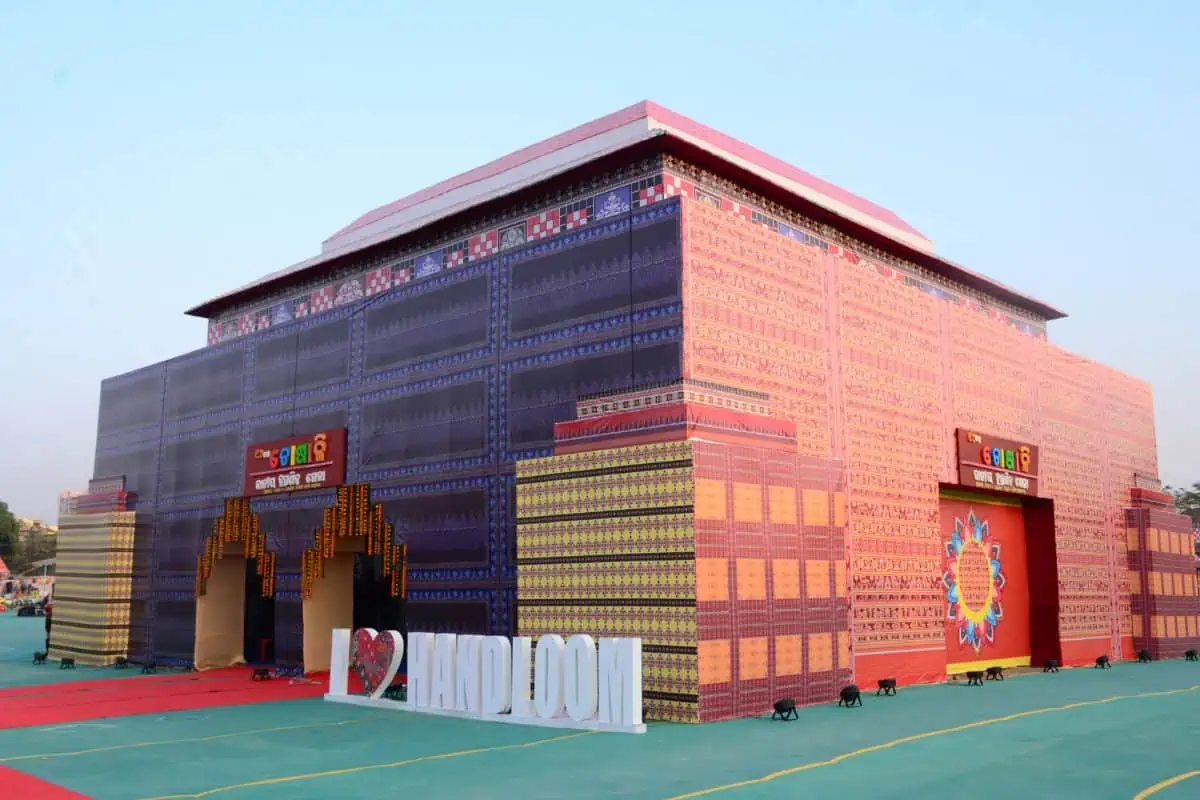
Then there was the ‘Orissa Art Ware’. Madhu Babu saw the declining state of the Tarakasi artisans of Cuttack. He brought them together, gave them modern tools, and ensured they were paid fair wages. He was obsessed with the Odisha handloom saree and promoted the Sambalpuri and Maniabandi weaves long before they became global fashion.
But his passion for quality was his financial undoing. The famous shoe-burning incident—where he destroyed thousands of rupees worth of stock because of a minor defect—happened at a time when he was already in debt. He refused to sell ‘second-rate’ goods to protect the honor of Odisha. By 1925, the factory was auctioned. Madhu Babu was penniless, but he was proud.
Utkal Sammilani: The Architecture of a New State
The year 1903 was a turning point. Madhu Babu founded the ‘Utkal Sammilani’ (Utkal Union Conference) at the Idgah field in Cuttack. This wasn’t just a political meeting; it was a family gathering of all Odia-speaking people.
Before this, the Odia people were like orphans in their own land. In Ganjam, they had to learn Telugu. In Sambalpur, they had to learn Hindi. In Cuttack, Bengali influence was dominant. Madhu Babu’s clarion call was simple: “Unite or Perish.”
The Historic Sessions
The Sammilani held sessions in various parts of the state, from the coastal plains to the western hills. The Rambha session in 1903, hosted by the Raja of Khalikote, and the Cuttack session were pivotal. Madhu Babu managed to bring together the feudal Rajas and the common intellectuals like Gopabandhu Das on the same platform.
He worked with the Rajas of Mayurbhanj and Parlakhemundi, but he also worked with the peasants. He convinced the British that a linguistically unified province would be easier to govern. Every time you cross the border into Odisha today, you are crossing a line that Madhu Babu fought for decades to draw. For more on the spirit of these celebrations, check out Utkal Divas.
Madhusudan Das as a Journalist: ‘The Oriya’
In 1917, Madhu Babu realized that the voice of Odisha needed a wider reach. He started ‘The Oriya’, an English weekly newspaper published from Cuttack. Through this publication, he took the issues of the Odia people to the national and international stage.
He was a fierce journalist who never minced words. He wrote about the plight of the farmers, the need for industrialization, and the unfairness of British taxes. ‘The Oriya’ became the intellectual heartbeat of the unification movement. He used the paper to educate the youth on global affairs and to instill a sense of pride in their heritage.
Madhu Babu as a Statesman: The Minister Who Resigned
In 1921, Madhusudan Das became the Minister of Local Self-Government in the Bihar and Orissa province. He was the first Odia to hold such a high position under the British ‘Diarchy’ system.
But he wasn’t interested in the power or the prestige. He had a vision for rural healthcare and education. However, he hit a roadblock when he realized that the bureaucracy was more interested in rules than in results.
The most famous incident of his ministerial career was his resignation. He argued that the post of a minister should be an ‘honorary’ one, meaning no salary should be taken for serving the public. He believed that a paid minister becomes a servant of the government rather than a representative of the people. When the government refused to accept this principle, he resigned.
He walked out of the Secretariat, left his official car behind, and hired a horse carriage to go home. That one act of resignation sent a message louder than a thousand speeches. It showed that for Madhu Babu, principles were always above positions. This act remains a rare example of political integrity in the history of Odisha.
Shailabala Das: The Daughter and the Legacy
In his personal life, Madhu Babu was a man of deep emotions. After his wife Soudamini Devi passed away, he found purpose in adopting Shailabala Das, the daughter of his friend Ambika Charan Hazra.
Shailabala wasn’t just an adopted daughter; she was his intellectual heir. He encouraged her to go to England for higher studies, making her the first Odia woman to do so. When she returned, she became a champion for women’s education. Together, they turned ‘Madhukothi’ into a beacon of light.
I’ve visited the Shailabala Women’s College many times. Walking through the halls, you can see the legacy of their partnership. Madhu Babu believed that “the education of a woman is the education of a generation.” The college stands as a living monument to that belief. If you are planning a visit, more information can be found on the Odisha Tourism website.
A Prolific Writer and Poet: The Soul of Utkal
Madhu Babu’s poetry was his way of talking to the soul of every Odia. He didn’t write for literary awards; he wrote to wake up a sleeping nation.
His poem “Jati Itihash” (History of the Nation) is a masterpiece. In it, he writes: “Jati itihash nathiye jahara, Manushya nuhen se pashu bitara.” (He who does not know his nation’s history is not a man, but a beast.)
He also wrote “Utkal Santan”, a poem that is still sung with fervor during school assemblies. He had a unique ability to mix patriotism with spirituality. His English writing was equally sharp. His grammar book, ‘Model Questions’, was so logically structured that it was used in Bengal and Bihar for years.
He was a master orator. It is said that when he spoke in the Legislative Council, the British officers would stop their work to listen. He could switch between Odia, Bengali, and English with such ease that he was often called ‘The Silver-Tongued Orator of the East’. His speeches were a blend of classical literature and modern logic.
Comparison with Utkalmani Gopabandhu Das
While Madhu Babu was the ‘Grand Old Man’, his younger contemporary Gopabandhu Das was the ‘Gem of Odisha’. They were two sides of the same coin.
Madhu Babu was the strategist, the legal eagle, and the industrialist who worked within the system to change it. Gopabandhu was the grass-roots worker, the saintly figure who worked directly with the masses. Madhu Babu focused on the administrative and industrial foundations of the state, while Gopabandhu focused on its moral and educational character.
Together, they formed a formidable duo. Madhu Babu often mentored the younger leaders of the Satyabadi group, providing them with legal and political guidance. Their synergy was the primary reason why the Odisha unification movement succeeded where many others failed.
The Final Years: Poverty and Pride
By the late 1920s, Madhu Babu was in deep financial trouble. He had spent every penny of his earnings as a lawyer on the Utkal Tannery and the unification movement. He had no savings, no property left.
In 1927, the man who was once the highest-paid lawyer in the region was declared insolvent. His house, his furniture, and even his library were at risk. But the people of Odisha didn’t let him fall. There are stories of common people sending him small amounts of money, which he often politely refused or gave away to others in need.
He spent his last years in a small portion of ‘Madhukothi’. Even then, he was visited by leaders like Mahatma Gandhi and Subhash Chandra Bose. Gandhi called him a “Great Patriot” and said that India needed more men like Madhusudan Das who understood the value of local industry.
He breathed his last on February 4, 1934. His death was mourned by the entire state. The ‘Grand Old Man’ was gone, but the state he had dreamt of was only two years away from being born. He died as he lived—with his head held high and his heart full of love for Odisha.
Inspiring Anecdotes: The Man Behind the Legend
The Quality King: Once, a British officer complained that the shoes from Utkal Tannery were expensive. Madhu Babu replied, “You are paying for the honor of Odisha, which is priceless. If you want cheap shoes, go to the British factories.”
The Teacher of Giants: Madhusudan Das was a resident tutor for Sir Ashutosh Mukherjee. He taught him the value of logical thinking. Later, he also taught Janakinath Bose, the father of Netaji Subhash Chandra Bose. One can see the seeds of Netaji’s uncompromising nature in the teachings of Madhu Babu.
The Salt Tax Debate: Years before the Dandi March, Madhu Babu made a stirring speech in the Legislative Council against the Salt Tax. He argued that salt was a gift of nature and that the poor should not be taxed for it. He was a pioneer of the civil disobedience ideology.
The Horse Carriage Incident: After resigning as a minister, when he took a horse carriage instead of the official car, the carriage driver refused to take money, saying, “You gave up your salary for us, I can give up my fare for you.” Madhu Babu wept that day, realizing that the common man understood his sacrifice.
How to Plan Your Visit to Madhusudan Das’s Memorials
If you want to truly connect with the spirit of Madhusudan Das, a visit to his memorials is essential.
1. Satyabhamapur (Birthplace)
Located about 20 km from Cuttack, this is where the legend began. The ancestral house is now a museum. You can see the well where he used to draw water and the small room where he studied by the light of a kerosene lamp. The village still maintains its serene character, offering a glimpse into the 19th-century life of Odisha.
2. Shailabala Women’s College (Madhukothi)
In the heart of Cuttack, this is a must-visit. While it’s a functioning college, the ‘Madhusudan Sangrahalaya’ within the campus houses his personal belongings. You can see his law books, his furniture, and even some of the tools used in the Utkal Tannery. For students and researchers, Madhusudan Law University also carries his name and spirit.
3. The High Court of Orissa
As the first Odia advocate, his presence is still felt here. There is a magnificent statue of him in the premises. On April 28, the entire court complex comes alive to celebrate ‘Lawyers’ Day’. It is a place where the legacy of justice is celebrated every day.
4. Gora Kabar
This is the cemetery in Cuttack where he was laid to rest. It is a quiet, peaceful spot. Every year on his death anniversary, thousands gather here to pay their respects. It is a place of pilgrimage for those who believe in the service of the nation.
The best time to visit Cuttack is during the winter months from October to February. You can combine this with a visit to the best tourist places in Bhubaneswar, which is only 30 km away.
Frequently Asked Questions (FAQs) about Madhusudan Das
What are the main achievements of Madhusudan Das?
His main achievements include:
- Forming the separate state of Odisha through the Utkal Sammilani.
- Being the first Odia graduate, MA, and BL.
- Establishing the Utkal Tannery and promoting local industries.
- Fighting the Puri Jagannath Temple case to preserve Odia culture.
- Resigning as a minister on ideological grounds.
- Starting ‘The Oriya’ weekly to give a voice to the Odia people.
Why is he called ‘Utkal Gourav’?
‘Utkal Gourav’ translates to ‘The Pride of Odisha’. He was given this title because he was the first to bring global recognition to Odia intellect and spent his entire life fighting for the rights and identity of the Odia people.
What was his relationship with Mahatma Gandhi?
Madhu Babu and Gandhi had a relationship of mutual respect. Gandhi visited his Utkal Tannery and was highly impressed by its social and industrial impact. Gandhi often cited Madhu Babu’s ideas on tanning as an inspiration for his own village industry movements.
What is the significance of April 28 in Odisha?
April 28 is the birthday of Madhusudan Das. In Odisha, it is celebrated as ‘Lawyers’ Day’ to commemorate his status as the first Odia advocate and his legendary contributions to the legal field.
Where can I find the books written by Madhusudan Das?
Most of his writings and poems have been compiled by the Odisha Sahitya Akademi. His English grammar book ‘Model Questions’ can still be found in old libraries in Cuttack.
How did Madhusudan Das contribute to women’s education?
Through his adopted daughter Shailabala Das, he championed the cause of women’s education. He encouraged her to pursue higher studies in England and supported the establishment of schools and colleges for women, the most prominent being the Shailabala Women’s College.
Final Thoughts: The Eternal Flame of Utkal
As I wrap up this tribute, I am struck by the sheer scale of one man’s impact. Madhusudan Das lived for 86 years, and not a single day was spent on himself. He was a man who converted to find his soul, who traveled across the world to find his voice, and who came back to find his motherland.
He taught us that being an Odia is not just about where you are born; it’s about what you are willing to sacrifice for your people. He was the bridge that carried us from a fragmented past to a unified future. He was a man of steel who had the heart of a poet.
The next time you enjoy a piece of Cuttack’s silver filigree or wear a beautiful Odisha handloom saree, remember the ‘Grand Old Man’ who burned his own shoes to ensure our products were the best. Madhu Babu didn’t just make a state; he made a nation of people proud of who they are. His life is a reminder that one person with a vision and the courage to follow it can change the destiny of millions.
Jai Jagannath! Jai Utkal!