Utkal Divas 2026: Odisha Day History and Celebrations
Explore Utkal Divas 2026 with Odisha Day history, the 90th anniversary context, key leaders, and how the state celebrates today.
The first time I stood among the massive crowd at Mahatma Gandhi Marg in Bhubaneswar on a bright April morning, I felt a shiver run down my spine. It wasn’t just the heat of the Odisha summer; it was the collective roar of thousands of voices singing “Bande Utkala Janani.” There’s something magical about Utkal Divas—a day when every corner of the state, from the bustling streets of Cuttack to the quiet tribal hamlets of Koraput, breathes a unified air of pride.
Utkal Divas, or Odisha Day, celebrated on April 1st every year, is more than just a public holiday. In 2026, we are celebrating a monumental milestone—the 90th anniversary of the formation of Odisha as a separate province. It was on April 1, 1936, that our land became the first state in India to be formed on a linguistic basis, a victory carved out of decades of silent tears, loud protests, and the unwavering determination of our ancestors.
If you are an Odia living in the heart of the state, or even if you’re part of the vibrant diaspora in the US, UK, or Middle East, this day connects us all to our roots. I want to share the incredible journey of how Odisha was reborn, the legends who made it possible, and the vibrant ways we are celebrating this historic 90th year in 2026.
What is Utkal Divas and Why is it Significant?
Utkal Divas commemorates the day when the Odia-speaking people finally secured their own administrative identity. For centuries, the Odia land—once the mighty Kalinga empire—had been fragmented. Parts of it were under the Bengal Presidency, others under Madras, and some under the Central Provinces. Our language was being suppressed in schools and courts, and our cultural identity was fading into the shadows of larger neighbors.
The significance of Utkal Divas lies in the “Spirit of Resilience.” It reminds us that no matter how fragmented we are, our language and culture are the threads that bind us. Celebrating Utkal Divas in 2026 is a tribute to that linguistic pride. It’s a day when we honor the fact that we were the pioneers of the linguistic state movement in India, setting a precedent for the entire nation.
For a traveler or a history buff, understanding Utkal Divas is the key to understanding the modern Odia psyche. It’s not just about the past; it’s about the “New Odisha” (Nua Odisha) that is currently leading in sports, technology, and disaster management while keeping its ancient soul intact. You can learn more about the current initiatives on the Official Government of Odisha Portal.
The Roots of Resistance: The Paika Rebellion of 1817
To understand why the creation of Odisha in 1936 was so sweet, one must go back to 1817. Long before the 1857 Sepoy Mutiny, the soil of Odisha witnessed the Paika Rebellion, often called the “First War of Independence” by many historians. For those interested in the deep archives, History of Odisha provides extensive records of this era.
The Paikas were the traditional landed militia of Odisha. When the British took over in 1803 and introduced oppressive land revenue policies, the Paikas, led by Buxi Jagabandhu, rose in a massive armed rebellion. They took over Puri and Banapur, forcing the British to flee.
I remember visiting the Barunei Hills near Khordha, where the rebellion was strongest. Standing there, you can almost hear the clashing of swords and the war cries of the Paikas. This rebellion was the first time the different regions of Odisha felt a unified sense of “resistance.” It proved that the Odia spirit could be suppressed for a while, but never broken. The Paika Rebellion became the legendary foundation upon which the peaceful linguistic movement was built a century later.
The Long Struggle for a Separate Odisha Province
The road to April 1, 1936, was not paved with flowers; it was a path of thorns and relentless struggle. To truly appreciate Utkal Divas, one must understand the dark period when the Odia language was on the verge of extinction.
The Fragmentation of Odia Lands
After the fall of the last independent king, Mukunda Deva, in 1568, the Odia land began to crumble. By the time the British took over in 1803, Odisha didn’t exist as a single map. Cuttack, Puri, and Balasore were lumped with Bengal. Ganjam and Koraput were sent to Madras. Sambalpur was pushed into the Central Provinces.
Imagine living in your own home but being told you must speak a foreign tongue to get a job or go to school. That was the reality for Odias. In the late 19th century, there was even a proposal to replace Odia with Bengali in schools! This “Language Crisis” was the spark that ignited the fire of the separate province movement, a struggle well-documented on Wikipedia’s Odisha Day page.
The Role of Ganjam Sammilani and Early Movements
The first organized cry for unity came from the south. In 1902, the Ganjam Sammilani (Ganjam Conference) was held in Berhampur. It was here that the seeds of the “Utkal Sammilani” were sown. The leaders realized that unless all Odia-speaking tracts were brought under one administration, our culture would perish.
Consider reading: Detailed History of Odisha from Ancient to Modern Times
Utkal Sammilani: The Architect of Modern Odisha
In 1903, the Utkal Sammilani (Utkal Union Conference) was founded by Madhusudan Das. This wasn’t just a political party; it was a cultural movement. Its motto was simple: “Whoever considers himself an Odia, regardless of caste or religion, is part of this family.”
The Sammilani held its sessions across different parts of the fragmented land, awakening the dormant pride of the people. It was the bridge that connected the common man, the intellectuals, and the royal kings. Without the Utkal Sammilani, the dream of a separate Odisha would have remained just that—a dream.
I remember reading an old account of a Sammilani meeting where thousands of people walked for days just to hear Madhu Babu speak. That kind of passion is what eventually forced the British government to take notice. They realized that the “Odia problem” couldn’t be ignored any longer.
The Role of Media: The Voice of a Silent Nation
One cannot talk about the 1936 victory without mentioning the “Ink Warriors.” In the late 19th and early 20th centuries, when the Odia language was under siege, it was the printing press that became our strongest fortress.
Utkal Deepika: The First Ray of Hope
Launched in 1866 by Gourishankar Ray, Utkal Deepika was the first Odia newspaper. It was born during the dark days of the “Na’Anka Famine” (1866), and its mission was simple: to voice the grievances of the Odia people to the British administration. It was through these columns that the demand for the unification of Odia lands first gained public momentum. Every time I see a copy of an old Deepika in a museum, I’m reminded that a single sheet of paper can indeed start a revolution.
The Samaj: The Soul of the People
Founded by Utkalmani Gopabandhu Das in 1919, The Samaj became the heartbeat of the freedom struggle and the statehood movement. It wasn’t just a newspaper; it was a movement. It carried the message of the Utkal Sammilani to every village. Even today, on Utkal Divas 2026, The Samaj continues to be a staple in Odia households, a legacy of the era when words were our only weapons.
Other publications like Sambalpur Hiteishini (from the west) and Asha (from Ganjam) played equally vital roles in ensuring that no matter which part of the fragmented land you lived in, you felt the pulse of the nation.
The Unsung Heroines: Women in the Odisha Movement
For a long time, the history of Utkal Divas was told through the stories of men. But as we celebrate the 90th anniversary in 2026, it is crucial to recognize the “Lionesses of Utkal” who marched alongside their brothers, husbands, and fathers.
Rama Devi and Malati Choudhury
Rama Devi Choudhury, affectionately called “Mother of Odisha,” was a pillar of strength. While she is often remembered for her role in the Freedom Movement, she was also a staunch advocate for Odia identity. Along with Malati Choudhury, she worked tirelessly to educate women in rural Odisha, instilling in them a sense of pride in their language and culture.
Sarala Devi: The Intellectual Force
Sarala Devi was the first woman to be elected to the Odisha Legislative Assembly in 1937, just a year after the state was formed. She was a prolific writer and a powerful orator who spoke about the need for linguistic and cultural autonomy. She proved that the struggle for a separate province was not just about administrative boundaries; it was about the social and intellectual liberation of all its people.
Other Notable Names
Women like Kokila Devi, Jahnabi Devi, and many others from the Satyabadi group ensured that the “Vana Vidyalaya” spirit reached the homes of the common man. Their contribution reminds us that the spirit of Odisha is as much feminine as it is masculine—nurturing yet fierce.
Evolution of Odia Literature: The Bedrock of Our Identity
The struggle for Utkal Divas was, at its core, a struggle for the Odia Language. Our literature is not just a collection of books; it is the map of our soul.
The Age of Sarala Das (15th Century)
Everything starts with Sudramuni Sarala Das. By writing the Mahabharata in Odia (instead of Sanskrit), he did something revolutionary. He gave the common man a language to claim as their own. Every time I hear the verses of Sarala Mahabharata, I hear the first echoes of our statehood movement.
The Bhakti Era and the Pancha Sakha
The 16th century brought the “Pancha Sakha” (Balarama Das, Jagannatha Das, Achyutananda Das, Ananta Das, and Yasovanta Das). Jagannatha Das’s Odia Bhagabata is found in every “Bhagabata Tungi” (community hall) in rural Odisha. This book did more to unify the Odia people than any political decree could. It created a common linguistic and spiritual ground that transcended the fragmented boundaries.
The Renaissance: Radhanath, Madhusudan, and Gangadhar
In the late 19th century, Kabibara Radhanath Ray, Bhaktakabi Madhusudan Rao, and Swabhaba Kabi Gangadhar Meher modernized Odia poetry. They wrote about the beauty of the Chilika lake, the glory of our history, and the sanctity of our soil. Their poetry gave us the vocabulary of patriotism. Gangadhar Meher, despite his poverty, wrote verses that were as rich as the Sambalpuri silk he wove.
Legends Who Shaped the Destiny of Odisha
Our history is written with the blood and sweat of giants. On Utkal Divas, we pay our deepest respects to those visionaries who dedicated their lives to the cause of Odisha. Many of these legends are honored at some of the 20 Must-Visit Places in Odisha, where their statues and memorials stand as tall as their contributions.
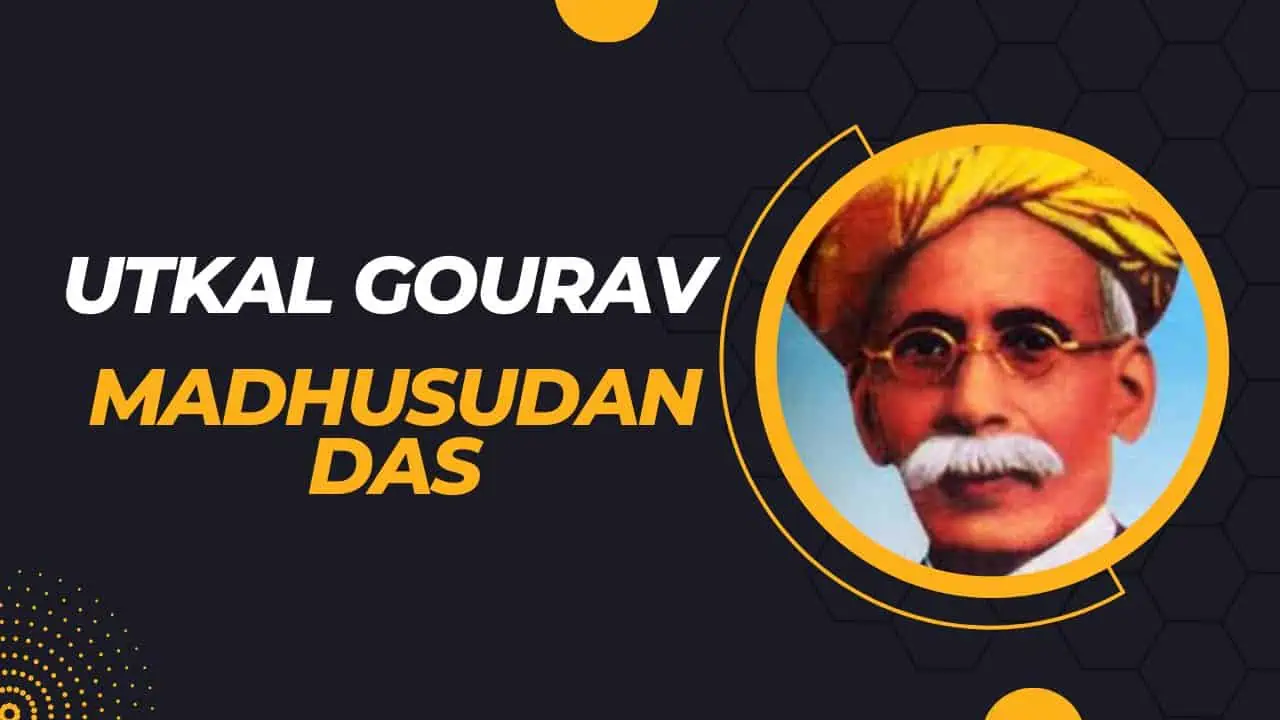
1. Utkal Gourav Madhusudan Das (1848–1934)
Known as the “Architect of Modern Odisha,” Madhu Babu was the first Odia to get a Master’s degree and a Law degree. He was a brilliant lawyer who used his intellect to argue the case for Odisha in the British Parliament. He was the one who famously said, “If you want to be a nation, you must have a language.” His house in Cuttack, now a museum, is a place of pilgrimage for every Odia.
2. Utkalmani Gopabandhu Das (1877–1928)
If Madhusudan was the brain, Gopabandhu was the soul of the movement. A poet, journalist, and social reformer, he founded the “Satyabadi Vana Vidyalaya” near Puri. His life was a testament to sacrifice. He famously wrote, “Misu mor deha e desha matire, deshabasi chali jaantu pthare” (Let my body mingle with the soil of this land, and let my countrymen walk over me).
Read more about his life: Utkalmani Gopabandhu Das – The Gem of Odisha
3. Maharaja Krushna Chandra Gajapati (1892–1974)
The King of Paralakhemundi was a master diplomat. He attended the Round Table Conferences in London and personally convinced the British authorities of the necessity of a separate Odisha. His political acumen and financial support were crucial in the final stages of the state’s formation.
4. Vyasa Kabi Fakir Mohan Senapati (1843–1918)
Fakir Mohan is the “Father of Odia Prose.” At a time when Odia was being mocked, he wrote “Chha Mana Atha Guntha,” a masterpiece that proved the richness and depth of our language. He protected the Odia language with his pen as if it were a sacred shield.
The Tale of Two Capitals: Cuttack to Bhubaneswar
On Utkal Divas, we often talk about the state, but the story of its capitals is equally fascinating. For over a thousand years, Cuttack (Abhinaba Barabasi Kataka) was the heart of Odisha. It was the center of the 1936 celebrations. Cuttack, with its narrow lanes and “Dahibara-Aludum” stalls, holds the memories of the Madhu Babu era.
However, as the new state began to grow, it needed a modern capital. In 1948, the foundation stone of Bhubaneswar was laid. Designed by the German architect Otto Königsberger, Bhubaneswar was envisioned as a “Temple City” that merged ancient architecture with modern planning.
The transition from the “Silver City” (Cuttack) to the “Temple City” (Bhubaneswar) was a symbolic passing of the torch. While Cuttack remains the emotional and judicial capital (home to the High Court), Bhubaneswar has become the face of a rising, tech-savvy Odisha. On Utkal Divas 2026, the twin cities are connected by a world-class metro system, yet they both retain their distinct personalities. Cuttack is the old grandmother telling stories of the struggle, and Bhubaneswar is the ambitious grandchild building the future.
How We Celebrate Utkal Divas in 2026
If you’re wondering what Utkal Divas looks like on the ground in 2026, let me paint a picture for you. The celebration has evolved from a simple government function into a massive, state-wide festival, often serving as a precursor to many other Famous Festivals of Odisha that take place throughout the year.
The Morning Rituals
The day starts early. Across the state, people wake up to the sound of patriotic songs played over loudspeakers. In every school and government office, the flag is hoisted. But the most moving part is the singing of the state anthem, “Bande Utkala Janani.” Whether you are a small child or an elderly person, when those notes hit, you stand straight. It’s our shared heartbeat.
The 90th Year Parade in Bhubaneswar
The heart of the celebration is the capital city. The grand parade at Mahatma Gandhi Marg is a spectacle of colors. In 2026, the parade features:
- Cultural Floats: Each district showcases its unique heritage—the Applique work of Pipili, the silver filigree of Cuttack, and the Sambalpuri weaves.
- Tribal Dances: Groups from Mayurbhanj and Koraput perform traditional dances, bringing the ancient rhythms of the forests to the city streets.
- The “Odia Language” float: It features a giant book of Sarala Mahabharata and the faces of the legends like Fakir Mohan and Madhusudan Das. Children dressed as these legends walk alongside, waving to the crowd.
Odia Paksha – A 14-Day Cultural Movement
In 2026, the celebrations aren’t limited to a single day. The government organizes “Odia Paksha,” a fortnight of events aimed at promoting the Odia language. There are book fairs, poetry recitals (Kabi Sammilani), and digital workshops on how to use Odia in tech.
Global Utkal Divas: The Diaspora Connect
One of the most heartening sights in 2026 is the “Global Utkal Divas.” Thanks to high-speed internet, Odia associations in Dubai, New Jersey, and London hold virtual meets. They share photos of their kids dressed in Sambalpuri outfits, performing Odissi. It’s a beautiful reminder that while we may be miles away from the Mahanadi river, the river still flows in our veins.
Odissi: The Soul of Odisha in Motion
No Utkal Divas is complete without a performance of Odissi. This classical dance form, which dates back to the Maharis (temple dancers) of the Jagannath Temple, is the ultimate expression of Odia aesthetics.
The Grace of Odissi Dance
Odissi is known for its Tribhangi (the three-part break of the body) and the Chauka (a square-like stance representing Lord Jagannath). When you watch a dancer perform the “Mangalacharan” or “Dashavatara,” you aren’t just watching a dance; you are witnessing 2,000 years of history. The intricate silk costumes, the silver jewelry from Cuttack, and the fragrance of the Champa flowers in the dancer’s hair—it’s a sensory overload of pure Odia culture.
Odissi Music: The Ancient Rhythms
While the dance is famous globally, Odissi Music is equally ancient. In 2026, there is a strong movement to get classical status for Odissi music. It has its own unique ragas and talas that are different from Hindustani or Carnatic styles. The haunting sound of the Mardala (drum) and the soulful notes of the flute are the background score of every Utkal Divas celebration. If you haven’t heard a “Champu” or “Chhanda” being sung by a master, you haven’t truly heard the voice of Odisha.
Arts and Crafts: The Visual Language of Utkal
On Utkal Divas, we don’t just speak Odia; we wear it and display it. Our arts and crafts are the visual markers of our identity.
The Divine Art of Pattachitra
Hailing from the heritage village of Raghurajpur, Pattachitra is one of the oldest art forms in India. These intricate paintings on cloth, depicting the legends of Lord Jagannath, are our connection to the divine. On Utkal Divas, many exhibitions showcase these scrolls, which take months of dedicated labor to complete. Consider reading: Raghurajpur – The Heritage Crafts Village of Odisha
Silver Filigree (Tarakasi) of Cuttack
The “Silver City” Cuttack is famous for its delicate Tarakasi work. The thin silver wires are twisted and turned into breathtaking designs. This art form is a symbol of the patience and precision that defines the Odia character. Wearing a Tarakasi brooch or earring on Utkal Divas is a popular way for the youth to display their cultural pride in 2026.
The Weaves of Unity: Sambalpuri and Bomkai
Odisha’s handlooms are our “Soft Power.” The “Ikkat” technique of Sambalpur, the intricate patterns of Bomkai from Ganjam, and the silk of Maniabandha are world-renowned. On April 1st, you’ll see thousands of men in Sambalpuri shirts and women in elegant Pata sarees. It’s a silent, colorful parade of unity.
A Culinary Odyssey: Beyond Pakhala and Rasagola
If you are a foodie, Utkal Divas is your “Day of Feast.” While Pakhala is the staple for the heat, the Odia kitchen offers so much more. Our food is characterized by minimal use of oil and spices, relying instead on the natural flavors of the ingredients. To experience these flavors in a professional setting, check out some of the Best Restaurants in Bhubaneswar to try Authentic Odia Thali.
The Magic of Dalma
The legendary Dalma is our comfort food. A mix of lentils and vegetables like raw papaya, brinjal, and pumpkin, tempered with “Pancha Phutana,” it is the healthiest meal you can find. Every district has its own variation. In the coastal areas, they might add coconut; in the west, it’s more savory. Consider reading: 10 Famous Odisha Foods You Must Try
The Sweet Heritage: Chhena Poda and Beyond
If the Rasagola is our victory, the Chhena Poda is our pride. Originating from Nayagarh, this “burnt cheese cake” is made by slow-baking cottage cheese and sugar until the crust is caramelized. The smoky flavor and the soft interior are addictive. Then there is the Arisa Pitha (a deep-fried rice flour pancake with sesame seeds), Kakara Pitha, and the Enduri Pitha (steamed in turmeric leaves). The smell of turmeric leaves steaming in the kitchen on a festive morning is, for me, the very scent of home. Learn more: The History and Mystery of Odisha Rasagola
District-wise Historical Significance
While the major celebrations happen in the cities, every district has a story of its own related to the statehood movement.
- Ganjam: The cradle of the movement. The first demand for unification started here with the Ganjam Sammilani.
- Sambalpur: The western front. The struggle here was against the imposition of Hindi. The people of Sambalpur, led by leaders like Dharanidhar Mishra, fought valiantly to keep Odia in schools and courts.
- Koraput: The tribal heartland. The struggle here was unique, involving the integration of vast forest tracts and the preservation of tribal Odia dialects.
- Balasore: The literary hub. It was here that the printing press first became a tool of revolution.
Odisha in 2026: A Global Leader
As we celebrate the 90th anniversary, let’s look at the “Modern Marvels” of Odisha.
The IT and Semiconductor Hub
Bhubaneswar in 2026 is no longer just a temple city; it’s a “Silicon Valley of the East.” With major global tech giants setting up their R&D centers and the newly launched semiconductor plant in Ganjam, Odisha is providing jobs to the world. Our youth no longer have to migrate for opportunities; the opportunities are coming to them.
Infrastructure: The Biju Expressway
The Biju Expressway, connecting the western parts of the state with the coast, has revolutionized travel. What used to take days now takes hours. This infrastructure isn’t just about roads; it’s about connecting the hearts of the people from different regions, truly fulfilling the dream of the Utkal Sammilani leaders.
Green Energy and Disaster Resilience
Odisha is now a global case study for disaster management. Our “Zero Casualty” policy during cyclones has saved millions of lives. Furthermore, with the green hydrogen projects and the focus on renewable energy, Odisha is showing the world how to grow sustainably.
Practical Advice for Celebrating Utkal Divas (The 2026 Way)
If you want to make the most of this 90th anniversary, here are some insider tips from my personal experience. You can also find the latest official event schedules on the Official Odisha Tourism Website.
- Attend a ‘Kabi Sammilani’: These poetry recitals are held in every major town. Even if you don’t understand every word, the rhythm and emotion of the Odia language are hypnotic.
- Try the ‘Mahaprasad’: If you are in Puri or near a Jagannath temple, don’t miss the sacred food. It’s the ultimate taste of Odia unity. Read more: Jagannath Temple – Darshan Timings and Prasad Details
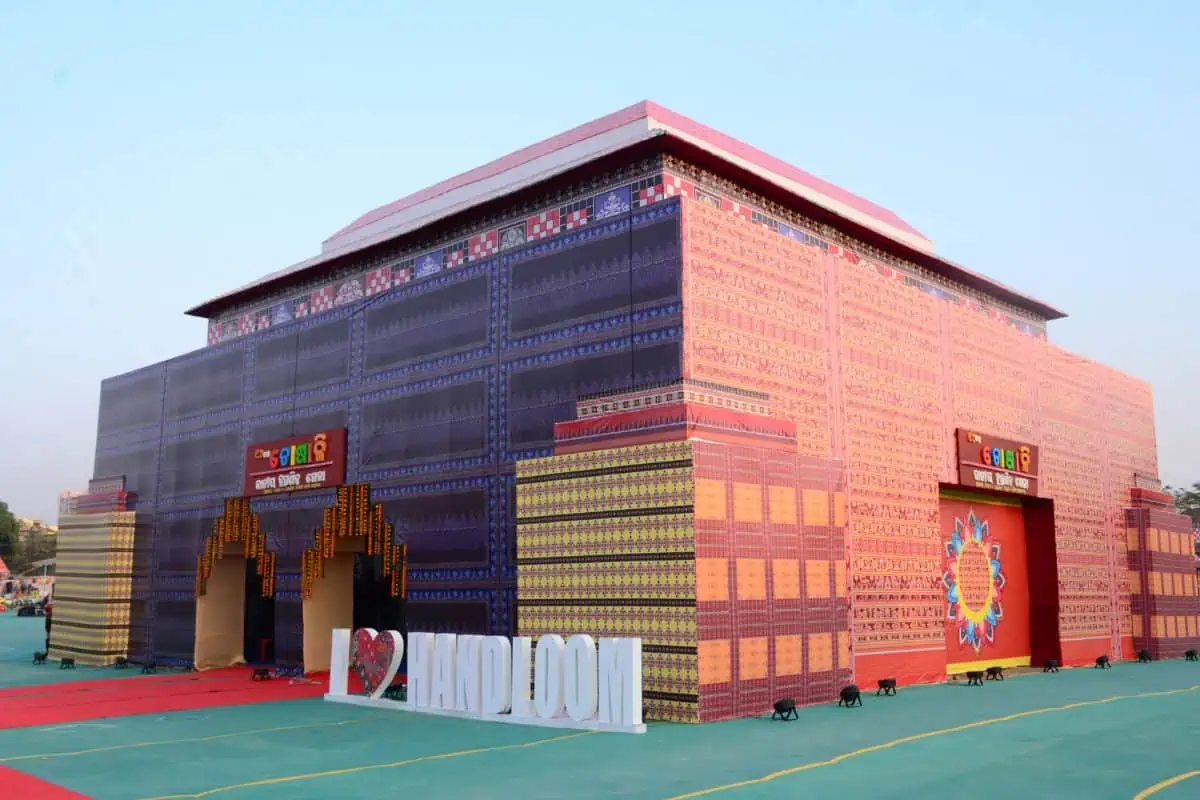
- Visit a Handloom Exhibition: April 1st usually sees major discounts and special exhibitions by “Boyanika” (the state handloom cooperative). It’s the best time to buy an authentic souvenir.
- Listen to ‘Bande Utkala Janani’: Find a public flag-hoisting ceremony in the morning. Standing with the locals as the anthem plays is a profound experience that no tourist guide can fully describe.
The Emotional Anthem: “Bande Utkala Janani”
You cannot understand the spirit of Utkal Divas without understanding our state anthem. Written by Kantakabi Laxmikanta Mohapatra, “Bande Utkala Janani” (I bow to thee, Mother Utkala) was officially adopted as the state anthem in 2020.
The lyrics describe the lush greenery, the holy rivers, the blue mountains, and the great heroes of Odisha. When it is played at the end of every Utkal Divas function, there is a palpable sense of unity. It is more than just a song; it is our identity set to music.
If you are attending a public event, please remember to stand in respect when the anthem is played. It’s a small gesture that speaks volumes about your respect for the local culture.
Key Facts About Utkal Divas for Students and Researchers
For those writing an essay or preparing for a debate on Utkal Divas 2026, here are some crucial facts to include:
| Feature | Details |
|---|---|
| Formation Date | April 1, 1936 |
| First Governor | Sir John Austin Hubback |
| First Capital | Cuttack (Later shifted to Bhubaneswar in 1948) |
| Original Districts | 6 (Cuttack, Puri, Balasore, Sambalpur, Koraput, Ganjam) |
| 90th Anniversary | Celebrated on April 1, 2026 |
| State Anthem | ”Bande Utkala Janani” (Written by Laxmikanta Mohapatra) |
| Linguistic Milestone | First state in India to be formed on linguistic basis |
The Road to 2036: A Century of Pride
The 90th anniversary is a moment of reflection. We look back at the struggle of 1936 and the progress of the last nine decades. But more importantly, we look forward.
By 2036, Odisha aims to be a trillion-dollar economy. We aim to have 100% literacy and world-class health facilities in every village. But most of all, we aim to remain the most welcoming and humble people in India. Our strength is our simplicity, and our power is our peace.
Conclusion: The Eternal Echo of Utkal
As the evening lights up the Lingaraj temple and the sky fills with fireworks, the echo of the past meets the promise of the future. Utkal Divas is the day we remember that we are a nation of “Kalingas”—brave, creative, and resilient.
Whether you are eating a simple bowl of Pakhala or managing a multi-million dollar company, on this day, you are just an Odia. And that is the greatest title you can ever hold.
Jai Jagannath! Happy Utkal Divas 2026! Bande Utkala Janani!
Note: For more information on Odisha’s heritage, consider exploring our guides on Konark Sun Temple and the Jagannath Temple in Puri.